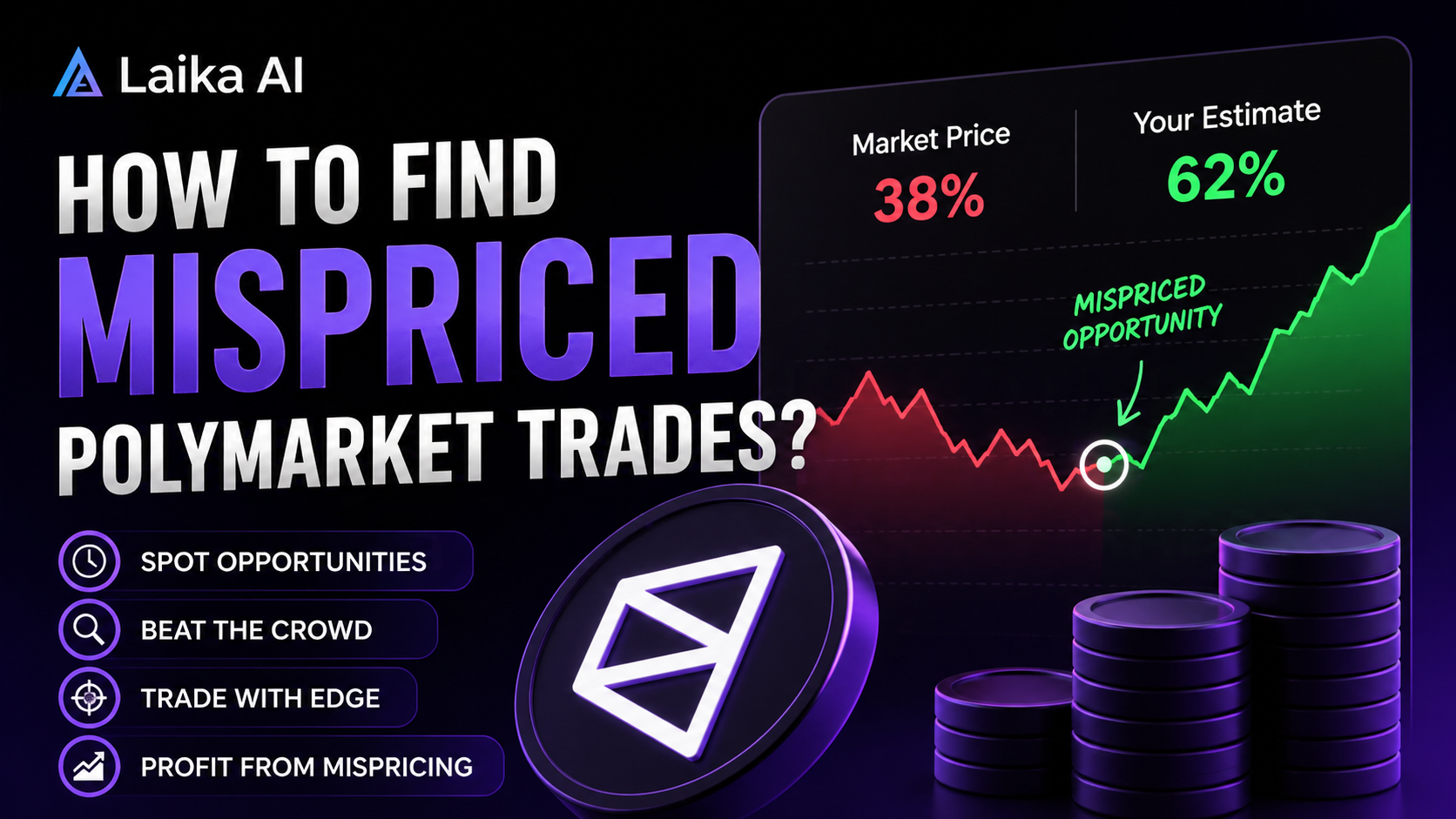
How to Find Mispriced Markets on Polymarket (Without Guesswork)
 LAIKA AI2 min read·Just now
--
Every Polymarket trader has faced this moment. You open a market, check the price, and realize it already reflects the outcome you just figured out.
You were right. Just not early enough.
That distinction matters because Polymarket does not reward correctness. It rewards being correct when the market is wrong. The gap between those two is where all profit exists.
Why Most Traders Miss the Opportunity
The default approach is obvious: do more research.
But research alone does not create an edge. In high-volume markets, hundreds of traders are analyzing the same data. Prices adjust quickly, often before you can act.
The real problem is not lack of information. It is lack of process. Traders who win consistently are not necessarily smarter. They are more systematic about where and how they look.
The Four Types of Mispricing
Mispricing on Polymarket tends to follow repeatable patterns:
1. Information Lag
New data becomes available, but the market has not reacted yet. Speed matters here.
2. Complexity Discount
Some markets are difficult to interpret. Most traders simplify, leaving room for deeper analysis to win.
3. Resolution Misread
Markets resolve based on specific rules, not headlines. Missing this detail creates consistent pricing errors.
4. Crowd Emotion
Markets overreact to dramatic narratives and underprice stable outcomes. Emotional swings create temporary inefficiencies.
A Simple 5-Step System That Works
Instead of relying on instinct, use a repeatable framework:
1. Target Low-Attention Markets
Highly visible markets are usually efficient. Look for newer or less crowded ones.
2. Read Rules Before Price
Always understand how the market resolves before forming an opinion.
3. Create Your Own Probability
Estimate the outcome independently before checking the current price.
4. Stress-Test Your View
Find the strongest counterargument. If your thesis holds, your edge is more reliable.
5. Size Based on Edge
Position size should reflect your calculated advantage, not your confidence level.
Where This Strategy Performs Best
This system works across categories, but it is especially effective in:
- Economic indicator markets tied to official data
- Weather markets driven by model updates
- Low-volume regional or niche events
- Long-term crypto predictions influenced by narrative cycles
These markets often move slower or contain overlooked details, making them more exploitable.
The Real Shift: From Instinct to System
Most traders operate reactively. They see a price, form an opinion, and act.
Profitable traders reverse this. They build a structured process, generate independent views, and only then compare with the market. That shift alone changes outcomes dramatically.
If you want to apply this process consistently, tools like Laika AI’s Polymetric can help streamline discovery, track smart money, and surface mispriced markets faster. It simply reduces the time between insight and execution.