How RagaPay Uses Smart Routing to Improve Payment Success Rates
 Ragapay7 min read·Just now
--
Every payment that fails costs something.
Sometimes it’s the transaction itself — a customer who doesn’t retry, a deposit that never completes, a sale that vanishes from the pipeline without a trace. Sometimes it’s downstream: the chargeback generated by a retry that succeeded on the customer’s end but not the merchant’s. The customer support ticket. The refund that shouldn’t have been issued. The negative review from a user who felt the platform let them down at the worst possible moment.
Add those costs up across a high-volume payment operation in gaming, forex, crypto, or cross-border e-commerce — and failed payments stop looking like an unavoidable byproduct of processing at scale. They start looking like the most expensive problem the business isn’t actively solving.
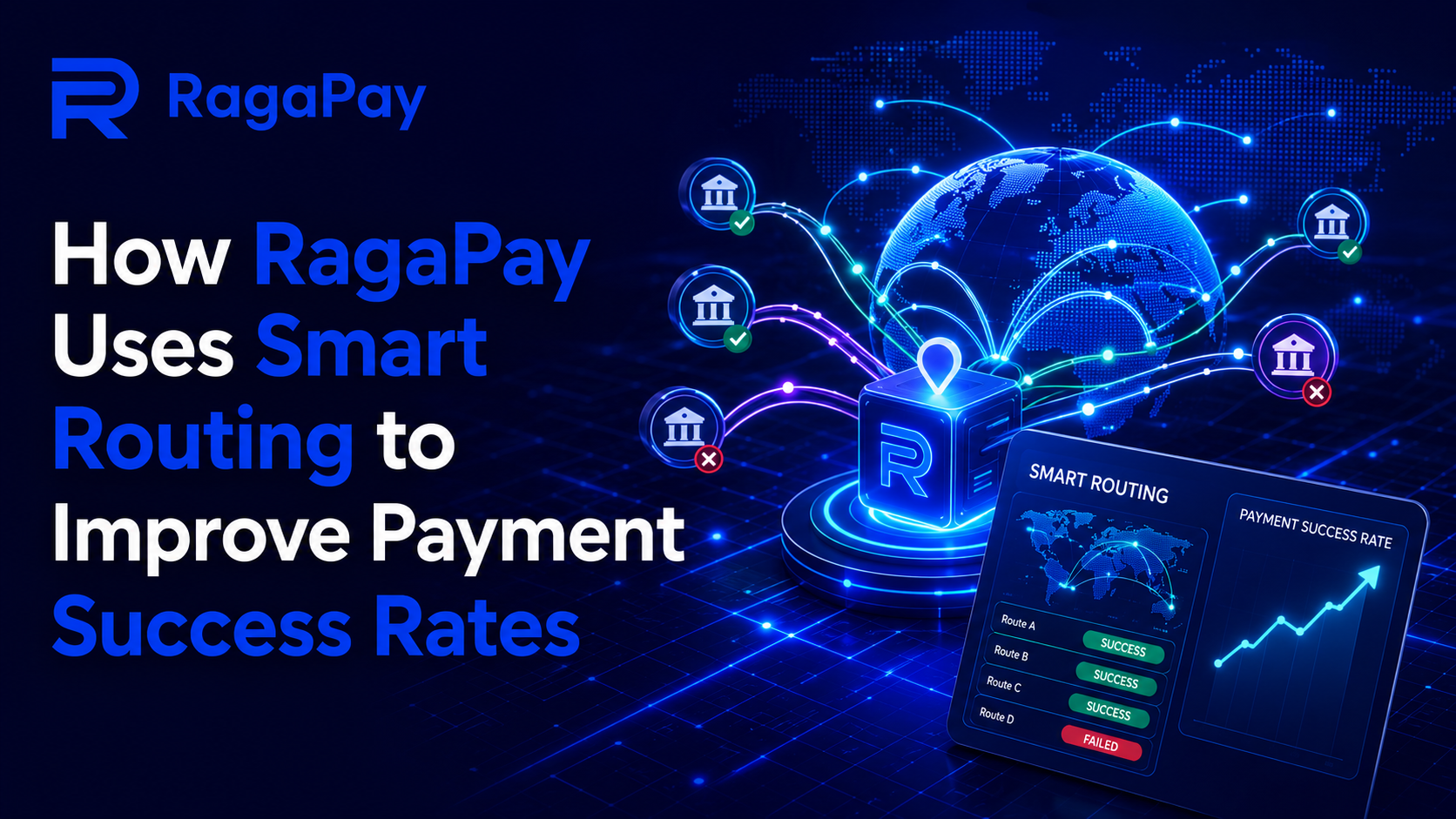
Smart routing is the mechanism that changes that equation. Not by processing more transactions, but by ensuring a higher percentage of attempted transactions actually succeed — through real-time decisions that select the optimal processing path for each individual payment, informed by live performance data, issuer intelligence, and the full context of that transaction’s risk and routing profile.
This is where RagaPay’s architecture is most consequential. And understanding how it works — not at the marketing level, but at the operational level — explains why merchants who implement it see payment success rates move in ways that static routing configurations simply cannot deliver.
The Routing Decision Most Payment Stacks Get Wrong
The default routing model for most payment operations is some version of “send everything to the primary gateway, use the backup if the primary fails.” It’s simple. It’s easy to implement. And it leaves an enormous amount of approval potential untapped.
Here’s what that model misses: different acquiring paths perform differently for different transaction profiles. A transaction from a card issued in Poland routed through a UK acquirer will have a materially different approval probability than the same transaction routed through an acquirer with an established bilateral relationship with Polish issuing banks. A high-value deposit from a first-time user on a gaming platform may need a different processing path than a recurring low-value transaction from an established account holder.
The variance isn’t small. In high-risk merchant categories, the approval rate difference between a well-matched and a poorly-matched routing decision for the same transaction can span 10 to 20 percentage points. At scale, that variance is the difference between a payment operation that performs and one that permanently underperforms.
Static routing can’t see this variance. It sends every transaction the same way and accepts whatever aggregate approval rate that fixed path delivers. It has no mechanism to learn that Route A performs 14 points better for mid-tier European cards on weekend evenings, or that Route B delivers stronger approval rates for first-time depositors in Southeast Asia. That learning requires data — and the application of that data in real time at the moment the routing decision is made.
What RagaPay’s Smart Routing Engine Actually Does
RagaPay’s routing engine operates at a level of granularity that fundamentally changes the approval probability for each transaction in the pipeline.
Real-Time Multi-Variable Routing Decisions
Every transaction that enters the RagaPay platform triggers a routing evaluation that runs in milliseconds. The engine processes a multi-variable input set — card BIN, issuing country, card product tier, transaction amount, merchant category, customer history, time of day, and current gateway health — and evaluates that profile against historical approval performance across every available acquiring path in the network.
The output isn’t a static rule match. It’s a probability-weighted routing decision that selects the path with the highest expected approval rate for that specific combination of variables — not for that card scheme in general, not for that geography on average, but for that transaction profile at that moment.
The precision matters because approval rates are not uniform. A routing decision made at the card scheme level — “European cards go to Acquirer A” — ignores the issuer-level relationships that determine whether a specific card from a specific bank in that region will approve more reliably through one acquiring path than another. BIN-level routing captures that granularity. Scheme-level routing leaves it on the table.
Continuous Performance Learning
The routing engine doesn’t make the same decision in month six that it made on day one. Every transaction outcome — approval, hard decline, soft decline, timeout — feeds back into the performance model that informs future routing decisions.
Over time, the engine builds a transaction profile for each BIN range, each geographic corridor, each acquirer relationship, and each time-of-day pattern. Those profiles improve as the data volume grows, and the routing decisions that draw on them become progressively more accurate.
This is the compounding advantage that static routing configurations can never replicate. A rule configured once stays accurate until someone updates it — which in practice means it drifts out of calibration as issuer relationships, gateway performance, and card network dynamics evolve. A learning routing engine stays calibrated automatically, without requiring manual intervention every time the environment changes.
Dynamic Failover Before Failures Become Visible
Gateway degradation doesn’t always announce itself with a full outage. More commonly, it shows up as gradual performance decline — rising response latency, elevated soft decline rates, intermittent timeout errors — before a hard failure occurs.
RagaPay’s routing layer monitors gateway health in real time and identifies degradation patterns before they become visible as customer-facing failures. When a route’s performance metrics begin trending below threshold — before the decline rate spikes — the engine begins redistributing volume to higher-performing paths automatically.
The practical result is that merchants processing through RagaPay are often insulated from gateway performance issues that would have generated a visible decline rate spike under a static routing setup. The routing layer absorbs the disruption before it reaches the transaction layer.
Intelligent Soft Decline Recovery
A soft decline — where the issuing bank is open to approval but the initial submission didn’t satisfy the full authorization requirement — is a recoverable transaction if handled correctly. The recovery approach depends on the specific decline reason code:
- Insufficient authentication: route through 3DS2 with a step-up challenge
- Processing path issue: retry through an alternative acquirer with stronger issuer relationships for that BIN
- Temporary issuer unavailability: timed retry with the same or an alternative path based on BIN-level issuer behavior patterns
- Currency or presentment mismatch: resubmit with corrected currency presentment through a locally-established acquiring relationship
Each recovery path is different, and applying the wrong one — or making no recovery attempt at all — determines whether that soft decline becomes an approval or a permanent loss. RagaPay’s decline recovery logic applies reason-code-specific recovery paths, which is why soft decline recovery rates through the platform are substantially higher than what merchants experience with undifferentiated retry logic.
The Approval Rate Impact Across Different Transaction Types
The routing intelligence RagaPay applies doesn’t deliver uniform results across all transaction types — it delivers the highest impact precisely where routing decisions matter most.
International card transactions benefit most from BIN-level routing precision. The acquirer-issuer relationship landscape varies enormously across geographies, and routing decisions at the card scheme level leave significant approval potential uncaptured for cross-border volume. Merchants with significant international transaction mix typically see the largest approval rate movement here.
First-time depositor transactions in gaming and crypto benefit from routing paths with established track records for new customer profiles in the relevant geography. First-party risk models at issuing banks treat new customer transactions with greater scrutiny, and routing through acquirers with better issuer familiarity for those profiles measurably improves first-deposit approval rates.
High-value transactions benefit from routing paths where the acquirer-issuer relationship can support authorization at the transaction amount — not all acquiring relationships perform equally well at elevated ticket values, and routing intelligence that accounts for amount-specific approval patterns captures approvals that amount-agnostic routing misses.
The Infrastructure Behind the Routing
The routing decisions RagaPay makes aren’t possible without the infrastructure depth that underlies them: a global network of acquiring relationships across multiple jurisdictions, each generating the transaction data that feeds the routing model; a technical architecture that can evaluate multi-variable routing decisions in the millisecond window between transaction submission and authorization request; and a continuous feedback loop that ensures the model reflects current performance rather than historical averages.
For merchants in gaming, crypto, forex, and cross-border commerce who’ve been accepting the approval rate their current infrastructure delivers — without questioning whether it could be materially higher — RagaPay’s routing infrastructure is the most direct path to finding out what that number actually looks like when the routing decision is made correctly.
The difference, in most cases, is larger than operators expect. And because smart routing improvements compound over time — as the performance model deepens, as the acquiring network relationships mature, as the decline recovery logic accumulates more signal — the approval rate gains achieved in the first quarter tend to be the floor, not the ceiling.
Routing Is the Variable Most Operators Haven’t Optimized
Payment optimization conversations in high-risk verticals tend to focus on fraud, chargebacks, and processing costs. Routing gets discussed, but rarely with the granularity the problem deserves.
The merchants who’ve gone deep on routing optimization — who understand how BIN-level decisions, real-time gateway health monitoring, and reason-code-specific decline recovery interact to determine aggregate approval rates — have found it to be the highest-return infrastructure investment in their payment stack.
Not because the other variables don’t matter. But because routing is the variable that most operators haven’t fully optimized yet.
In a competitive environment where customer acquisition costs are high and every percentage point of approval rate represents captured revenue from traffic already paid for, that unexploited potential is the most consequential thing in the payment operation.
RagaPay was built to close that gap — one routing decision at a time.
Related Payment Industry Insights
Businesses looking to improve payment performance can also explore:
Ragapay High-Risk Payment Gateway: Complete Guide for Global Merchants
Why Apple Pay and Google Pay for Businesses Are Essential in 2026
From Banks to PSPs: How the Payments Ecosystem Works in 2026