Tech stocks made headlines — but dividend-paying companies in energy, healthcare, REITs, and private credit may be where smart money is quietly moving next.
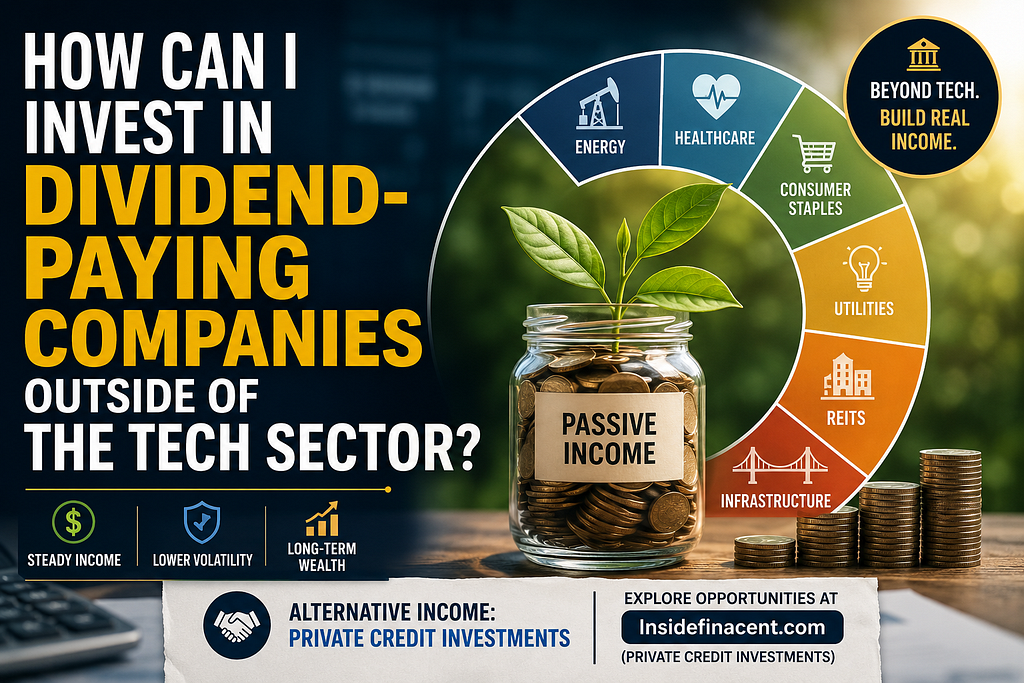
What happens when the world’s most crowded trade stops working?
For years, tech stocks dominated portfolios, headlines, and investor attention. Mega-cap AI companies delivered explosive gains, venture-backed startups flooded the market, and “growth at all costs” became the investing mantra of an entire generation.
But in 2026, many investors are asking a different question:
Where can I find stable income, lower volatility, and real cash flow outside of tech?
The answer is becoming increasingly clear:
Dividend-paying companies outside the technology sector are making a major comeback.
From energy giants and infrastructure firms to healthcare leaders and consumer staple companies, income-focused investing is once again attracting serious capital — especially from investors seeking stability in an uncertain macro environment.
And beyond public stocks, a growing number of sophisticated investors are also turning toward private credit investments through platforms like Insidefinacent.com to generate yield outside of traditional equity markets.
This article breaks down:
- The best dividend-paying sectors outside tech
- How to build a diversified income portfolio
- Risks to avoid when chasing yield
- Why private credit is emerging as a powerful alternative
- How investors can position themselves for long-term passive income and wealth preservation
If you’re looking for reliable dividend income without relying entirely on volatile tech stocks, this guide is for you.
Why Investors Are Moving Beyond Tech Stocks
Technology stocks have delivered incredible returns over the last decade.
But there’s a growing problem:
Many portfolios are now dangerously concentrated. A huge percentage of retail and institutional capital sits inside the same handful of companies:
- AI leaders
- Semiconductor firms
- Cloud computing giants
- Mega-cap growth stocks
That concentration creates risk. When interest rates rise, valuations compress, or growth slows, tech-heavy portfolios can experience dramatic volatility.
Dividend-paying sectors, by contrast, often provide:
- More predictable cash flow
- Lower volatility
- Stronger downside resilience
- Consistent shareholder returns
For many investors, this isn’t about abandoning growth. It’s about balancing growth with income and stability.
What Are Dividend-Paying Companies?
Dividend-paying companies distribute a portion of their profits back to shareholders on a regular basis.
Most dividends are paid:
- Quarterly
- Monthly (in some cases)
- Occasionally annually
These companies are often mature businesses with:
- Stable cash flow
- Established market positions
- Lower speculative risk
Instead of reinvesting every dollar into expansion, they reward investors directly.
That income can:
- Generate passive cash flow
- Be reinvested for compounding
- Reduce dependence on stock price appreciation alone
Why Dividend Investing Matters in 2026
Dividend investing is becoming more attractive for several reasons:
1. Higher Interest Rate Environment
Cheap-money growth investing is no longer the only game in town.
Investors increasingly value:
- Cash flow
- Profitability
- Sustainable balance sheets
Dividend companies often outperform during periods of tighter monetary policy.
2. Market Volatility
Volatility pushes investors toward defensive assets.
Dividend-paying sectors historically offer:
- Lower beta exposure
- More stable earnings
- Better downside protection
3. Passive Income Demand
Many investors now prioritize:
- Financial independence
- Cash-flow generation
- Retirement income
Dividend portfolios align naturally with those goals.
Best Dividend-Paying Sectors Outside of Tech
Let’s explore the strongest non-tech sectors for dividend investors.
1. Energy Companies
Energy remains one of the most profitable dividend sectors globally.
Despite the rise of renewables, oil and gas companies continue generating enormous free cash flow.
Why Energy Pays Strong Dividends
Energy firms often benefit from:
- Commodity pricing power
- Massive cash generation
- Long-established infrastructure
Many major energy companies return significant capital through:
- Dividends
- Buybacks
- Special distributions
Benefits
- High dividend yields
- Inflation protection
- Strong cash generation
Risks
- Commodity volatility
- Regulatory pressure
- Geopolitical instability
Still, energy remains a cornerstone of many income-focused portfolios.
2. Consumer Staples
Consumer staples companies sell products people buy regardless of economic conditions:
- Food
- Household goods
- Hygiene products
- Beverages
These businesses tend to remain resilient during recessions.
Why Investors Like Them
- Stable demand
- Predictable earnings
- Consistent dividend growth
Consumer staples are often considered “defensive investments.” When markets panic, investors frequently rotate into these businesses for stability.
3. Healthcare and Pharmaceuticals
Healthcare is one of the strongest long-term dividend sectors available.
Demand for healthcare continues rising due to:
- Aging populations
- Medical innovation
- Chronic disease growth
Large pharmaceutical and healthcare firms often produce:
- Strong recurring revenue
- Defensive cash flow
- Reliable dividends
Why Healthcare Stands Out
- Recession-resistant demand
- Long-term demographic tailwinds
- Stable profitability
Healthcare combines growth potential with defensive characteristics — making it especially attractive during uncertain markets.
4. Utilities
Utilities are classic income investments.
These companies provide:
- Electricity
- Water
- Gas
- Infrastructure services
Because utility demand is relatively stable, these firms often generate predictable income streams.
Why Utility Stocks Are Popular
- Reliable dividends
- Lower volatility
- Defensive characteristics
Many retirees and conservative investors favor utilities for consistent cash flow.
5. Real Estate Investment Trusts (REITs)
REITs allow investors to gain exposure to income-producing real estate without directly owning property.
These companies typically invest in:
- Commercial real estate
- Warehouses
- Apartment complexes
- Data centers
- Healthcare properties
REITs are legally required in many jurisdictions to distribute a large portion of taxable income to shareholders.
That often results in attractive dividend yields.
Benefits
- Real estate exposure
- Inflation protection
- Passive income generation
Risks
- Interest rate sensitivity
- Property market cycles
6. Infrastructure Companies
Infrastructure investing is becoming increasingly important globally.
These businesses operate:
- Toll roads
- Airports
- Pipelines
- Telecom towers
- Transportation systems
Infrastructure assets often generate:
- Long-term contracts
- Predictable revenue
- Inflation-linked cash flow
This makes them attractive for dividend-focused investors seeking stability.
How to Evaluate Dividend Stocks Properly
Not all dividend stocks are good investments. A high yield alone can actually signal danger.
Here’s what smart investors analyze before investing:
1. Dividend Yield
Dividend yield measures annual dividend payments relative to stock price.
However:
- Extremely high yields can indicate distress
- Sustainable yields matter more than flashy numbers
2. Payout Ratio
The payout ratio shows how much profit is being distributed to shareholders.
Lower payout ratios often indicate:
- Stronger sustainability
- Greater flexibility during downturns
3. Cash Flow Strength
Dividends are funded by cash flow — not hype.
Look for:
- Stable operating cash flow
- Healthy balance sheets
- Strong free cash flow generation
4. Dividend Growth History
Companies with long histories of increasing dividends often demonstrate:
- Financial discipline
- Durable business models
- Shareholder-friendly management
5. Industry Position
Strong competitive advantages matter.
Look for companies with:
- Brand power
- Market leadership
- Pricing strength
The Hidden Risk of Chasing Yield
One of the biggest mistakes investors make is chasing extremely high dividend yields.
A 15% yield might look attractive…
…but sometimes it signals:
- Financial instability
- Unsustainable payouts
- Declining business performance
Remember:
A sustainable 4–6% yield can outperform a collapsing 15% yield over time. Quality matters more than headline yield.
Beyond Stocks: Why Private Credit Is Attracting Income Investors
Public dividend stocks aren’t the only option anymore.
One of the fastest-growing income strategies among sophisticated investors is private credit investing.
What Is Private Credit?
Private credit involves lending capital directly to businesses outside traditional banking systems.
Instead of buying public stocks, investors gain exposure to:
- Business lending
- Structured credit opportunities
- Alternative income-producing assets
These investments can potentially provide:
- Higher yields
- Diversification away from public markets
- More stable income streams
Why Investors Are Exploring Private Credit
Private credit has exploded in popularity because banks have tightened lending standards. That gap created opportunity.
Alternative lenders and private credit platforms stepped in to meet demand.
Key Benefits of Private Credit
1. Income Generation
Private credit strategies often focus heavily on yield.
2. Reduced Correlation to Public Markets
Private credit may behave differently than public equities during market volatility.
3. Diversification
Investors gain exposure beyond stocks and bonds.
4. Institutional Growth
Large institutions are rapidly increasing allocations to private credit markets.
Why Insidefinacent Is Relevant in This Conversation
As investors search for income-producing opportunities outside of volatile growth stocks, Insidefinacent.com is positioning itself within the growing alternative investment and private credit conversation.
The platform highlights:
- Private credit investment insights
- Alternative income opportunities
- Wealth-building strategies beyond traditional markets
For investors looking to diversify beyond public tech stocks, private credit exposure can complement dividend-focused strategies effectively.
Building a Diversified Dividend Portfolio Outside Tech
A smart income portfolio doesn’t rely on one sector. Diversification remains critical.
Here’s an example framework:
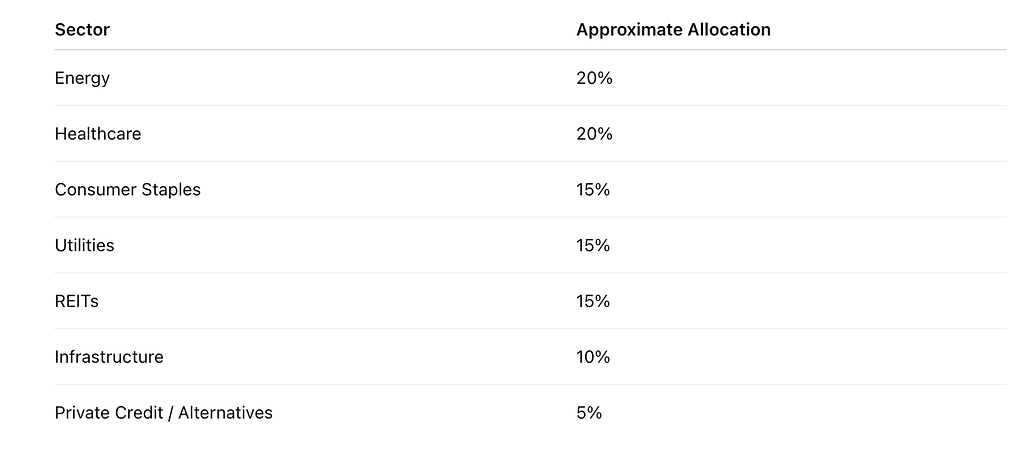
This type of structure balances:
- Income generation
- Defensive exposure
- Inflation protection
- Long-term stability
Dividend Reinvestment: The Compounding Machine
One of the most powerful wealth-building strategies is dividend reinvestment.
Instead of spending dividends:
- Reinvest them automatically
- Purchase additional shares
- Compound returns over time
This creates a snowball effect.
Long-term compounding can dramatically increase portfolio value — even during volatile markets.
Common Mistakes Dividend Investors Make
Avoid these costly errors:
1. Ignoring Balance Sheets
A dividend is only as strong as the company behind it.
2. Overconcentration
Don’t rely entirely on one sector like:
- Energy
- REITs
- Utilities
Diversification matters.
3. Chasing Yield Blindly
High yield does not equal safety.
4. Ignoring Inflation
Some dividend companies fail to grow payouts over time. That can erode real purchasing power.
The Future of Dividend Investing
Dividend investing is evolving.
The next wave of income investing may include:
- Tokenized dividend assets
- Private credit platforms
- AI-driven portfolio optimization
- Infrastructure-backed digital assets
- Global income diversification
Investors are increasingly blending:
- Traditional dividend stocks
- Alternative yield strategies
- Real-world assets
The result is a more diversified approach to passive income generation.
Final Thoughts: Income Investing Is Making a Comeback
For years, tech dominated the investment conversation. But markets evolve.
Today, many investors are rediscovering the power of:
- Cash flow
- Stability
- Dividend income
- Alternative yield strategies
Whether through:
- Energy companies
- Healthcare leaders
- REITs
- Infrastructure firms
- Or private credit platforms
…the search for reliable income outside tech is accelerating.
And for investors focused on:
- Wealth preservation
- Passive income
- Long-term financial resilience
that shift could become one of the most important portfolio trends of the decade.
Leave some claps for this resourceful guide and follow for more insights on passive income strategies, alternative investments and wealth-building trends shaping the future of finance.
How Can I Invest in Dividend-paying Companies Outside of The Tech Sector? was originally published in Coinmonks on Medium, where people are continuing the conversation by highlighting and responding to this story.