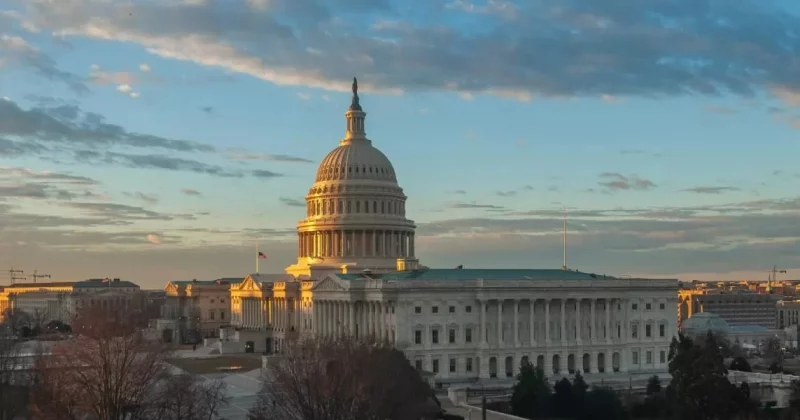
House of Representatives passes resolution limiting Trump’s war powers against Iran
Four Republicans crossed party lines to join Democrats in a 215-208 vote demanding congressional authorization for continued military action.
Share
Add us on Google by Editorial Team Jun. 5, 2026The US House of Representatives voted on June 3, 2026, to curtail President Trump’s authority to wage war against Iran without explicit congressional sign-off. The final tally was 215-208, a razor-thin margin that required four Republican defectors to push the resolution over the finish line.
The measure invokes constitutional war powers provisions that demand the president obtain authorization from Congress before continuing military hostilities.
The vote and the defectors
The four Republicans who broke ranks tell an interesting story about the ideological fault lines within the party. Brian Fitzpatrick of Pennsylvania, Thomas Massie of Kentucky, Tom Barrett of Michigan, and Warren Davidson of Ohio all voted with every single Democrat in the chamber.
AdvertisementMassie and Davidson are well-known libertarian-leaning members who have historically been skeptical of executive overreach on military matters. Fitzpatrick has long positioned himself as one of the most moderate Republicans in the House.
Three months of conflict and a symbolic ceiling
The US-Iran conflict has been underway for roughly three months as of early June 2026. The House resolution is the most significant congressional pushback against the military engagement to date, but it is largely symbolic.
The resolution needs Senate approval to carry any real weight. The White House has shown no indication it intends to seek formal congressional authorization, and Senate Republican leadership has generally deferred to the executive branch on matters of military engagement.
The resolution doesn’t mandate an immediate halt to military operations. It marks the first successful legislative effort in the House aimed at curbing presidential military powers related to Iran since the conflict began in March 2026.
What this means for markets
The resolution contains nothing related to digital assets, and the congressional debate has been firmly focused on constitutional authority rather than economic policy.
Prolonged military conflicts tend to strain government budgets, influence energy prices, and shift investor sentiment. Iran’s role in global oil supply means that any intensification of hostilities could send energy prices higher, which feeds into inflation expectations, which feeds into interest rate policy.
Disclosure: This article was edited by Editorial Team. For more information on how we create and review content, see our Editorial Policy.