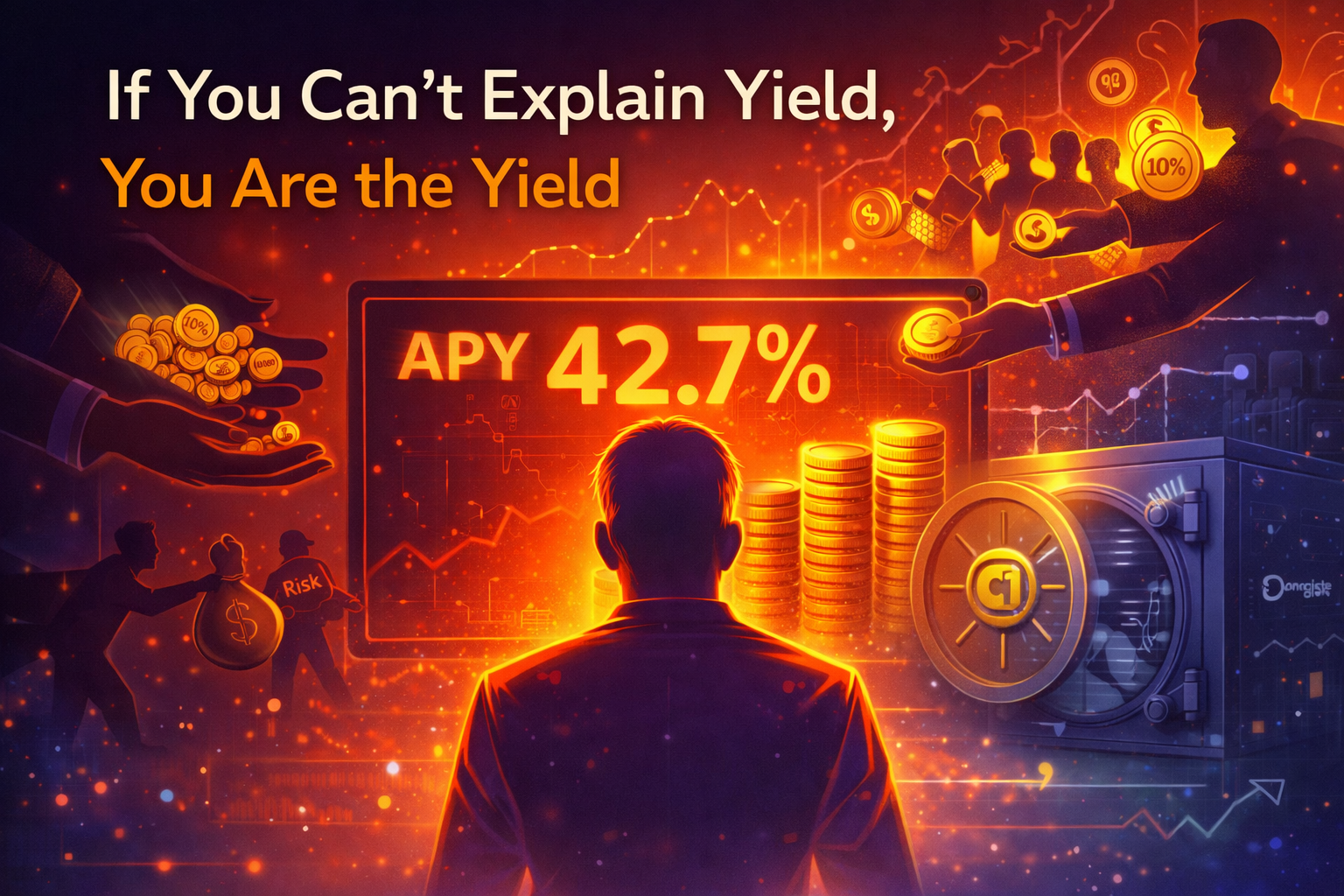
High APY, Low Understanding
 Kayleen3 min read·Just now
--
In DeFi, the easiest numbers to see are often the hardest to truly understand.
There’s a pattern that shows up again and again in DeFi. You open an app, scan a few pools, and your attention immediately locks onto one thing: The highest APY on the screen.
It’s almost automatic. You don’t start by asking how it works. Or what risks are involved. Or where the return is coming from. You start with the number, and in a way, that’s exactly how the system is designed.
The Attraction of a Single Number
APY is powerful because it simplifies everything. It compresses complexity into something easy to compare. One number, side by side with another. 18% vs 32% vs 67%, no context needed — at least, that’s how it feels.
But the moment something complex gets reduced to a single metric, there’s always a trade-off. You gain clarity, you lose depth.
What That Number Doesn’t Tell You
Most APYs in DeFi are not wrong, they’re just incomplete. They often represent a projected or gross return — before accounting for the things that actually shape your outcome. Things like:
- Market volatility shifting your exposure
- Impermanent loss in liquidity positions
- Fees from entering, exiting, and rebalancing
- Slippage during execution
- Changing conditions that affect yield over time
None of this is hidden, but it’s also not emphasized. So you end up making decisions based on a clean number that was never meant to tell the full story.
Yield Is Always Coming From Somewhere
At some point, you have to ask a simple question: Who is paying for this?Because yield doesn’t exist in isolation, it comes from activity within the system:
- Traders generating fees
- Borrowers paying interest
- Liquidations redistributing value
- Arbitrage balancing inefficiencies
- Protocols emitting incentives to attract liquidity
Some of these are durable, others are temporary. And some depend entirely on continued participation — meaning the system works as long as people keep entering it.
The Cost You Don’t Notice at First
Here’s where things become less obvious. You might still be earning yield. But you’re also taking on hidden trade-offs. You provide liquidity, but take on price risk. You earn incentives, but face dilution. You enter a strategy, but don’t fully see how it behaves in downside scenarios.
And because everything is packaged into a single APY, those trade-offs don’t feel immediate, until they are.
Why Understanding Changes Outcomes
Two people can interact with the same protocol and walk away with very different results. One follows the highest number, the other tries to understand the structure behind it. They think about:
- Sustainability of the yield
- Sources of return
- Potential risks and costs
- How the position evolves over time
That difference might seem small at first. But over time, it compounds in ways that are hard to ignore.
A Different Way to Think About Yield
There’s a shift happening — slow, but noticeable. People are starting to move away from simply chasing the highest APY available. Instead, they’re asking better questions:
- What is driving this return?
- How stable is it?
- What happens if conditions change?
This is the beginning of a more deliberate approach. Not just participating in DeFi — but actually understanding it.
From Reaction to Intention
Understanding yield is one thing, managing it consistently is another. Most users don’t have the time — or the tools — to constantly monitor, rebalance, and optimize their positions. And that’s where structured systems begin to matter. Concrete Vaults are built to handle this layer:
- Allocating capital across multiple strategies
- Adjusting positions as markets evolve
- Rebalancing automatically over time
- Minimizing inefficiencies that quietly reduce returns
The goal isn’t just convenience, it’s to make outcomes more aligned with expectations. Explore Concrete at app.concrete.xyz
The Real Difference
At the end of the day, the gap in DeFi isn’t access. It’s understanding. Everyone can see the same APY. Not everyone understands what it represents.
And that difference — subtle as it seems — is what separates those who chase yield from those who actually keep it. Because in the end, high APY doesn’t guarantee high returns, but understanding does something close. more explore Concrete at app.concrete.xyz