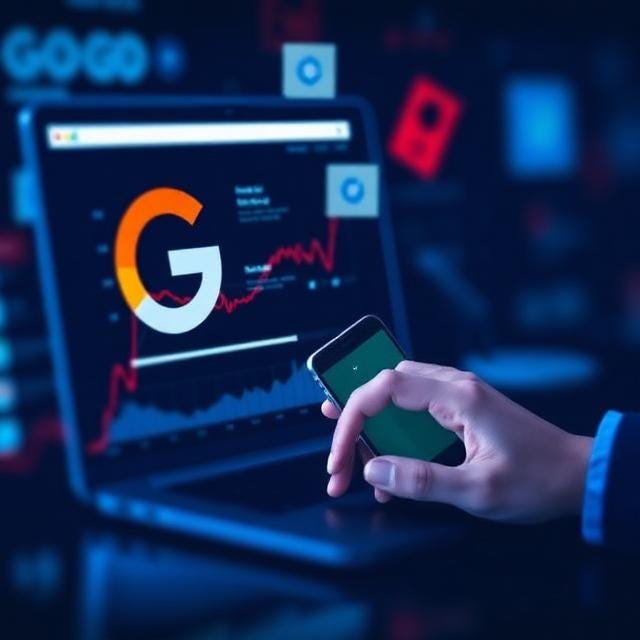
Google Is No Longer Enough
How to Drive Traffic from the Search Engines Your Competitors Are Ignoring
 Creative Minds5 min read·1 hour ago
--
For the last decade, the digital marketing playbook was simple: write good content, build some backlinks, and pray to the Google algorithm.
It worked. For a while.
But if you’ve noticed your organic traffic plateauing — or worse, plummeting after a core update — you aren’t imagining it. The landscape has shifted. Relying solely on Google is no longer a strategy; it’s a risk. It’s like building your entire business on rented land where the landlord can change the locks overnight.
But here is the good news: The monopoly is breaking.
We are entering a new era of search. Users are increasingly turning to AI answer engines, privacy-focused platforms, and visual discovery tools to find information. These emerging channels are less saturated, faster to index, and often drive higher-quality traffic than traditional search.
If you want to future-proof your traffic in 2026, you need to stop optimizing for just one engine and start mastering the ecosystem. Here is how to unlock high-quality visitors from both traditional and emerging search platforms.
The Problem with “Google-Only” Thinking
The primary issue with relying exclusively on Google is volatility. One algorithm update can wipe out years of work. But there is a second, subtler problem: saturation.
The most valuable keywords are fiercely contested. Breaking into the top ten results for competitive terms requires immense authority and time. Meanwhile, newer and alternative search engines operate differently. They have smaller indexes, meaning less competition. They prioritize different signals — like recency, user engagement, or community validation — rather than just historical domain authority.
This creates a “blue ocean” opportunity. By diversifying your traffic sources, you insulate yourself from volatility and tap into audiences that are actively seeking alternatives to the status quo.
The New Big Players: Beyond the Blue Links
To master traffic today, you need to understand the four pillars of the modern search ecosystem:
1. The AI Answer Engines (Perplexity, You.com)
Platforms like Perplexity AI don’t just give you links; they give you answers. They synthesize information from multiple sources and cite them. For creators, this shifts the goal from “winning the click” to “winning the citation.”
If your content is authoritative, well-structured, and factual, these AI engines will cite you as a source. This drives highly targeted traffic because users who read the citation are often motivated to click through to verify the information or learn more.
2. The Privacy-First Alternatives (Brave Search, DuckDuckGo)
A growing segment of users is concerned about data privacy. Engines like Brave Search (which uses its own independent index) cater to this audience. Because Brave’s index is smaller and fresher than Google’s, new, high-quality content can rank much faster. There is no “sandbox” effect holding you back.
3. The Underrated Giant (Bing & Microsoft Start)
Bing powers not only its own search but also Yahoo, DuckDuckGo (partially), and Microsoft’s Copilot. Bing users tend to be older, more affluent, and have higher conversion rates for B2B and high-ticket items. Plus, with less competition, it’s easier to rank.
4. Visual & Vertical Search (Pinterest, YouTube)
Pinterest is not social media; it’s a visual search engine with over 450 million users planning their next purchase. YouTube is the second-largest search engine in the world. Ignoring these platforms means ignoring billions of searches every month.
How to Get Indexed in Hours, Not Weeks
The biggest advantage of emerging search engines is speed. On Google, new sites can take months to gain traction. On platforms like Bing and Brave, you can be visible in days — if you know how to push your content.
Use IndexNow
Stop waiting for bots to find you. IndexNow is an open protocol co-developed by Microsoft and Yandex that allows you to instantly notify search engines when your content is published or updated.
By implementing IndexNow, you ping Bing, Yandex, and other supported engines immediately. This ensures your content is crawled and indexed within minutes. It is arguably the most impactful technical SEO upgrade you can make right now.
Optimize for “Citation,” Not Just Clicks
For AI engines like Perplexity, structure is king. These models parse content to extract facts. To get cited:
- Answer directly: Start your articles with clear, concise answers.
- Use structured data: Implement Schema markup (FAQ, Article, Product) to help machines understand your content.
- Provide data: AI loves statistics, tables, and lists. Make your content easy to parse.
The Strategy: Diversify to Survive
You don’t need to abandon Google. You need to augment it. A resilient traffic strategy looks like this:
- Foundation: Optimize your site for Core Web Vitals and Schema so it’s ready for any engine.
- Submission: Use IndexNow and webmaster tools to submit your sitemap to Bing, Brave, and Yandex.
- Expansion: Repurpose your best content for Pinterest and YouTube to capture visual search traffic.
- Authority: Build brand presence so AI engines recognize you as a trusted entity.
Mastering the Multi-Engine Landscape
Shifting from a single-engine mindset to a multi-engine strategy can feel overwhelming. Where do you start? How do you track performance across five different platforms? How do you optimize for AI citations without losing your human voice?
I’ve spent the last year testing these strategies, analyzing data from emerging engines, and refining a system that drives consistent, high-quality traffic regardless of algorithm changes.
I’ve compiled everything — including step-by-step submission guides, technical checklists, and content frameworks for AI engines — into a comprehensive guide: Traffic Mastery: How to Get High-Quality Visitors from Emerging and Traditional Search Engines.
This isn’t just theory. It’s a practical playbook for 2026, designed to help you:
- Get indexed in hours using the latest APIs.
- Capture traffic from Perplexity, Brave, and Bing.
- Future-proof your site against AI overviews.
- Build a traffic engine that you own, not rent.
The Bottom Line
The internet is bigger than Google. The tools are faster. The competition is distracted.
By mastering the latest search engines and submission protocols, you can achieve in months what used to take years. Don’t let your business depend on a single gatekeeper. Diversify your sources, accelerate your visibility, and take control of your growth.
The future of search is here. Are you ready for it?
If you found this article helpful, consider checking out Traffic Mastery for the complete deep dive into multi-engine traffic strategies.