gmcrete 🧱
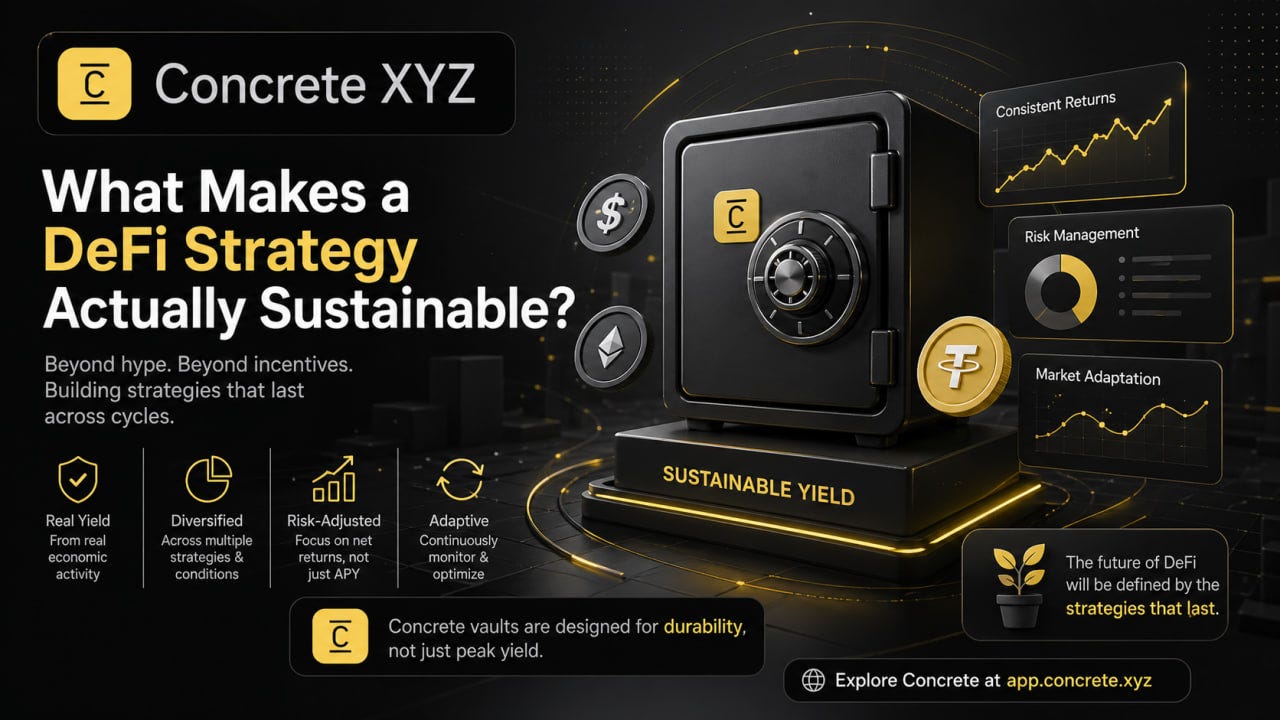
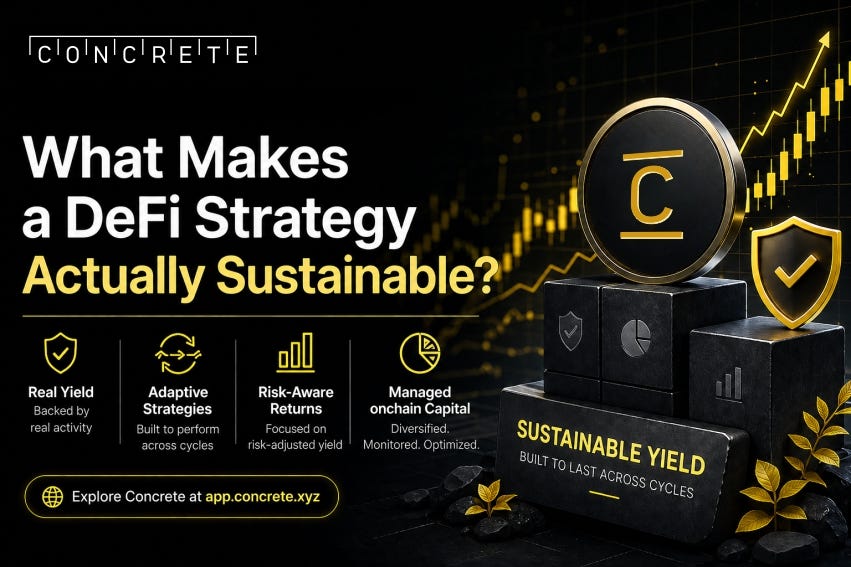
What Makes a DeFi Strategy Actually Sustainable?
 Almeraxbt3 min read·Just now
--
DeFi is full of yield
Every week, new strategies appear, APYs spike. Capital floods in
And then… it fades,
Yields drop. Liquidity rotates, Opportunities disappear
We’ve all seen this cycle,
So the real question isn’t:
“What has the highest yield?”
It’s:
“What actually lasts?”
1. The Pattern We Keep Ignoring
In DeFi, the cycle is predictable:
• New protocol launches
• High APY attracts capital
• Liquidity increases
• Returns compress
• Capital moves on
This isn’t random, It’s structural.
Most strategies are designed to attract capital not to sustain it.
2. What Does “Sustainable” Really Mean?
A sustainable DeFi strategy isn’t defined by peak performance,
It’s defined by durability.
A truly sustainable strategy should:
• generate consistent returns over time
• not rely entirely on token incentives
• remain viable across market conditions
This is about risk-adjusted yield, not headline APY.
3. Real Yield vs Temporary Yield
Not all yield is created equal
There are two main types:
Temporary yield
• driven by emissions or incentives
• declines as rewards reduce
• attracts short-term capital
Real yield
• generated from trading fees
• lending demand
• arbitrage & liquidations
• actual economic activity
Temporary yield creates spikes, Real yield creates stability.
4. Liquidity & Market Conditions Matter
A strategy doesn’t exist in isolation
Its sustainability depends on:
• liquidity depth
• user activity
• market volatility
• demand for the strategy
Some strategies only work in bull markets, Others adapt across cycles, That’s the difference.
5. The Hidden Layer: Risk & Cost
Most dashboards show returns, Few show reality
True performance must include:
• execution costs
• slippage
• rebalancing
• changing correlations
A strategy that looks strong on paper
can degrade significantly over time
This is where many users lose edge.
6. From Yield Chasing → Strategy Design
DeFi is evolving
From chasing numbers, to designing systems
Sustainable strategies focus on:
• diversification across positions
• continuous monitoring
• adapting to market changes
• optimizing for net returns
This is where DeFi starts to resemble institutional finance.
7. The Role of Concrete Vaults
This is where structured infrastructure matters
Concrete vaults are designed to:
• prioritize sustainable yield sources
• manage capital dynamically
• adapt to changing conditions
• reduce reliance on incentives
It’s not about finding the highest APY, It’s about building durable strategies.
8. A Real Example: Concrete DeFi USDT
Take Concrete DeFi USDT, It offers ~8.5% stable yield, At first glance, it may not look “exciting.”
But over time?
Consistency wins
Stable, risk-adjusted yield
often outperforms volatile spikes, This is what attracts long-term capital.
9. The Bigger Shift
DeFi is maturing
From:
yield chasing → capital management
short-term gains → long-term strategies
The future belongs to:
• sustainable yield
• managed DeFi
• structured vault systems
• institutional grade infrastructure
Because in the end:
The highest APY doesn’t win, The strategy that lasts… does.
Explore Concrete at: app.concrete.xyz 🧱