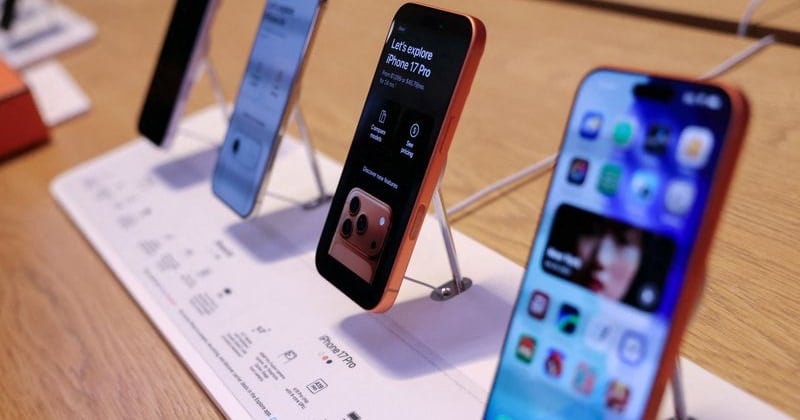
Global smartphone market faces record 14% decline amid chip shortage
Memory chip shortages driven by AI demand are pushing smartphone shipments to their lowest level since 2013, while average prices climb to record highs.
Share
Add us on Google by Editorial Team Jun. 1, 2026The global smartphone market is heading for its worst year in over a decade. Shipments are forecast to fall 13.9% year-over-year in 2026, landing somewhere between 1.08 and 1.09 billion units, according to Counterpoint Research.
That would make it the largest annual contraction the smartphone industry has ever recorded. To put the volume in perspective, you’d have to rewind to 2013 to find shipment numbers this low.
The AI-shaped hole in your phone’s supply chain
This isn’t your standard cyclical downturn. The culprit is a severe shortage of memory chips, specifically DRAM and NAND, the components that let your phone store photos and run apps without crawling.
The shortage exists because manufacturers have been reallocating production capacity toward high-bandwidth memory (HBM) chips. The same factories that used to make memory for smartphones are now making memory for AI servers, because that’s where the money is. Nvidia’s appetite for HBM chips has effectively cannibalized supply for consumer devices.
AdvertisementThe conflict between the US and Iran has compounded the problem, driving up component costs across the supply chain. Rising wholesale prices, already up 14% in Q1 2026, are getting passed directly to consumers.
The average selling price of a smartphone is expected to hit a record $550 in 2026. That’s roughly $100 more than last year. Manufacturers are phasing out lower-end models entirely because the math doesn’t work when components cost this much.
Winners, losers, and the great consolidation
Not every company is feeling the squeeze equally. Apple and Samsung, with their massive purchasing power and long-standing supplier relationships, are holding up better than the rest of the pack. Apple briefly claimed the top spot in global market share during Q1 2026, a quarter that saw overall shipments decline between 2.9% and 6% year-over-year.
Smaller Android manufacturers are in rougher shape. Brands like Transsion and Xiaomi, which built their businesses on affordable devices in emerging markets, are experiencing sharper volume declines.
What this means for investors
Analysts expect a further decline of approximately 1% in 2027 before supply chains potentially normalize enough for a rebound in 2028.
Memory chip manufacturers, on the other hand, are sitting in an interesting position. The shortage is painful for phone makers, but it reflects booming demand from the AI sector. Companies like Samsung, SK Hynix, and Micron are prioritizing HBM production because it’s far more profitable per wafer than standard mobile memory.
Unlike the pandemic-era shortages that hit the industry a few years ago, this downturn isn’t caused by temporary factory shutdowns or shipping bottlenecks. It’s rooted in a fundamental reallocation of semiconductor manufacturing capacity toward AI.
Disclosure: This article was edited by Editorial Team. For more information on how we create and review content, see our Editorial Policy.