The ability of one man founders to start a small SaaS and not spend months developing the wrong thing.
A majority of those who attempt to build a Micro SaaS fail in their attempt because they do not consider themselves lazy.
They are ineffective, as they become excessive, too soon, and to individuals who did not even order them.
That is inhuman, and ironically liberating. As a small software product that is being invented by one founder, a freelancer, a marketer or creator, it is not to look virtue that you are actually doing something. Your job is to get useful fast. There is a big difference.
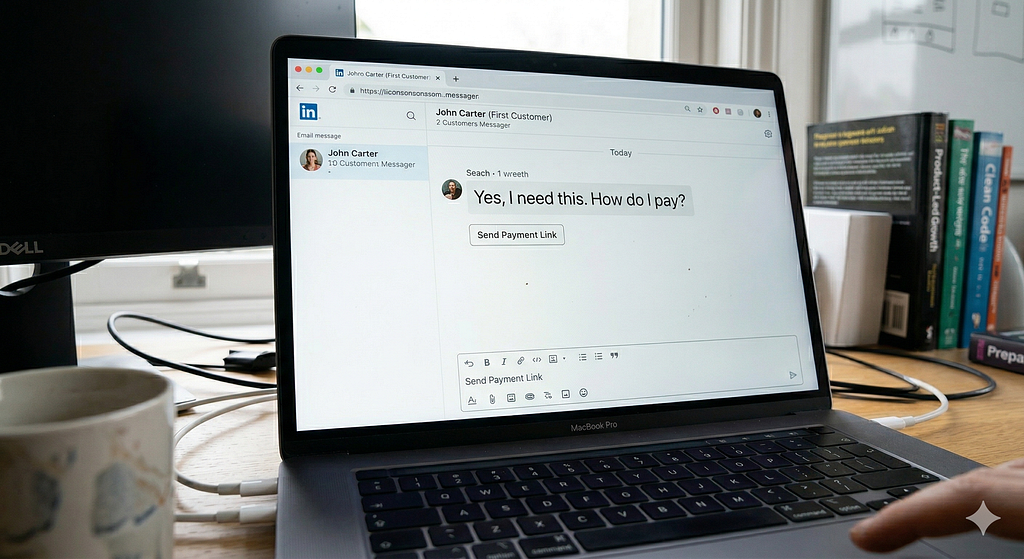
It seems to me that the wish to have the story of the launch and not the launch is that of the majority of the first time founders. They desire the advanced post, the crafted landing page, the logo, the viral post, and the experience of being a founder. Instead, what they really require is somebody to say when this is Yes, I need this. How do I pay?”
Everything is different with the twist of the point of view.
The most important is the one of starting up a startup in which you are supposed to develop a tool
The outrageous claim that comes after this is the next one: the finest of successful Micro SaaS products are not launched as companies. They begin as annoyances.
A repetitive task. A messy workflow. A report, no one would be willing to make manually. It is among the rare issues that clients continue to complain. A practice, which is effective and which seems more painful than it ought to be.
And there is the good stuff.
It is the hyperbole of the internet entrepreneurship. You are following circular notes, growth charts, artificial intelligence displays, huge product rollouts. Still, even some of the most lucrative mini software items have a most shameful basis:
- It is among the repurposing tools of niching content.
- A specific team dashboard.
- An agency lead qualifier.
- One of the automations is a client portal.
- The neural network is used to eliminate five irritating processes.
That is not boring. That is focused.
It is not always the most brilliant idea to have whatever comes as your first customer. It is an unpleasant small place of a very small extent.
It is even more so when you are alone. You do not have a six month time to develop a platform. You must have a traction, response and evidence. The original one must be nearly small.
The features are the starting point of most people but the customers begin with pain
When beginners declare that they are going to create a SaaS, they actually intend to create a software idea.
Having a market is not identical with having a market.
Most of the projects just cannot make it out of the gap between the two things.
Some of the individual founders begin with the question, What should I build?
What can be more apt as a question is, What already are people trying to make ugly?
That is where you find demand.
Look for signs like these:
- Human beings working on the spread sheets on something evidently broken.
- Every client is a single and the same manual action of freelancer.
- The sewing teams that sew five items to perform one task.
- People who receive frequent demands in the society.
- Companies paying huge amounts of money on the over priced software when they can only afford to use a single feature.
Innovation will not be desired by my first customer. They want relief.
This is why I would prefer to say painkiller rather than vitamin despite the fact that it is being overused. Your product is just a nice to have and therefore the delay of purchasing your product is delayed by the people. It is much easier to save time, bring leads or reduce errors or make money, and make a buying decision.
The following may come in handy: would you be capable of telling in one sentence, what your product is worth, but not cleverly?
For example:
- Composes lengthy posts as LinkedIn posts which can be shared by B2B founders.
- Answer is an AI business which allows real estate agents to train on their listings and guides them to the answer.
- In less than five minutes, small agencies are reported on brands.
That is clear. Clear sells.
How to obtain an idea without necessarily having to wait to get inspired
You do not need a magical idea. You need a pattern.
Some of the best Micro SaaS ideas can be acquired in some of the four locations.
1. Work you already do
Freelancing, consulting, doing marketing, running things or making content You are on all day in case you are freelancing, consulting, doing marketing, running things or making content.
Note down things that are ordinary, irritating and happen too frequently so that other people can also encounter them.
You see you are two in doing one of them yourself. You know what is painful, and you can experiment the product on the real life.

2. Services which are translable to software
It is among the clever approaches of lone founders.
You are not making people believe in the new product but you repair the issue manually as a service. Then you ask yourself what can be computerized, programmed or standardized.
That is, you are not prophesying. You are taking out product out of the current demand.
Many of the SaaS products which have initially appeared as agencies with too much repetitive work.
3. Communities of questions tediousness
The hints to the products in Reddit, the niche Facebook groups, Slack groups, Discord groups, indie hacker groups, and comment sections.
Do not merely go out and find people interested in knowing about your proposed tool. Detect individuals and complain.
Compliments are not as good in proving of an idea as complaints.
4. The new problems are the metamorphosis of the insolvable problems in the past
This is where the interest starts at this point.
Many of the minor software concepts that used to be painfully expensive to develop several years ago have been made by AI. The potential to make tiny tool of summarizing, classifying, tagging, drafting, filtering or researching or transforming contents tools conveniently is now possible.
But the trap is obvious. Humans come up with AI applications rather than resolving real life problems.
Nobody wakes up wanting AI.
They desire quicker content creation, smogger CRM notes, superior leads follow up, less research or administration. The application of AI can also be made in the event that it improves the results, speeds up, or reduces cost.
The launch strategy that I would prefer most: sell before you finish
This is where most of the founders will not take pleasure in as it is not a comfortable part.
One can think about trying to achieve the validation until he or she feels that the product is complete.
Not fake validation. Not likes. Not “cool idea.” Real validation.
That can look like:
- Simple page with a wait list.
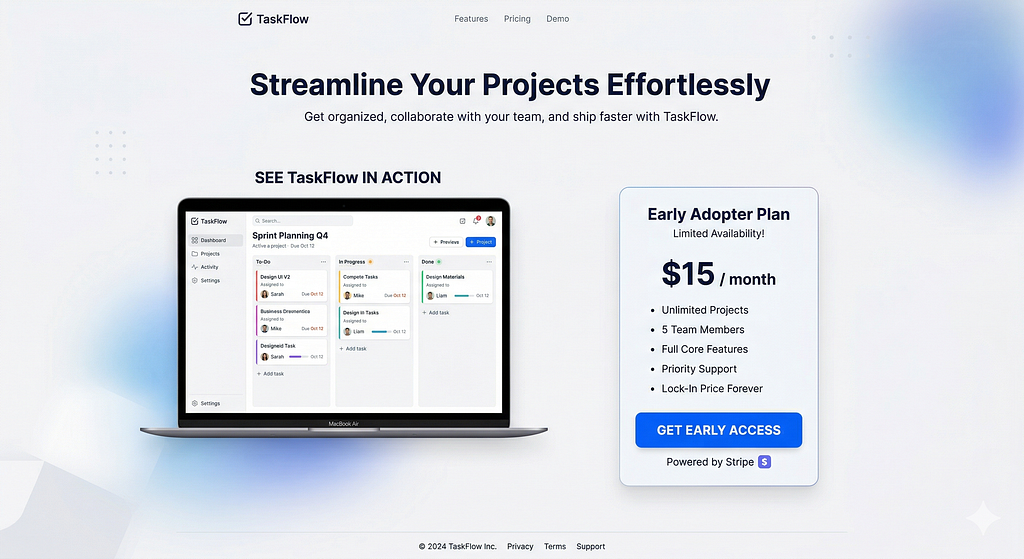
- A stripe payment button that is an early access stripe payment.
- A short demo video.
- The manual concierge type of product.
- Send cold email to individuals having the target issue.
- It is not just made available in a single post.
You are not ever trying to cheat, guys. You are attempting to literally establish the reality of the pain in such a way that someone will be interested of what you will do to take off into a build cycle.
This is noteworthy since construction is enticing. Selling is clarifying.
The market is that, which knows about things, and your product plan will never know anything about it.
It informs you of the simplicity of your promise. Yes or no: do you have too broad a niche? The wrongness of your set of features. The logic of your pricing. It can be questioned whether people are so concerned to the extent of acting.
I have collaborated with individual artists who have been negotiating logos and price lists over the course of weeks and have not even spoken to ten potential clients. That is backward.
Talk early. Show ugly prototypes. Suggest to recruit manually. Get money and then it will turn you into a comfort person.
Authentic audience is superior to free audience that is stinking with appreciative indifference.
What your initial writing actually deserves to get
What you want should not be found in your first draft.
It must be the most unrealistic change.
It implies that there is a problem that comes in and an outcome that is guaranteed. Not ten features. One result.
A Micro SaaS MVP is usually adequate and may include:
One clear use case
Do to either of the two kinds of users one thing.
One obvious result
Save time. Generate leads. Reduce errors. Create content faster. Organize data better.
One fast onboarding path
Nobody wants homework. It must be reasonable about the product some few minutes later.
One way to get paid
There has to be a method of testing the intention to purchase even in its crude form.
One feedback loop
Email responses, call center, chat, form responses, use activity. It is possible to notice where stagnation of the users takes place.
That is enough to start.
What should wait?
- Fancy dashboards
- Team features
- Deep customization
- Multiple pricing tiers
- Complicated branding
- Edge case workflows
These products bear fruits but are likely to postpone the learning.
I would prefer calling the former a form of inquiry and not a monument.
The initial customer is the commencement of the actual job
The first buyer is a very thrilling and risky channel.
Why? It is due to the fact that you can begin overreacting on one person.
The ambition towards which you have reached after the first income is not to transform into a custom software shop of your initial customers. This is to keep track of trends.
What is that the users love at first sight?
Where do they get confused?
What is it that they say about the value?
What nearly made them not buy?
Such kind of responses is better as compared to most of the startup advice.
This is also the phase when the issue of distribution would begin to score higher than perfection of the product.
A small product of software that is not well distributed will not grow.
Most probably, it is the best distribution in the case of solo founders, during the initial phases of development: Simple and direct distribution.
- Useful construct lessons are to be given in common.
- Report list results, and not features.
- Niche Interview contacts that you are familiar with.
- Turn contents of pare transforms into briefs.
- Exploit your network of service, audience or client base.
- Intros and testimonials will be provided by first users.
You do not need to “go viral.” You would want to have an ordinary method of meeting the following ten relevant individuals.
That is a much saner goal.
Learn a lot, do little tests, nothing to be ashamed of being realistic
One of the pieces of advice that I would offer to a founder who chooses to create a Micro SaaS solo is to cease the attempt to appear like a startup.
Act like a problem solver.
That is to mean that it is a selection of a limited audience. Solving one painful issue. Charging early. Keeping scope tight. Listening closely. Improving only what matters.
Nothing is glamorous in that approach and that is why so effective.
The positive thing is that you do not need to have a massive team, massive audience and a radical idea to start with. You must be so close to a real problem, and you must know how to hold yourself in and not squander your time out on how to solve it.
Half baked products are being flooded into the internet that had been unreasonably incredible and commercially irrational.
Do not build one of those.
Create the simple object, which one uses twice a week. Then make it a little better. Then sell it to the other that had this problem.
Such is how a real Micro SaaS begins.
Not with a grand vision.
A paying customer who is interested and a convenient patch and does not want to make things big until it comes to pass.
Conclusion
The article keeps returning to one practical truth: do not build too much, too early, for people who do not urgently need it.
Start smaller.
Listen harder.
Sell earlier.
A solo founder does not win by looking bigger. A solo founder wins by being useful faster.
Read the previous articles.
Your Business — On AutoPilot with DDImedia AI Assistant
(Join Our Waitlist)
Visit us at DataDrivenInvestor.com
Join our creator ecosystem here.
DDI Official Telegram Channel: https://t.me/+tafUp6ecEys4YjQ1
Follow us on LinkedIn, Twitter, YouTube, and Facebook.
From Idea to First Customer: A Solo Founder’s Guide to Launching a Micro SaaS was originally published in DataDrivenInvestor on Medium, where people are continuing the conversation by highlighting and responding to this story.