From Clicking Buttons to Managing Systems
--
There was a time when DeFi felt simple.
You connected a wallet.
You clicked “deposit.”
You earned yield.
That was it.
No complexity. No strategy. No real need to think deeply.
But that version of DeFi doesn’t exist anymore.
The Evolution No One Talks About
What changed isn’t just the tools.
It’s the underlying systems.
Early DeFi was:
- isolated
- straightforward
- easy to reason about
Modern DeFi is:
- composable
- interconnected
- deeply layered
A single position today might involve:
- multiple protocols
- several layers of liquidity
- dynamic rebalancing logic
- cross-market dependencies
But here’s the catch:
The interface still looks simple.
The Dangerous Gap Between UX and Reality
DeFi has improved its UX dramatically.
But the system underneath has become more complex.
This creates a gap:
Simple interface, complex reality.
And that gap is where most users make mistakes.
Because when something looks simple, you treat it as simple.
You:
- skip analysis
- ignore dependencies
- underestimate risk
What You’re Actually Doing (Without Realizing It)
When you “just deposit,” you are often:
- providing liquidity to traders
- taking on price exposure
- participating in arbitrage dynamics
- relying on protocol incentives
- entering a strategy you didn’t design
You are not just clicking a button.
You are entering a system.
The Shift From Actions to Systems Thinking
This is the key transition happening in DeFi right now:
From:
- action-based thinking (“I deposited”)
To:
- system-based thinking (“What system am I entering?”)
This shift changes how you evaluate everything:
- risk
- return
- timing
- sustainability
Why Most Users Struggle Here
Because systems thinking requires:
- mental models
- understanding of flows
- awareness of dependencies
And most DeFi interfaces don’t teach that.
They optimize for:
- speed
- simplicity
- conversion
Not comprehension.
The Cost of Not Adapting
If you continue treating DeFi as:
a set of buttons to click
Instead of:
a system to understand
Then your outcomes will depend on luck.
And in DeFi, luck is inconsistent.
The Role of Structured Infrastructure
This is exactly why structured systems are emerging.
Because not every user can:
- model strategies
- monitor markets
- optimize execution
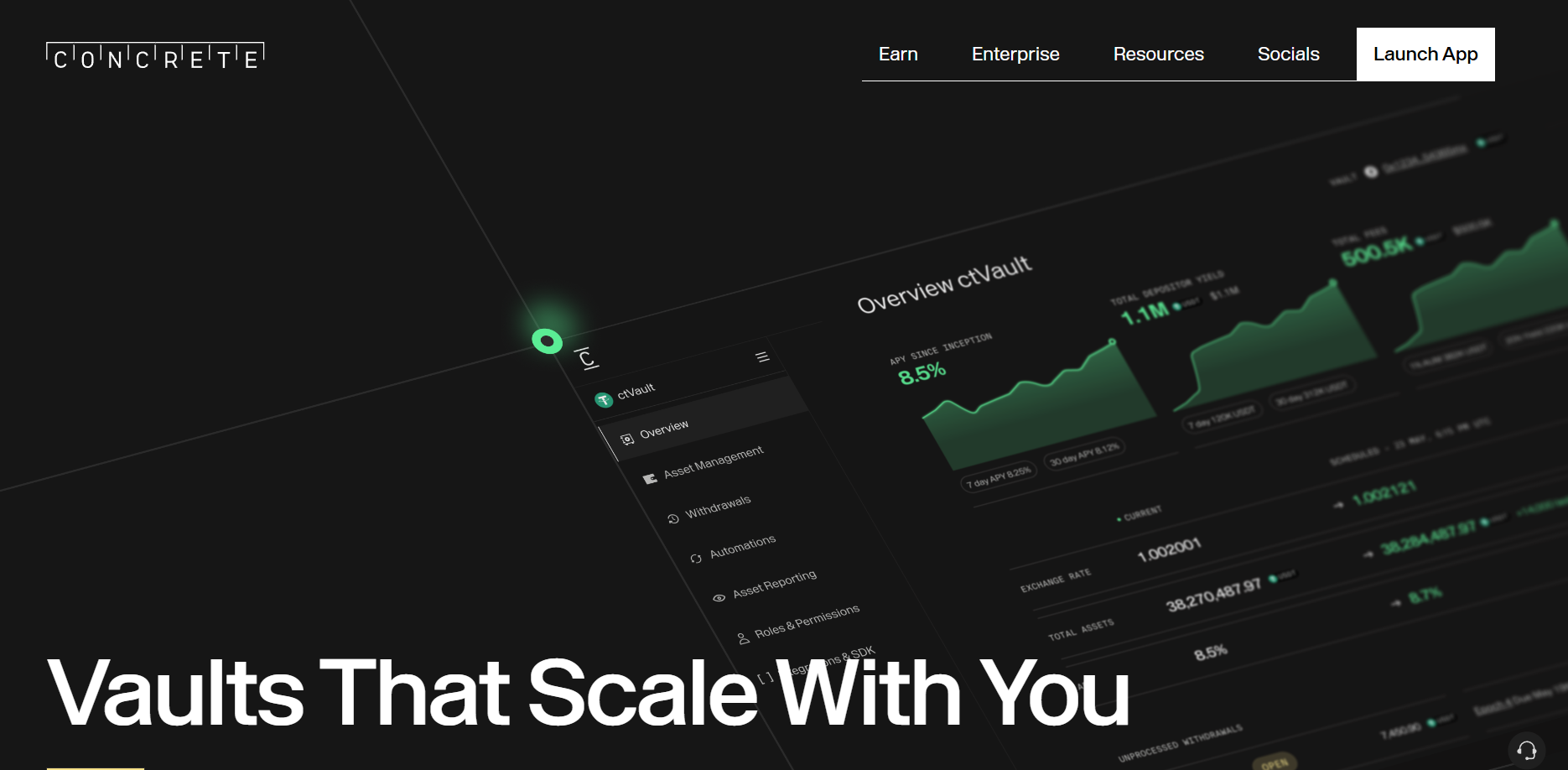
Concrete Vaults are built to bridge this gap:
- managing strategies under the hood
- automating decisions
- optimizing allocation
- reducing human error
They allow users to interact simply…
Without being exposed blindly.
🚨 Explore Concrete at app.concrete.xyz 🚨
Final Thought
DeFi didn’t become harder to use.
It became harder to understand.
And today, the edge doesn’t come from clicking faster.
It comes from seeing the system behind the button.