France intercepts sanctioned Tagor tanker linked to Russian oil trade
The French navy boarded the EU-sanctioned vessel roughly 400 nautical miles west of Brittany, the latest in a growing campaign against Russia's shadow fleet.
Share
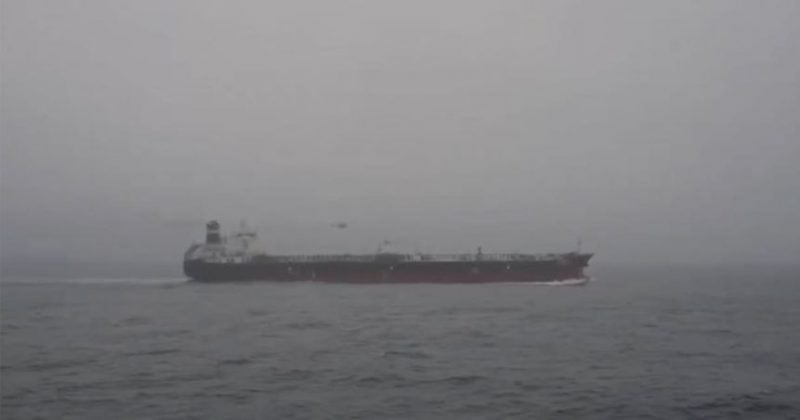
Add us on Google by Editorial Team Jun. 1, 2026France’s navy intercepted the oil tanker Tagor in international waters on May 31, boarding the vessel and ordering it to a French anchorage for inspection. The ship had sailed from Russia’s Murmansk port and was reportedly flying a false Cameroonian flag when it was stopped roughly 400 nautical miles west of Brittany.
French President Emmanuel Macron confirmed the boarding. UK forces provided support during the operation, making it a joint effort between two of Europe’s largest naval powers.
The Tagor is sanctioned by the US, the EU, the UK, Switzerland, and Ukraine. It is at least the third or fourth such interception France has carried out as part of a broader crackdown on Russia’s so-called shadow fleet, the murky network of aging tankers that keeps Russian crude moving despite Western restrictions.
AdvertisementWhat is the Tagor and why does it matter
The Tagor, formerly known as the British Gannet, was built in 2005 and carries the IMO number 9282481. Its operator, Fractal Marine DMCC, is based in Dubai.
The US imposed sanctions on the vessel on July 30, 2025. The EU followed on October 24, 2025. The UK added its own restrictions in February 2026.
Fractal Marine DMCC has indirect ties to Iranian interests, specifically through connections to Mohammad Hossein Shamkhani. That link places the Tagor at the intersection of two of the West’s most aggressive sanctions regimes: those targeting Russian energy exports and those aimed at Iran’s network of intermediaries.
The shadow fleet problem
Russia’s shadow fleet has been one of the most persistent headaches for Western policymakers since sanctions escalated in 2022. Rather than comply with price caps and trade restrictions, Russian oil finds its way to market aboard a fleet of older vessels that operate through byzantine ownership structures and frequently misrepresent their flags, destinations, and cargo.
The Tagor sailing under a false Cameroonian flag is a textbook example. Flag states are supposed to exercise regulatory oversight over vessels flying their colors. When a sanctioned ship fraudulently claims registration from a country with limited maritime enforcement capacity, it creates a gap that only physical interception can close.
What this means for the crypto and sanctions landscape
This specific interception did not involve any digital assets or blockchain-based technologies. The evasion methods at play, shell companies, flag manipulation, corporate layering through Dubai intermediaries, are conventional sanctions evasion techniques.
Traders and investors should watch for whether subsequent investigations into Fractal Marine DMCC or related entities reveal any digital asset connections, something that often only surfaces months after initial enforcement actions.
Disclosure: This article was edited by Editorial Team. For more information on how we create and review content, see our Editorial Policy.