--
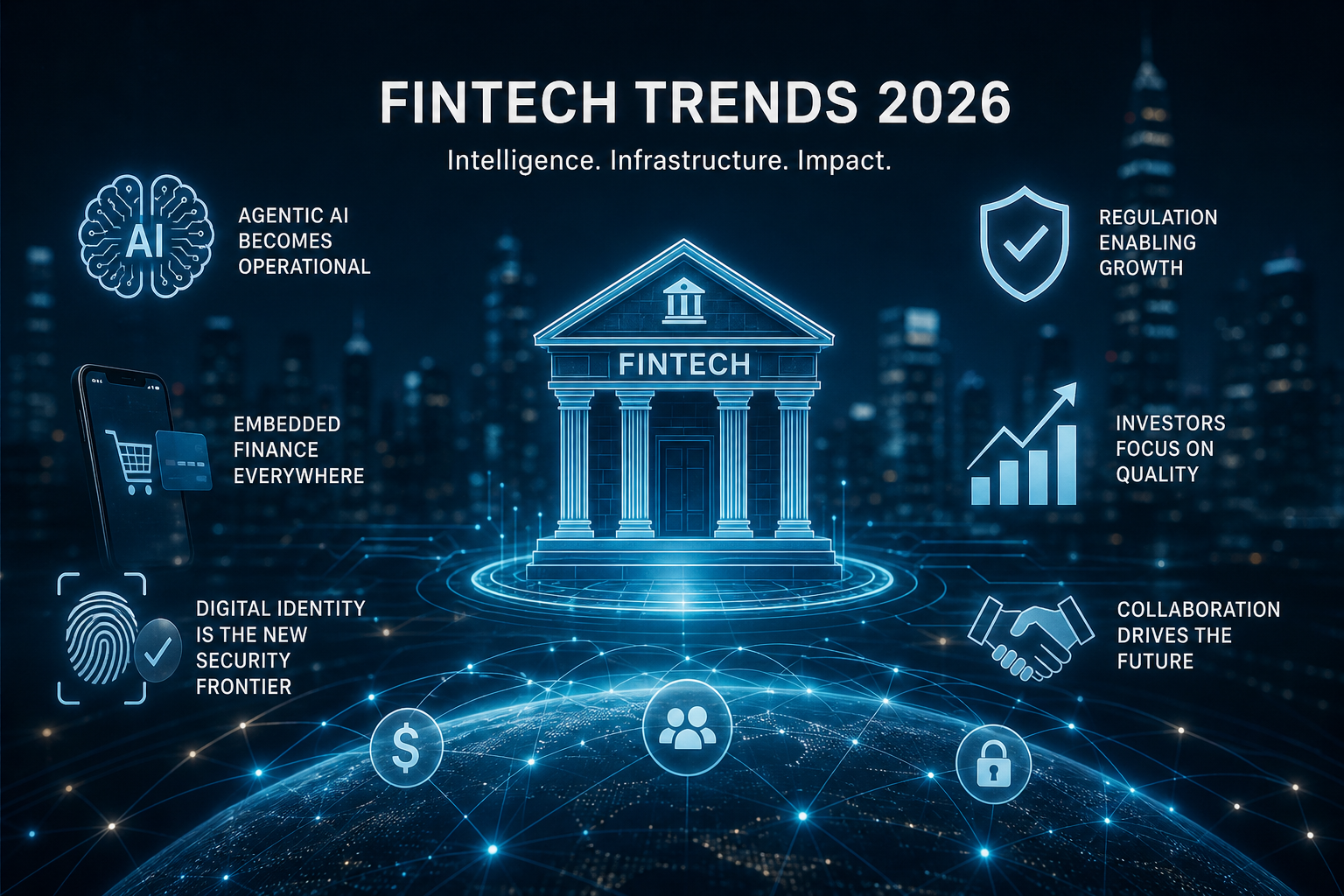
Fintech Trends 2026: What’s Actually Changing — and What Comes Next? In 2026, financial technology is no longer a story of disruption — it’s a story of consolidation, intelligence, and infrastructure maturity. The question is no longer what fintech can do, but what it must become. So where is the industry truly headed? ________________________________________ What defines fintech in 2026 — and why does it feel different now? The defining shift is subtle but critical: fintech has moved from experimentation to essential infrastructure. After years of explosive growth, the sector is entering a phase where profitability, compliance, and scalability matter more than raw innovation. According to recent industry data, investors are prioritizing fewer but larger, high-conviction deals, signaling a more disciplined capital environment. At the same time, global markets are expanding. Digital payments alone are projected to surge dramatically, with instant payment volumes expected to reach nearly $58 trillion by 2028. This raises the next logical question: ________________________________________ If fintech is maturing, what technologies are actually driving growth? Three forces dominate the 2026 landscape: 1. Agentic AI becomes operational — not experimental AI is no longer limited to chatbots or analytics dashboards. It is now executing financial decisions autonomously — from fraud detection to portfolio adjustments. In India, fintech platforms are already deploying AI systems capable of end-to-end financial workflows, not just recommendations. “The next generation of fintech won’t just assist decisions — it will execute them,” says a senior payments strategist at a global bank. 2. Embedded finance turns every platform into a bank From SaaS dashboards to e-commerce platforms, financial services are being embedded directly into user experiences — eliminating the need for traditional banking interfaces. This shift is redefining customer ownership: whoever controls the interface controls the financial relationship. 3. Digital identity becomes the new security frontier As transactions become instant, identity verification becomes the bottleneck. Advanced digital identity systems are now central to fraud prevention and trust. But these innovations create a deeper question: ________________________________________ Is innovation outpacing regulation — or finally aligning with it? For the first time in years, regulation is catching up — and in some cases, enabling growth. A notable example: in April 2026, India’s MobiKwik received regulatory approval to operate as a non-banking financial company (NBFC), allowing it to expand into lending and credit services. This reflects a broader global trend: • Stablecoin frameworks are tightening • Licensing pathways are becoming clearer • Compliance is becoming a competitive advantage “Regulation is no longer a barrier — it’s becoming a moat,” notes a fintech policy advisor quoted in industry briefings. Which leads to the next challenge: ________________________________________ If regulation is stabilizing, why are investors still cautious? Because fintech is entering a “quality over quantity” era. Despite steady funding volumes, deal activity has dropped sharply — indicating investor selectivity and market consolidation. At the same time: • Venture firms are doubling down on AI-first fintech startups • Capital is flowing into companies with clear revenue models • IPO ambitions are returning — but cautiously Even major banks are reinforcing their bets. In April 2026, Santander announced a $67 million investment into its payments arm Ebury to expand AI-driven infrastructure. So what does this mean for competition? ________________________________________ Who is winning in fintech right now — startups or incumbents? The answer: both — but for different reasons. Startups win on: • Speed • User experience • Niche innovation Incumbents win on: • Trust • Regulation • Scale The real shift is collaboration. Partnerships between banks and fintechs are accelerating, with asset managers and financial institutions increasingly relying on fintech capabilities to stay competitive. Meanwhile, neobanks and digital-first players continue to grow aggressively. U.S.-based fintech Chime, for example, is projecting stronger-than-expected revenue in 2026, driven by AI efficiencies and user growth. Which raises the strategic question: ________________________________________ What will separate winners from losers in fintech by 2030? Three capabilities will define the next decade: 1. Infrastructure thinking over product thinking Fintech leaders are building ecosystems, not apps — platforms that integrate payments, lending, identity, and compliance seamlessly. 2. AI integration with real ROI The market is shifting away from “AI as a feature” toward AI as measurable business value — cost reduction, revenue growth, and operational efficiency. 3. Trust as a product Cybersecurity, transparency, and compliance are no longer backend concerns — they are core user-facing differentiators. ________________________________________ So, what is the future of fintech — evolution or reinvention? It’s both. 2026 marks the moment fintech stops trying to “disrupt finance” and starts becoming finance itself. The next wave won’t be defined by flashy apps or viral growth hacks — but by: • Invisible infrastructure • Autonomous financial systems • Deep integration into everyday life Or, put more simply: Fintech is no longer a category. It’s the operating system of the global economy. ________________________________________ Final takeaway If you’re optimizing for “fintech trends 2026”, the real insight is this: • The hype cycle is over • The execution era has begun • And the winners will be those who combine technology, trust, and timing