
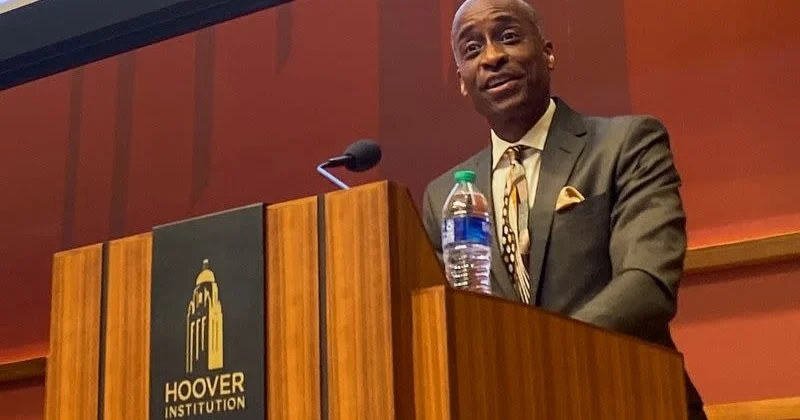
Federal Reserve Vice Chair Jefferson talks inflation, AI, and trade disruptions at Bank of Japan conference
Philip Jefferson's Tokyo appearance signals the Fed's growing concern about global energy shocks, AI-driven economic shifts, and persistent inflation risks.
Share
Add us on Google by Editorial Team May. 27, 2026Federal Reserve Vice Chair Philip N. Jefferson took a seat at the Bank of Japan on May 28 to discuss the forces reshaping the global economy. The venue: the Bank of Japan Institute for Monetary and Economic Studies’ 2026 conference, themed “Monetary Policy from New Perspectives.” The topics: energy prices, artificial intelligence, trade disruptions, and the stubborn question of where US inflation is headed.
What Jefferson put on the table
The discussion at the IMES conference covered five interconnected threads: global energy prices, advancements in AI, trade disruptions, risks to US growth and inflation, and where the Federal Reserve currently stands on monetary policy.
None of these are new obsessions for Jefferson. He delivered a speech on AI’s economic impacts in November 2025, tackled supply-side inflation dynamics in February 2026, and addressed energy price effects on the economy in March 2026. The Tokyo appearance represents a consolidation of those individual threads into a single, coherent narrative about global uncertainty.
AdvertisementThe conference also featured European Central Bank executive board member Philip R. Lane, underscoring that this wasn’t a casual academic exercise.
The inflation and energy price connection
Jefferson’s prior March 2026 speech on energy effects laid groundwork for this conversation. By returning to the topic at a major international conference, he’s signaling that the Fed hasn’t filed energy volatility under “resolved.”
Jefferson has been exploring how artificial intelligence could reshape productivity, labor markets, and ultimately price stability. Jefferson’s repeated engagement with this topic suggests the Fed is genuinely trying to model both scenarios rather than assuming the optimistic case.
What this means for crypto investors
The fact that cryptocurrency didn’t come up during the discussion is itself a data point. When the Fed’s Vice Chair sits down at one of the world’s premier monetary policy conferences and the agenda is entirely focused on energy, AI, trade, and traditional inflation metrics, it tells you where the institutional attention is directed.
Traders should be watching commodity markets and inflation expectations data as leading indicators rather than waiting for the Fed to spell things out at the next FOMC meeting.
Disclosure: This article was edited by Editorial Team. For more information on how we create and review content, see our Editorial Policy.