Fear & Greed: The Emotion Behind Every Market Move
 Aldeb Trades2 min read·Just now
--
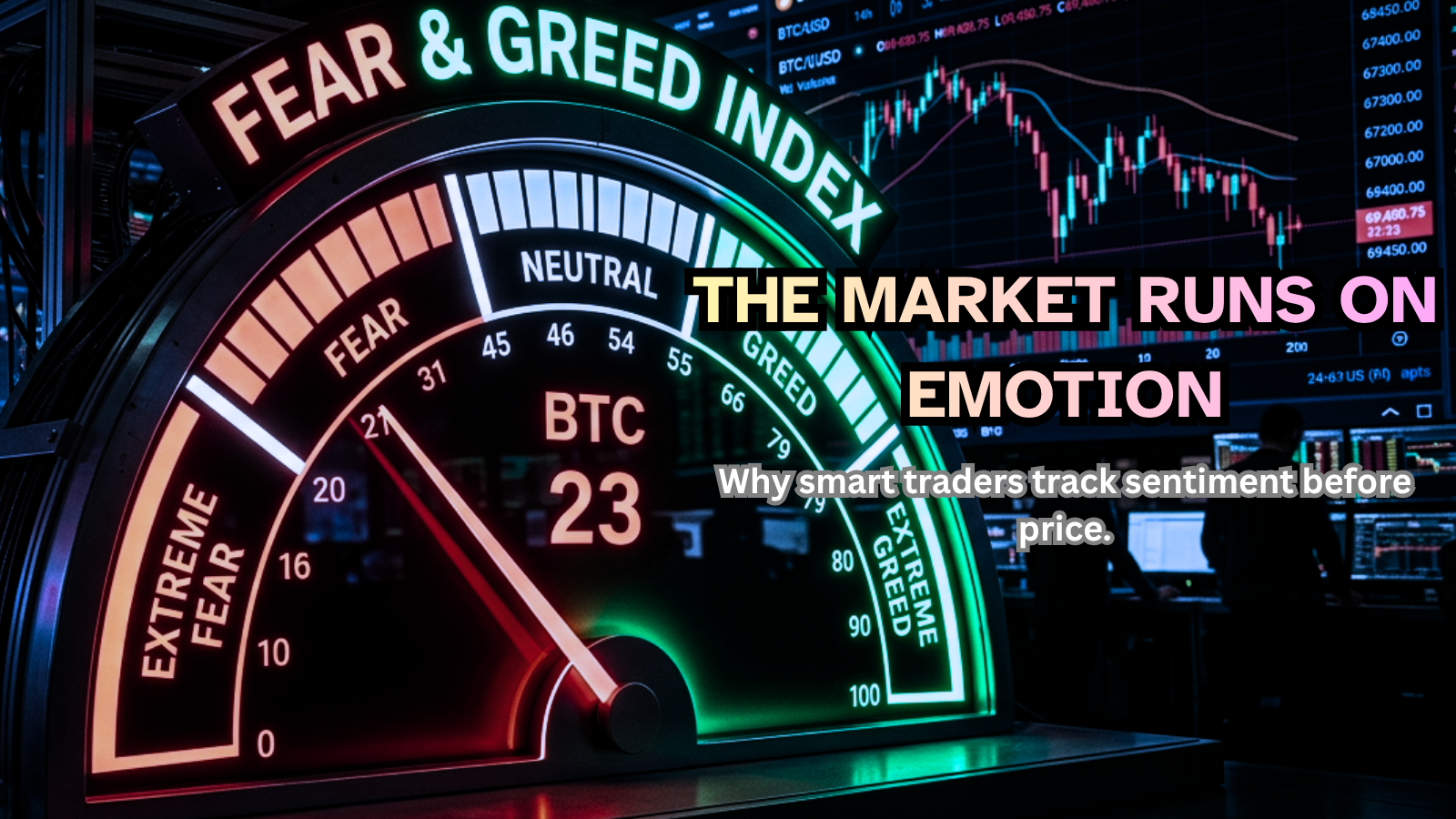
Why smart traders track sentiment before price
Markets don’t move on logic alone.
They move on emotion.
Fear causes panic selling, liquidations, and volatility.
Greed creates FOMO, overleveraging, and euphoric rallies.
That’s why traders closely watch the Fear & Greed Index — a sentiment indicator designed to measure the emotional state of the market.
What Is the Fear & Greed Index?
The Fear & Greed Index tracks whether the market is currently driven more by fear or greed.
It usually ranges from:
When markets crash, fear dominates.
When prices rally aggressively and everyone becomes bullish, greed takes over.
The index doesn’t predict the future — but it reveals the emotional temperature of the market.
What Extreme Fear Really Means
When the market enters extreme fear:
- Traders panic
- News turns bearish
- Weak hands exit positions
- Liquidations spike
Historically, this is often where opportunity begins to appear.
Not because the market instantly reverses —
but because most sellers may already be exhausted.
What Extreme Greed Means
Extreme greed usually appears when:
- Everyone becomes bullish
- Leverage rises aggressively
- Traders chase price higher
- Risk management disappears
This is where markets become vulnerable.
When positioning becomes too crowded on one side, volatility tends to increase.
Why Professionals Watch Sentiment
Smart traders and market makers monitor fear and greed because emotion affects:
- Liquidity
- Volatility
- Positioning
- Market stability
When fear dominates, markets become unstable.
When greed dominates, risk quietly increases.
Understanding sentiment helps professionals stay rational while the crowd becomes emotional.
The Biggest Mistake Traders Make
Most traders:
- Panic near bottoms
- FOMO near tops
- Follow emotion instead of structure
The market often rewards discipline, not emotion.
Because in the end:
Fear creates opportunity.
Greed creates vulnerability.
Discipline creates longevity.