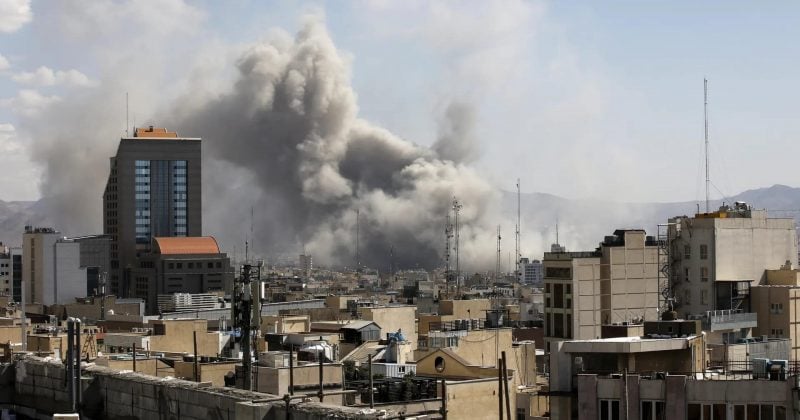
Explosions rock Tehran as Israel and Iran trade air strikes, Bitcoin dips toward $63K
The first direct military exchange since the April 2026 ceasefire sent crypto markets into risk-off mode, with oil prices surging and Asian equities tumbling.
Share
Add us on Google by Editorial Team Jun. 9, 2026Explosions were reported across central Tehran and several other Iranian cities on June 8, 2026, as Israel launched airstrikes targeting military installations in western and central Iran. Iran responded with waves of ballistic missiles directed at Israel, triggering air raid sirens and defensive interceptions.
The exchange marks the first direct confrontation between the two nations since a fragile ceasefire was brokered in April 2026. For crypto markets, the consequences were immediate: Bitcoin briefly dipped toward $63,000 as traders scrambled into risk-off positioning before staging a partial recovery.
What happened and why it matters
The chain of events started on June 7, when Hezbollah launched a rocket attack on northern Israel. Israel retaliated with airstrikes on Iranian military targets the following day, hitting installations in Tehran as well as Isfahan, Karaj, and Tabriz. Iran then fired ballistic missiles back at Israel, completing a rapid-fire escalation cycle that shattered weeks of relative calm.
AdvertisementUS President Donald Trump reportedly urged restraint in communications with Israeli Prime Minister Benjamin Netanyahu, emphasizing the need to avoid further escalation. The diplomatic pressure appeared to have some effect, with reports later indicating a halt in offensive operations from both sides.
WTI crude oil prices surged over 3% to approximately $93.50 per barrel. Asian equities took a hit, with South Korea’s KOSPI index experiencing particularly sharp declines. Bitcoin’s dip toward $63,000 was accompanied by similar short-term drops in Ethereum and XRP. The recovery came as reports suggested both sides were stepping back from the brink.
The broader context
The April 2026 ceasefire came after weeks of direct fighting between Israel and Iran earlier in the year. That conflict itself represented a dramatic departure from decades of shadow warfare, where the two nations typically fought through proxies rather than launching missiles at each other’s territory.
Hezbollah remained armed and active along Israel’s northern border following the ceasefire. The June 7 rocket attack was the spark, but the kindling had been piling up for months.
What this means for investors
Traders should be watching three things closely. First, whether the halt in offensive operations holds or whether either side resumes strikes in the coming days. Second, oil prices, because sustained moves above $95 per barrel would start to meaningfully change the macro calculus. And third, US diplomatic posture, because Washington’s willingness to restrain Israel will likely determine whether this remains a contained exchange or spirals into something larger.
Disclosure: This article was edited by Editorial Team. For more information on how we create and review content, see our Editorial Policy.