
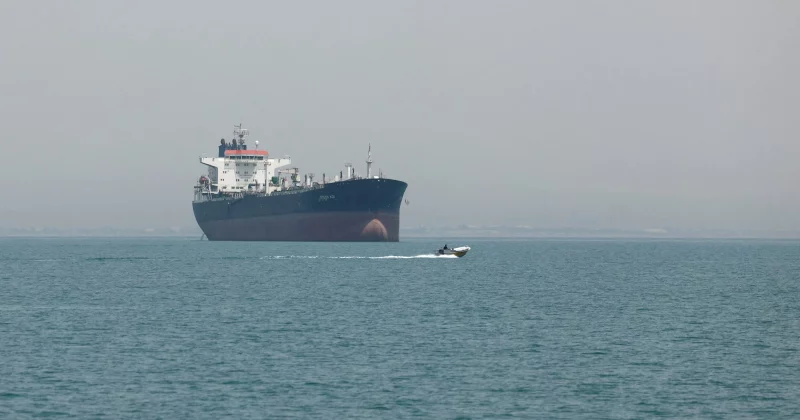
European Union sanctions IRGC Navy unit and two Iranian individuals over Strait of Hormuz restrictions
The EU's first use of its expanded sanctions framework targets an Iranian military command and two nationals accused of imposing a toll system on commercial ships.
Share
Add us on Google by Editorial Team Jun. 9, 2026The European Union designated the Hormozgan Provincial Command of the Islamic Revolutionary Guard Corps (IRGC) Navy, along with two Iranian nationals, under a fresh round of sanctions tied to freedom of navigation in the Strait of Hormuz. The move, announced on June 8, 2026, marks the first enforcement action under the EU’s recently expanded sanctions framework targeting Iran’s interference with one of the world’s most critical maritime chokepoints.
The two individuals named are Mohammad Akbarzadeh and Hamid Hosseini. Both face asset freezes, travel bans, and restrictions on receiving funds or economic resources from EU-linked sources.
AdvertisementWhat happened and why it matters
The Strait of Hormuz handles roughly 20% of global oil shipments. According to the EU, the sanctioned individuals and military unit were involved in operating a toll system that restricts navigation through the strait. That system allegedly includes vessel screening requirements, documentation and fee demands, and direct threats against commercial ships attempting passage.
The EU characterized these activities as a direct violation of international maritime law. The expanded sanctions framework was itself adopted on May 22, 2026, giving the EU a broader toolkit for targeting entities that threaten freedom of navigation. This latest action brings the total number of sanctioned targets under the framework to 26 natural and legal persons plus 27 entities, all focused on Iran’s military support activities and navigation threats.
The geopolitical backdrop
The IRGC Navy has periodically harassed, seized, or threatened commercial vessels in the waterway for years, particularly during periods of heightened tension with Western nations. What is new is the EU creating a dedicated legal instrument specifically to punish navigation interference, then actually using it within weeks of its adoption on May 22, 2026.
What this means for investors
The sanctions themselves contain no references to cryptocurrency or digital assets. There is no indication that the EU is, at this stage, linking these specific measures to blockchain-based financial flows or requiring crypto exchanges to screen for the named individuals beyond existing compliance obligations.
Oil price volatility is the most direct transmission mechanism. If the toll system in the Strait of Hormuz escalates, or if Iran retaliates against the sanctions by further restricting passage, crude prices could spike, affecting roughly 20% of global oil shipments that transit the strait.
Disclosure: This article was edited by Editorial Team. For more information on how we create and review content, see our Editorial Policy.