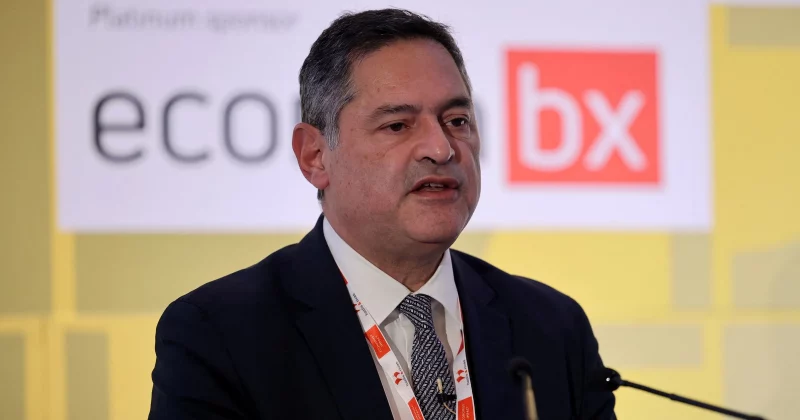
European Central Bank’s Patsalides pushes for permanent joint European debt to bolster euro stability
The Central Bank of Cyprus governor argues that a rare alignment of conditions makes the case for a common European safe asset more compelling than ever.
Share
Add us on Google by Editorial Team Jun. 8, 2026For over a decade, the idea of joint European debt has been the economic policy equivalent of Groundhog Day. Every few years, someone important floats it, fiscally conservative nations say no, and everyone goes home. Now Christodoulos Patsalides, the Governor of the Central Bank of Cyprus and a member of the ECB Governing Council, is making the case that this time the conditions are actually different.
In an opinion piece published on June 7, 2026, Patsalides argued that Europe faces a “rare alignment of economic, geopolitical, and institutional conditions” that makes joint debt issuance not just sensible but necessary. His pitch: create a permanent common European safe asset to strengthen the bloc’s sovereignty, fund shared priorities like green energy and digital transformation, and give the euro a serious boost on the global stage.
AdvertisementWhat joint European debt would actually change
Patsalides outlined several concrete advantages. Lower borrowing costs across the board. Enhanced liquidity for euro-denominated assets. A reliable collateral base that could deepen European capital markets. Better mobilization of household savings. And, critically, a stronger international role for the euro as a reserve currency.
The clever workaround for political resistance
Patsalides isn’t naive about the politics. Germany and the Netherlands, among others, have spent years blocking permanent joint debt proposals. Their concern is straightforward: why should countries with strong fiscal discipline effectively guarantee the borrowing of countries with weaker track records?
To navigate this minefield, Patsalides proposed something worth paying attention to. He suggested decoupling the issuance of joint debt from spending decisions. In practice, this means the debt instrument itself would exist independently, funding common European goals without creating a direct risk-sharing framework where one country’s fiscal choices become another country’s liability.
Previous EU programs demonstrated that joint issuance can work mechanically. The SURE program, which funded short-time work schemes during the pandemic, and NextGenerationEU, the bloc’s post-COVID recovery fund, both involved joint borrowing. They proved the plumbing functions. But they were temporary by design, which is precisely what made them politically palatable.
What this means for investors
Patsalides provided no specific issuance volumes or timelines, and the political obstacles remain substantial. Patsalides’ remarks align with previous ECB positions, but ECB advocacy alone has never been sufficient to overcome member-state opposition.
Disclosure: This article was edited by Editorial Team. For more information on how we create and review content, see our Editorial Policy.