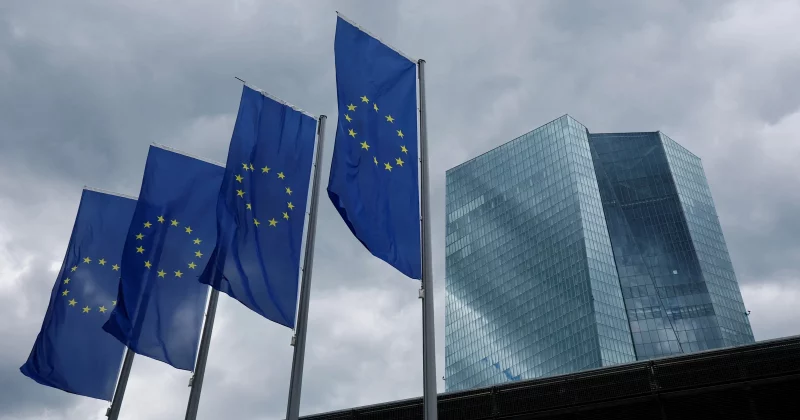
European Central Bank warns of financial stability risks from Middle East conflict
Rising energy prices, upward inflation revisions, and non-bank sector vulnerabilities are keeping the ECB on edge as geopolitical tensions ripple through euro area markets.
Share
Add us on Google by Editorial Team May. 27, 2026The European Central Bank is sounding alarms about what the escalating Middle East conflict means for financial stability across the euro area. The core concern: energy supply disruptions are pushing inflation higher, rattling markets, and exposing cracks in the financial system that monetary policy alone can’t easily fix.
The conflict, which intensified in February 2026, has introduced a particularly thorny problem. Tensions involving Iran and the potential for disruptions at the Strait of Hormuz, one of the world’s most critical oil shipping chokepoints, have driven substantial energy price increases across the region.
Inflation projections climb as energy shocks bite
The ECB has revised its baseline inflation projection for 2026 upward to 2.6%. But the adverse scenarios tell a more unsettling story: inflation could spike to between 3.5% and 4.4% depending on how the conflict evolves. Euro area firms are already reporting higher expected input costs and elevated short-term inflation expectations.
AdvertisementECB Chief Economist Philip Lane weighed in on May 13, 2026, noting that the current energy supply shocks are fundamentally different from prior disruptions. The specific risks posed by the Strait of Hormuz, through which roughly a fifth of the world’s oil passes daily, make conventional monetary policy tools less effective at absorbing the blow.
Lane emphasized the “uniqueness” of these energy supply shocks, pointing to the limited effectiveness of standard central bank responses when the disruption originates from a single strategic chokepoint.
Rate decision reflects the balancing act
At its April 30, 2026 meeting, the ECB decided to hold its deposit rate steady at 2%.
The decision to hold also reflects broader concerns about market volatility. The conflict has introduced significant swings across asset classes, creating fiscal pressures for euro area governments. Non-bank financial sectors, think investment funds, insurers, and pension funds, are particularly exposed to the kind of rapid repricing that geopolitical shocks can trigger. When a hedge fund or pension fund takes a hit from an energy price spike, the ECB can’t simply step in the way it might backstop a commercial bank.
What this means for crypto investors
With inflation projections rising and the deposit rate parked at 2%, the opportunity cost of holding non-yielding assets increases. Bitcoin doesn’t pay interest. When risk-free rates stay elevated or climb higher, the calculus for allocating capital to assets that generate no yield gets harder to justify on paper.
A scenario where the Strait of Hormuz faces actual disruption could trigger a broad risk-off move. The adverse inflation scenarios the ECB is modeling, 3.5% to 4.4%, would almost certainly prompt more aggressive monetary tightening, which historically hasn’t been kind to speculative assets.
IMF reports and recent ECB surveys reinforce that elevated global risks from energy price shocks and persistent geopolitical uncertainty are not going away anytime soon. For crypto market participants, the practical move is monitoring ECB rate decisions and inflation data as closely as on-chain metrics, because in this environment, macro is the trade.
Disclosure: This article was edited by Editorial Team. For more information on how we create and review content, see our Editorial Policy.