
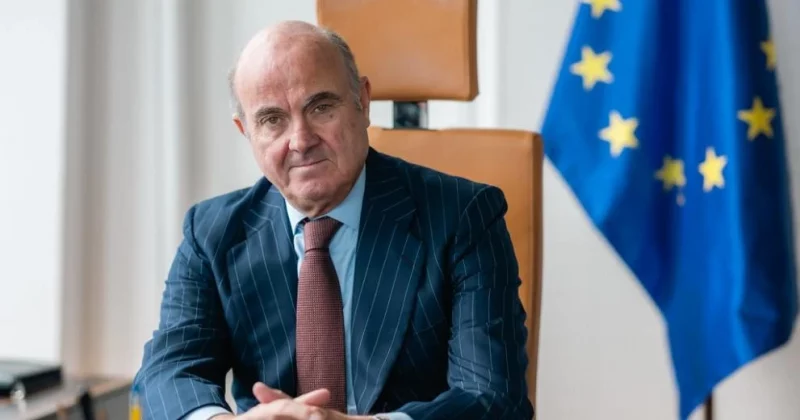
European Central Bank must consider weaker growth in June decision, says Guindos
ECB Vice President warns that slowing economic output should temper any rate hike enthusiasm as inflation climbs to 3%.
Share
Add us on Google by Editorial Team May. 27, 2026The European Central Bank faces a classic central banking dilemma heading into its June meeting: inflation is running hot, but the economy is barely moving. ECB Vice President Luis de Guindos wants his colleagues to keep both facts in mind before reaching for the rate hike lever.
Guindos, in what amounts to one of his final public statements before leaving office, stressed that weaker growth in the euro area deserves serious weight when the Governing Council convenes on June 10-11.
The numbers telling two different stories
Euro area inflation surged to 3% in April 2026, a sharp jump from 1.9% just two months earlier in February. The euro area economy expanded by just 0.1% in the first quarter of 2026.
AdvertisementThe ECB held its key interest rates steady at its last meeting on April 30. The deposit facility rate sits at 2.00%, the main refinancing rate at 2.15%, and the marginal lending facility at 2.40%. That decision reflected what the ECB characterized as intensified upside risks to inflation alongside downside risks to economic growth.
Why geopolitics are making this harder
De Guindos pointed to geopolitical events as a key variable, particularly their potential to disrupt energy price flows and, by extension, the inflation outlook.
Markets are pricing in a potential 25 basis point rate hike for the June meeting. That would push the deposit facility rate to 2.25%. De Guindos has signaled that upcoming economic data and revised staff projections will be critical inputs for the June decision. New economic forecasts are expected alongside the rate announcement.
What this means for investors
A rate hike would likely strengthen the euro, which has a cascading effect across asset classes. A stronger euro makes European exports more expensive abroad, potentially adding another headwind to already anemic growth. It also makes euro-denominated assets more attractive to foreign capital, which could draw flows away from dollar-denominated investments.
For crypto investors, the connection is less direct but still relevant. Major central bank decisions on interest rates influence global risk appetite. When rates go up, the opportunity cost of holding non-yielding assets like Bitcoin increases. The 2022-2023 hiking cycle across the Fed and ECB coincided with significant drawdowns in crypto markets.
The ECB’s June decision isn’t just about one rate move. If the Governing Council hikes while acknowledging that growth is essentially flat, it tells the market that inflation is the priority. For traders positioning around the June 10-11 meeting, the revised staff projections may matter more than the rate decision itself, revealing whether the ECB’s internal models see the inflation spike as temporary or entrenched, and whether the 0.1% growth figure was a one-quarter stumble or the start of something worse.
Disclosure: This article was edited by Editorial Team. For more information on how we create and review content, see our Editorial Policy.