EU targets head of Russian Orthodox Church with sanctions after Hungary drops four-year veto
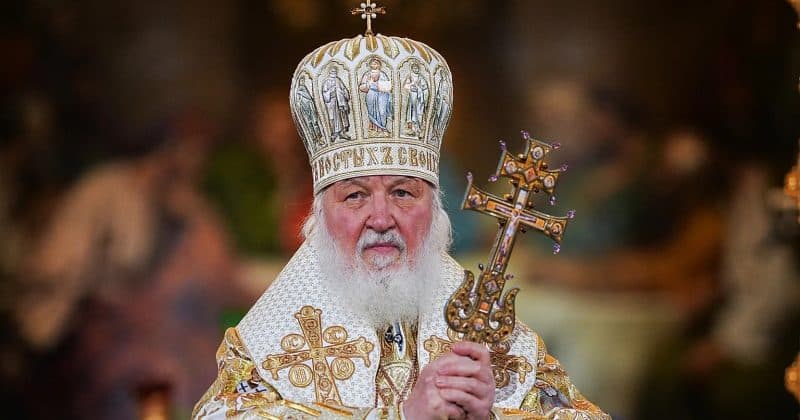
Patriarch Kirill, who has publicly backed Russia's invasion of Ukraine since 2022, is finally in Brussels' crosshairs after a political shift in Budapest.
Share
Add us on Google by Editorial Team Jun. 10, 2026For four years, one country kept the European Union from sanctioning one of the most prominent cheerleaders of Russia’s war in Ukraine. That country was Hungary, and the cheerleader was Patriarch Kirill, head of the Russian Orthodox Church.
Now, with Hungary’s new government signaling a willingness to play ball, the EU is moving forward with plans to add Kirill, whose legal name is Vladimir Gundyayev, to its sanctions list. The move is part of a broader “mini-package” of targeted measures that has been under discussion since May 2026.
The long road to sanctions
The idea of sanctioning Patriarch Kirill is not new. The EU first proposed the measure back in May 2022, just months after Russia launched its full-scale invasion of Ukraine. Kirill had made himself a fairly easy target, offering vocal, public endorsement of the Kremlin’s military campaign and framing the conflict in spiritual and civilizational terms that gave Moscow’s aggression a veneer of religious legitimacy.
The UK, Canada, and Ukraine all sanctioned him that same year. The EU, however, kept running into a wall named Viktor Orban.
EU sanctions require unanimous approval from all member states. Hungary under Orban repeatedly used its veto to shield Kirill from Brussels’ reach.
AdvertisementThat changed when Hungary’s political landscape shifted. The country’s new government has indicated it will support sanctions that its predecessor had blocked for years.
What’s in the mini-package
The sanctions discussions that kicked off in May 2026 center on a targeted package that goes beyond just the patriarch. The mini-package is expected to include roughly 10 individuals along with select Russian vessels tied to what is known as the “shadow fleet.”
Russia’s shadow fleet is a collection of aging tankers and cargo ships used to circumvent Western oil sanctions. These vessels typically operate with obscured ownership, switched-off tracking systems, and dubious insurance, making them both a sanctions evasion tool and an environmental hazard in European waters.
There is a wrinkle, though. As of late May 2026, Kirill was reportedly excluded from the immediate sanctions package in order to expedite approval before a June 15 deadline. The EU has left the door open for future action against him, but the practical reality is that his inclusion was decoupled from the faster-moving elements of the package.
Why Kirill matters beyond the church
Patriarch Kirill presides over a church with an estimated 100 million or more adherents and wields significant soft power both inside Russia and across Orthodox communities globally. His explicit backing of the invasion gave the Kremlin moral cover.
The UK and Canada clearly agreed back in 2022. Their sanctions on Kirill set a precedent that the EU has been slow to follow, not for lack of will among most member states, but because of the unanimity requirement that gave Hungary outsized leverage.
Ukraine sanctioned Kirill as well. The Ukrainian Orthodox Church formally severed ties with the Moscow Patriarchate in 2022.
What this means for the broader sanctions landscape
Since February 2022, the EU has rolled out multiple rounds of measures targeting Russia’s financial sector, energy exports, military-industrial complex, and political elite. Adding about 10 individuals and some ships is, in the grand scheme, incremental.
Budapest’s shift from systematic obstructionism to cooperative engagement on Russia sanctions represents a meaningful change in EU internal dynamics.
The shadow fleet component is more economically relevant. Every sanctioned vessel is one less ship available to move Russian oil outside the price cap framework.
Disclosure: This article was edited by Editorial Team. For more information on how we create and review content, see our Editorial Policy.