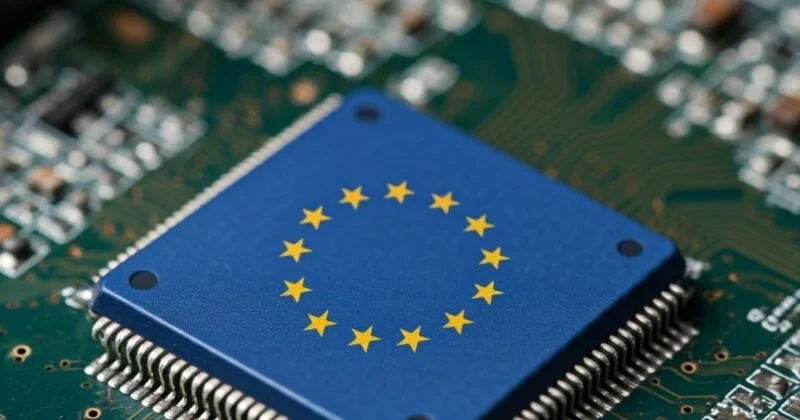
EU seeks €120B to boost local chip production as global semiconductor race heats up
Europe's ambitious semiconductor strategy faces a funding gap as the bloc scrambles to double its share of global chip output by 2030.
Share
Add us on Google by Editorial Team May. 28, 2026Europe wants to make its own chips again. The price tag: €120 billion, a figure that makes the bloc’s original investment plans look like a down payment.
The push comes as the EU finds itself producing somewhere between 8% and 10% of the world’s semiconductors. The goal is to hit 20% of global production by 2030.
From €43B to €120B: the ambition keeps growing
The European Chips Act, which took effect in September 2023, originally aimed to mobilize €43 billion in combined public and private investment. As of now, over €80 billion in chip-related investments have been announced across the bloc, nearly doubling the original target. But the EU has apparently concluded that even €80 billion isn’t enough, with the €120 billion figure representing the scale of capital needed to genuinely restart competitive local chip production.
AdvertisementThe European Commission is already planning an overhaul that would grant it direct cross-border investment authority, a structural reform that signals Brussels knows the current framework isn’t cutting it.
Who’s actually building fabs in Europe
Intel has committed to building facilities in both Ireland and Germany. A joint venture in Germany involving TSMC, Bosch, Infineon, and NXP carries a combined investment exceeding €10 billion, representing one of the largest semiconductor commitments ever made on European soil.
Bosch, Infineon, and NXP are major players in automotive and industrial semiconductors, the chip categories where Europe actually has existing market strength.
Why this matters beyond chip nerds
The US passed its own CHIPS Act in 2022, committing tens of billions in subsidies to domestic production. The pandemic-era chip shortage, which shut down car factories and delayed consumer electronics for months, made Europe’s supply chain vulnerability painfully obvious.
For investors watching the semiconductor space, equipment manufacturers, construction firms specializing in cleanroom facilities, and specialty chemical suppliers all stand to benefit from the buildout. European semiconductor companies like Infineon, NXP, and ASML are positioned at the center of this investment wave.
The Commission’s move to consolidate cross-border investment authority suggests Brussels is aware of execution risks. Investors should watch for concrete policy changes around subsidy distribution and permitting timelines, as those procedural details will ultimately determine whether €120 billion in stated ambition translates into actual fabrication capacity.
Disclosure: This article was edited by Editorial Team. For more information on how we create and review content, see our Editorial Policy.