Doosan combines products and manufacturing with Nvidia’s AI platforms
South Korean industrial conglomerate expands Nvidia partnership to build AI-powered robots, autonomous equipment, and factory infrastructure.
Share
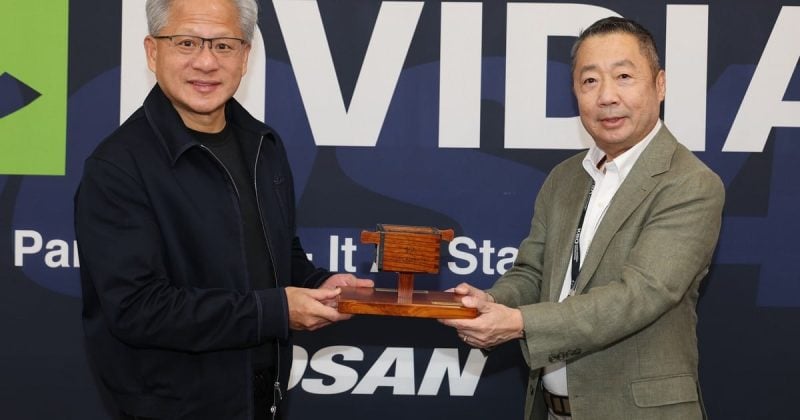
Add us on Google by Editorial Team Jun. 8, 2026Doosan Group is going all in on physical AI. The South Korean industrial giant announced an expanded partnership with Nvidia on June 7-8, merging its manufacturing expertise and proprietary product data with Nvidia’s accelerated computing platforms to build what both companies envision as the next generation of intelligent industrial equipment.
The market noticed. Doosan Robotics shares climbed nearly 4% on the news, while Nvidia gained approximately 2% amid a broader wave of AI deals in South Korea.
What the partnership actually involves
Three major Doosan subsidiaries are involved: Doosan Robotics, Doosan Bobcat, and Doosan Enerbility. Each brings a different slice of the industrial pie, spanning energy systems, construction equipment, robotics, and advanced electronics materials.
AdvertisementOn the Nvidia side, the partnership taps into the company’s DSX AI factory platform and its broader accelerated computing stack. The DSX platform is essentially Nvidia’s blueprint for building AI-native data centers and factory infrastructure.
The collaboration isn’t starting from scratch. Doosan and Nvidia first partnered on October 31, 2025, with a narrower focus on physical AI applications in construction and power equipment. That earlier deal also touched on robotics, but the scope was more limited. This expansion pulls in more Doosan entities, more Nvidia technology, and a significantly more ambitious roadmap.
Doosan Robotics is developing a new operational system for its robots using Nvidia’s simulation and inference capabilities. The company has set a target of deploying industrial humanoid robots by 2028.
What this means for investors
The immediate stock reactions tell part of the story, but the longer-term implications are more interesting. Doosan is effectively positioning itself as a physical AI platform company rather than just a traditional industrial conglomerate. If the humanoid robot timeline holds and the AI factory infrastructure performs as advertised, the company could look very different by the end of the decade.
The risk, of course, is execution. The gap between an AI model running in simulation and a humanoid robot performing useful work on a factory floor remains significant. Doosan’s 2028 target for humanoid deployment will be the key milestone to watch.
For Nvidia investors, the deal reinforces the company’s strategy of embedding itself across every layer of the AI value chain. Once a company like Doosan builds its entire robotics operating system on Nvidia’s simulation and inference stack, switching costs become formidable.
Disclosure: This article was edited by Editorial Team. For more information on how we create and review content, see our Editorial Policy.