Donald Trump pressures Kevin Warsh for interest rate cut as inflation hits three-year high
The newly sworn-in Fed Chair faces his first major test: a president demanding cuts while economic data screams the opposite.
Share
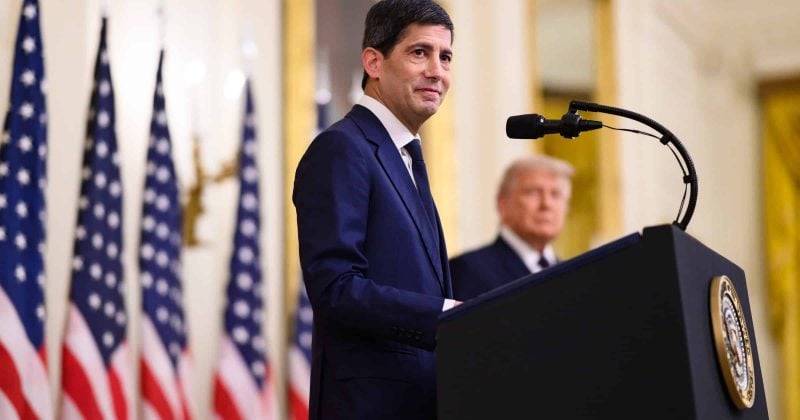
Add us on Google by Editorial Team Jun. 8, 2026Kevin Warsh has been Federal Reserve Chair for roughly three weeks. He’s already got the most powerful person on Earth breathing down his neck about interest rates.
Donald Trump has repeatedly urged Warsh to cut rates, framing lower borrowing costs as essential for the US economy. The problem? Inflation has surged to its highest level in three years, and market indicators are actually pointing toward rate hikes, not cuts.
The timeline that got us here
Trump nominated Warsh on January 30, 2026. The Senate confirmed him in May, and he was officially sworn in on May 22. For context, Warsh isn’t a stranger to the Fed. He served as a governor during the 2008 financial crisis and has long been considered a hawk-leaning voice in monetary policy circles.
Trump has called potential rate hikes “the wrong thing to do,” a phrase he’s deployed repeatedly in recent weeks as inflation data has worsened.
AdvertisementWarsh’s first Federal Open Market Committee meeting as Chair is scheduled for June 16-17. That gathering will be the first real signal of how he intends to navigate the tension between presidential pressure and economic reality.
The independence question
During his Senate confirmation hearings, Warsh addressed the elephant in the room directly. He assured senators that he made no commitments to Trump regarding interest rate cuts.
Warsh has previously expressed interest in recognizing disinflationary trends where they exist, which suggests he’s not allergic to eventual rate cuts. He has also emphasized the influence of AI-driven productivity on economic conditions to justify calls for easing monetary policy while stressing the importance of the Federal Reserve’s independence.
The three-year high in inflation puts Warsh in a genuinely difficult spot. Cutting rates in this environment would risk accelerating price increases further. Holding steady or hiking rates would demonstrate independence but invite withering public criticism from the Oval Office.
What this means for crypto and broader markets
Warsh is notably the first Fed Chair to possess direct exposure to cryptocurrency, with personal investments in major digital assets, potentially influencing his perspectives on monetary policy amid changing economic dynamics.
Interest rate policy is the single biggest macro lever affecting asset prices across the board. When rates go down, borrowing gets cheaper, yield on safe assets drops, and money flows into riskier bets. Crypto, as one of the most speculative asset classes in existence, tends to feel these shifts more dramatically than most.
A rate hike cycle would strengthen the dollar, increase yields on government bonds, and make the opportunity cost of holding non-yielding assets like Bitcoin meaningfully higher.
The June 16-17 FOMC meeting will be the first concrete data point investors can work with. Not just for the rate decision itself, but for the tone of Warsh’s statement and press conference, which will be parsed for hints about whether the new Chair is charting his own course or bending toward Pennsylvania Avenue.
Disclosure: This article was edited by Editorial Team. For more information on how we create and review content, see our Editorial Policy.