🪪 Digital Credentials with Zero Friction
 Everycred3 min read·Just now
--
We’ve all been there.
You’re signing up for something important maybe a job application, a financial service, or even a simple platform. And right when you’re ready to move forward, you hit the same wall:
Upload your documents.
Wait for verification.
Repeat the process somewhere else.
It’s slow. It’s repetitive. And it feels unnecessary in a world that’s otherwise instant.
But what if credentials didn’t slow you down?
What if they actually moved with you?
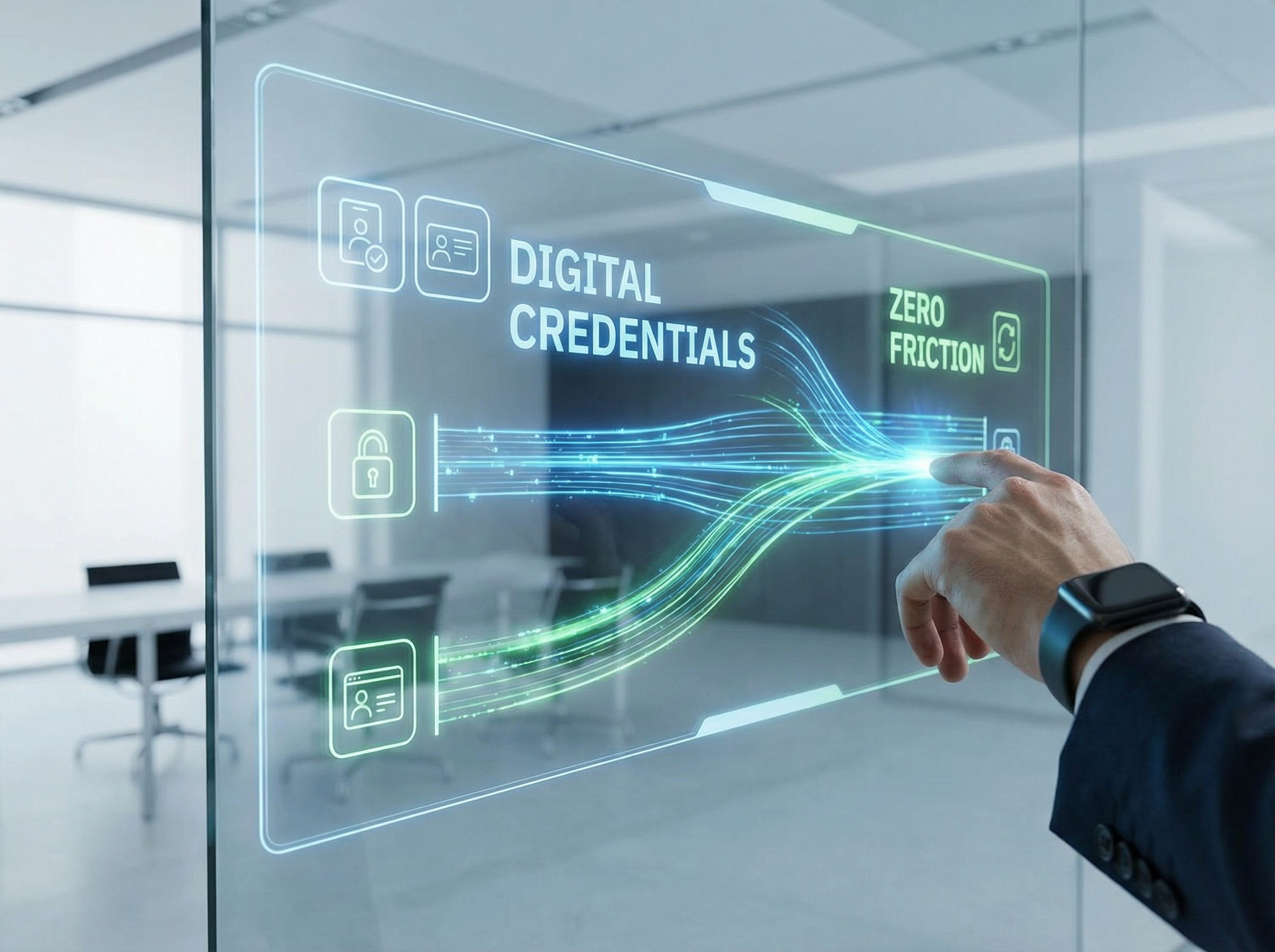
That’s exactly what modern digital credentials are starting to enable: zero friction experiences where verification just works.
🌐 Why Traditional Credentials Don’t Scale
Most systems today still rely on static documents.
PDFs, scanned IDs, certificates they may be digital, but they behave like paper. Every time you use them, you’re asked to upload, share, and wait for validation.
This creates a few obvious problems:
- Repeated verification across platforms
- Delays in onboarding and approvals
- Increased risk of data exposure
- Poor user experience
Even with digital tools, the process hasn’t fundamentally changed.
🔗 A New Way to Think About Credentials
Digital credentials aren’t just files , they’re verifiable pieces of data.
Instead of sending documents, you can share proof that:
- Is instantly verifiable
- Cannot be easily tampered with
- Can be reused across multiple services
This shift turns credentials from something you submit into something you present.
And that’s where the friction starts to disappear.
🧩 What “Zero Friction” Really Means
Zero friction doesn’t mean removing security , it means removing unnecessary steps.
In a zero-friction system:
- You don’t upload the same document twice
- You don’t wait for manual verification
- You don’t share more information than needed
Instead, verification becomes:
✔️ Instant
✔️ Secure
✔️ Seamless
It happens in the background, without interrupting the user experience.
🔐 The Role of Technology Behind the Scenes
Behind these experiences are systems built on:
- Secure identity frameworks
- Cryptographic verification methods
- Decentralized models of data ownership
In many cases, technologies like blockchain help ensure that credentials remain tamper-proof and trustworthy.
But for the user, all of this stays invisible.
You don’t see the complexity you just experience the simplicity.
🛡️ Better Privacy, Not Less
One of the biggest advantages of digital credentials is data minimization.
Instead of sharing full documents, users can:
- Prove their age without revealing their birthdate
- Confirm qualifications without sending certificates
- Verify identity without exposing unnecessary details
This creates a more privacy-first system where trust doesn’t require oversharing.
🌍 Where This Is Already Making an Impact
Zero-friction credentials are already transforming how systems work:
- Hiring: Faster verification of qualifications
- Finance: Smoother onboarding processes
- Education: Easy sharing of achievements
- Public services: Simplified identity verification
In each case, the goal is the same make trust faster and more reliable.
🚀 The Future of Digital Interaction
We’re moving toward a world where:
- Credentials are reusable
- Verification is instant
- Users stay in control
- Systems are designed for simplicity
And most importantly where trust doesn’t slow things down.
💭 Final Thoughts
Digital credentials shouldn’t feel like paperwork.
They should feel like a natural extension of your identity secure, portable, and effortless to use.
As systems evolve, the focus is shifting from proving more to sharing smarter.
And when that happens, friction doesn’t just reduce , it disappears.
📩Contact Us
Curious how digital credentials can transform your platform or workflow?
👉 https://www.everycred.com/contact-us