DeFi Doesn’t Remove Trust It Engineers It
 aqeel javed5 min read·Just now
--
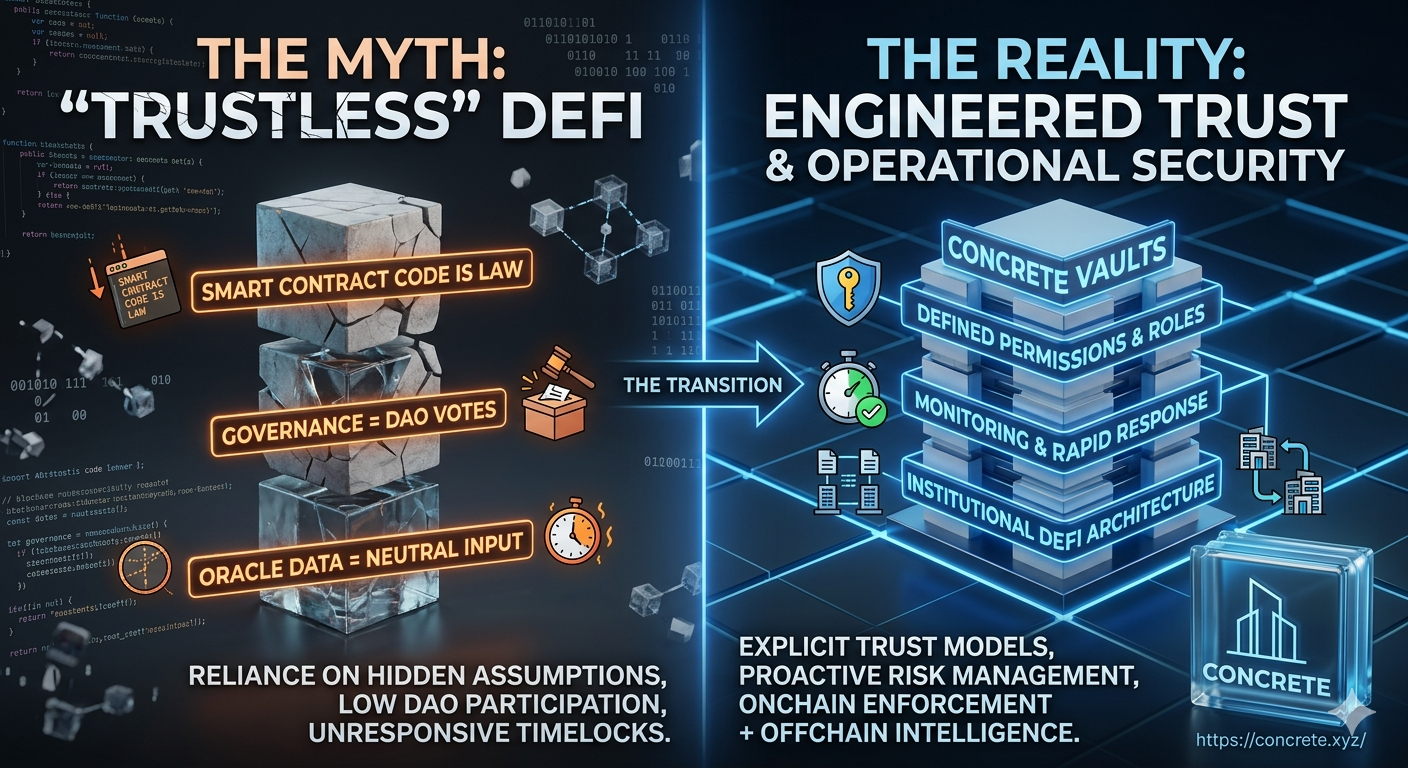
The founding myth of decentralized finance was built on a singular, intoxicating promise that we could finally stop trusting people and start trusting math. For years, the rallying cry of the movement has been that DeFi is trustless and that code is law. This narrative suggested a world where intermediaries would vanish into the background and users would no longer be subject to the whims, errors, or greed of centralized institutions. It was a beautiful vision of a frictionless financial system that operated entirely on neutral ground. However, as the industry has matured and the complexity of these systems has increased, a more nuanced reality has begun to surface. Trust did not actually disappear from the equation. Instead, it was simply redistributed, repackaged, and moved into new, often less visible layers of the stack.
When we peel back the curtain on any major protocol, we quickly realize that trust is unavoidable in any functional financial system. While you might not be trusting a bank teller or a corporate executive, you are trusting a smart contract developer to have written bug-free code. You are trusting a governance council to make rational decisions during a crisis. You are trusting oracles to provide accurate price feeds and bridges to secure assets moving between chains. The tension we face today is that while we claim to be building trustless systems, we are actually building highly interconnected webs of dependency. The question for the next era of DeFi is not how we remove trust, but rather how we acknowledge, structure, and engineer it to ensure true resilience.
The Hidden Layers of Decentralization
To understand where we are going, we must first be honest about where trust actually lives today. In many cases, trust is abstracted away rather than eliminated. When a user deposits assets into a lending pool, they are making a massive leap of faith in the smart contract assumptions underlying the protocol. They are trusting that the execution layers will remain stable and that the oracle dependencies will not fail during a period of high market volatility. Even the most decentralized protocols often rely on a small group of developers or a DAO with low participation to steer the ship.
This leads us to the problem of decentralization theatre. Many projects in the space go to great lengths to appear decentralized while maintaining significant backdoors or centralized points of failure. We see multisigs acting as a proxy for security, where a handful of individuals hold the keys to millions of dollars. We see timelocks that are designed to delay changes but often do nothing to prevent a systemic risk from unfolding in real time. These systems provide the aesthetic of decentralization without providing the actual safety that users require. When a critical moment arrives and a protocol cannot react because its governance is too slow or its roles are too poorly defined, the illusion of trustlessness shatters.
The Shift Toward Engineered Trust
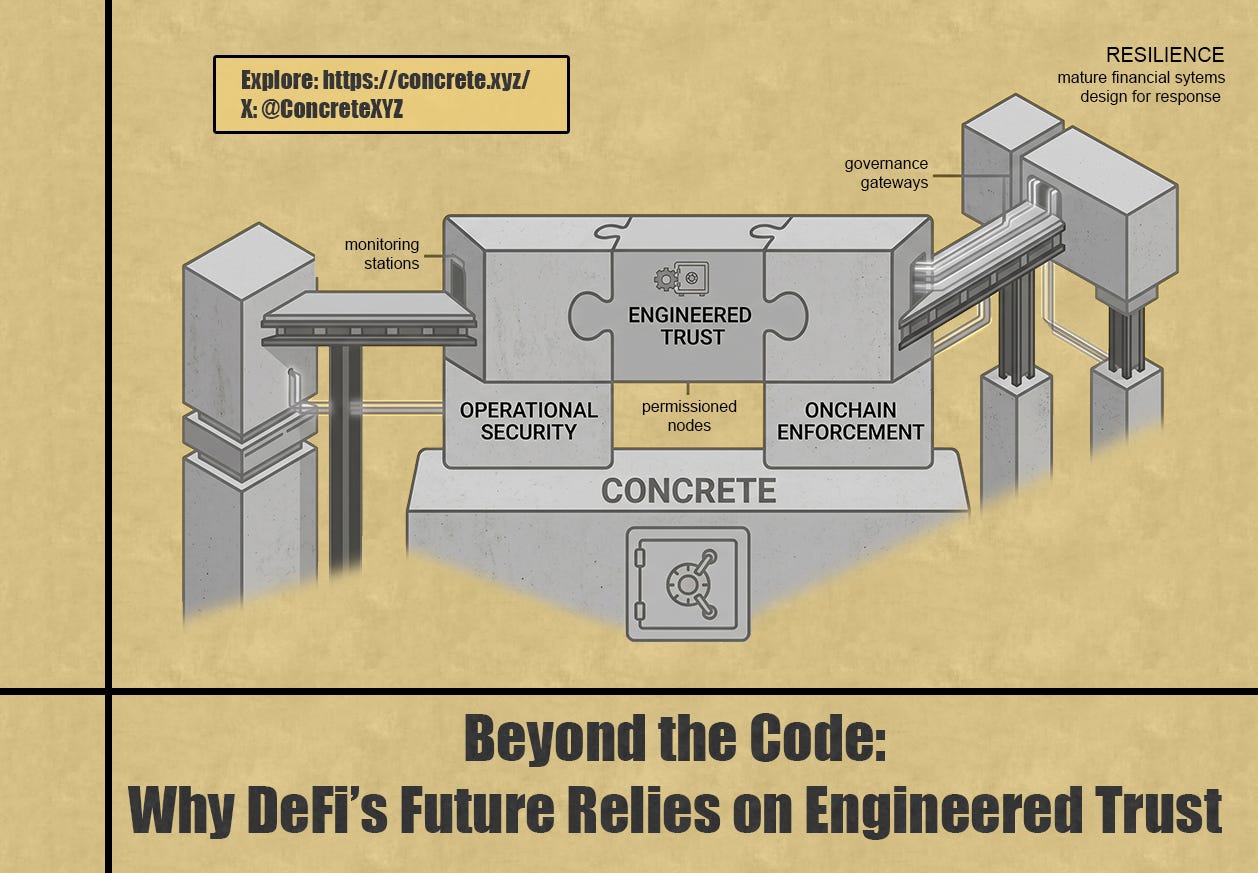
The path forward requires a transition from the myth of trustlessness to the reality of engineered trust. This is a model where trust is not ignored but is designed into the system from the ground up. Engineered trust means establishing clear roles and responsibilities within a protocol. It means having defined permissions and enforced constraints that dictate exactly what can and cannot happen under specific conditions. Rather than relying on the hope that code alone can handle every edge case, engineered trust acknowledges that mature financial systems require both technical excellence and operational foresight.
This is how institutional finance has operated for centuries, and it is how the next generation of DeFi infrastructure must function to survive. Real-world systems need monitoring and rapid response mechanisms. They need layered security that can handle human judgment in edge cases where an automated script might fail or be exploited. If the industry is to move toward institutional DeFi, it must stop pretending that it can exist entirely in a vacuum of “code is law” and start building systems that can respond to failure with grace and speed.
How Concrete Is Reimaging Infrastructure
This philosophy is the cornerstone of what we are building at Concrete. We recognize that the current DeFi infrastructure is often too rigid or too opaque to handle the demands of a global financial market. Concrete takes a fundamentally different approach by making trust explicit rather than hidden. Our architecture is designed for response, not just prevention. We believe that while onchain enforcement is vital, it must be paired with off-chain intelligence and a controlled execution environment to be truly effective.
By utilizing Concrete vaults, we are moving away from decentralization theatre and toward a model of genuine operational security. Our framework uses a role-based architecture that ensures every actor within the system has a clearly defined and limited scope of power. This prevents the “god mode” vulnerabilities that plague so many protocols while still allowing for the flexibility needed to manage risk. In the Concrete ecosystem, trust is a tool that we engineer to create stability. We prioritize the actual safety of assets and the reliability of the system over ideological purity. By creating a structured environment where trust is managed through rigorous engineering, we provide a foundation that can actually support the weight of institutional capital.
Beyond the Trustless Narrative
The bigger shift occurring in DeFi today is the realization that resilience matters more than any single ideology. The industry is moving beyond the simplistic trustless narratives of the past and entering a phase where the winners will be those who provide the most robust infrastructure. Future protocols will not be judged by how loudly they claim to remove trust, but by how effectively they manage and secure it.
As we look toward the future, the goal is to build a financial system that is not just decentralized in name, but resilient in practice. This means creating environments where trust is structured and enforceable, ensuring that even when a single component fails, the entire system does not collapse. DeFi infrastructure is evolving to meet the needs of a more demanding user base that values operational security and predictable behavior under stress above all else.
The transition to engineered trust is not a step backward; it is the necessary evolution required for DeFi to scale. It allows us to move from experimental toys to professional-grade financial tools. By being honest about where trust exists, we can finally build the safeguards necessary to protect it. The future of finance will be defined by those who understand that trust is the most valuable asset we have, and that the best way to honor it is to engineer it with precision.
To learn more about our approach to building the next generation of financial infrastructure, you can explore Concrete at https://concrete.xyz/.