🧱 DeFi Doesn’t Remove Trust It Engineers It
--
DeFi was built on a simple idea:
“Don’t trust people. Trust code.”
For a while, that idea felt revolutionary.
Smart contracts replaced intermediaries.
Transactions became transparent.
Systems ran automatically.
It created the belief that finance could finally become trustless.
But as the ecosystem evolved, something became clear:
👉 Trust didn’t disappear.
👉 It just moved.
🔍 The Myth of “Trustless” Systems
The phrase “trustless DeFi” became one of the most powerful narratives in crypto.
- Code is law
- No intermediaries
- Fully decentralized systems
But in practice, no system operates without trust.
The real question isn’t:
“Is there trust?”
It’s:
👉 Where does that trust exist, and how is it managed?
🧠 Where Trust Actually Lives in DeFi
Even the most advanced DeFi systems rely on multiple layers of trust:
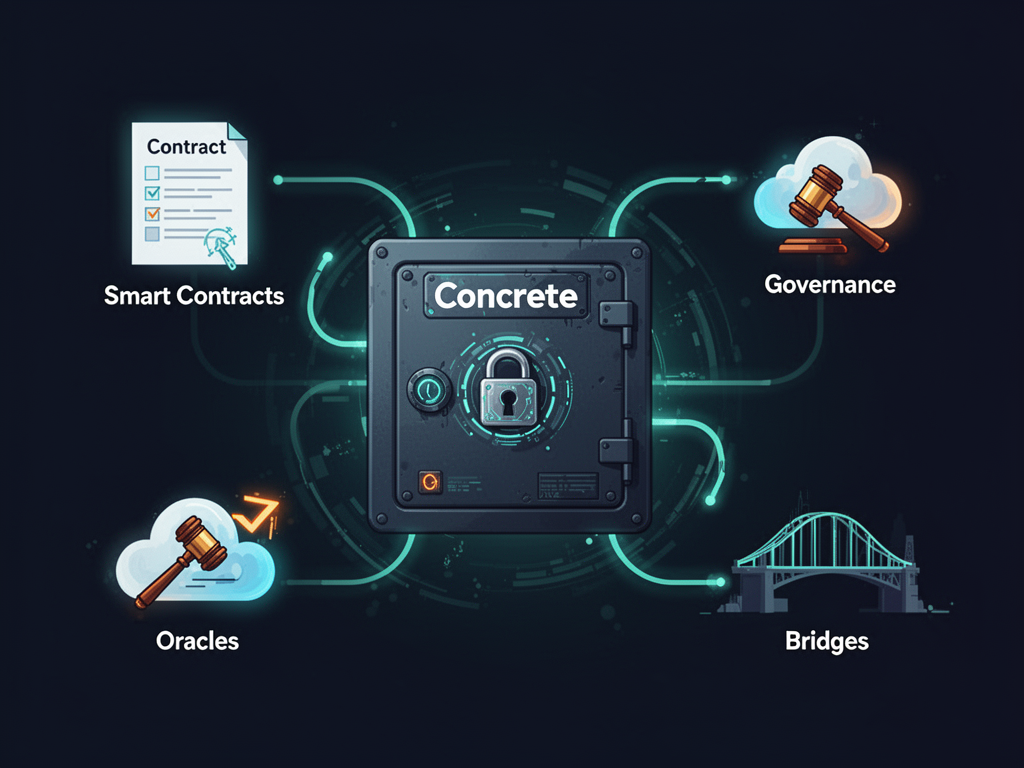
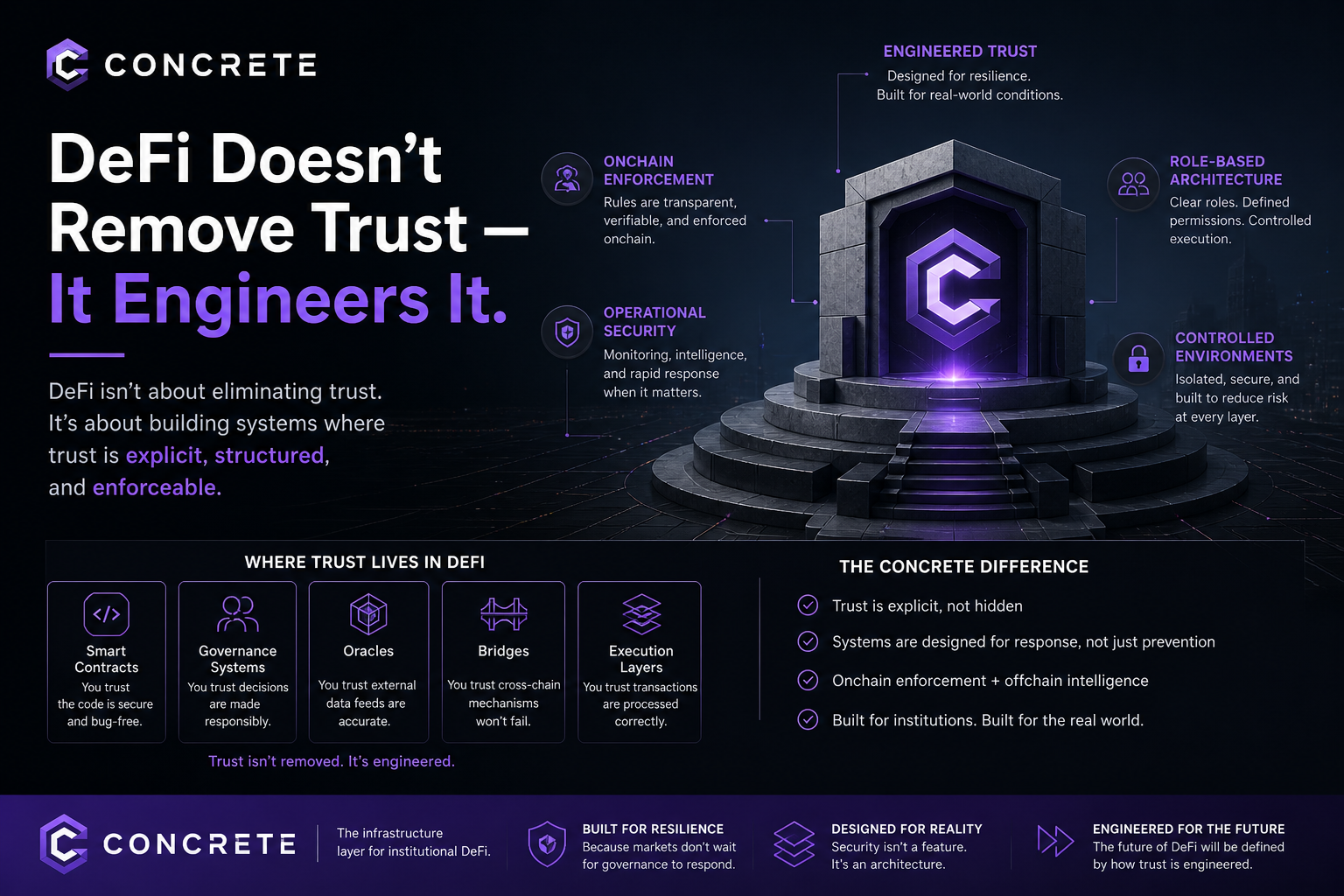
- Smart contracts — You trust the code is secure and bug-free
- Governance systems — You trust decisions are made responsibly
- Oracles — You trust external data feeds are accurate
- Bridges — You trust cross-chain mechanisms won’t fail
- Execution layers — You trust transactions are processed correctly
These are not optional components — they are foundational.
👉 Trust hasn’t been removed. It’s been abstracted.
⚠️ The Problem With “Decentralization Theatre”
As DeFi grew, a new issue emerged:
Systems that look decentralized… but aren’t truly resilient.
This is often referred to as decentralization theatre.
Examples include:
- Multisigs used as a proxy for security
- DAOs with low participation or concentrated power
- Timelocks that delay risk but don’t eliminate it
- Systems unable to react quickly during critical failures
These designs create the appearance of safety, not actual safety.
👉 There’s a difference between being decentralized and being secure.
🔧 From Trustless to Engineered Trust
Instead of pretending trust doesn’t exist, a better model is emerging:
👉 Engineered trust
This approach accepts that trust is unavoidable
and focuses on designing it properly.
Engineered trust means:
- Clear roles and responsibilities
- Defined permissions
- Enforced constraints
- Systems built to respond to failure
This is how mature financial systems operate.
And increasingly, it’s how modern DeFi infrastructure is evolving.
🛡️ Why Operational Security Matters
Code alone cannot handle every situation.
Real systems require:
- Continuous monitoring
- Rapid response mechanisms
- Human judgment in edge cases
- Layered security design
In volatile environments, the ability to respond is just as important as the ability to prevent.
👉 Operational security becomes the backbone of reliability.
🧱 How Concrete Approaches Trust Differently
This is where Concrete stands apart.
Rather than hiding trust behind decentralization narratives, Concrete makes it explicit and structured.
Its approach focuses on:
- Onchain enforcement combined with off-chain intelligence
- Role-based architecture with clearly defined permissions
- Controlled execution environments
- Systems designed for response, not just prevention
Concrete prioritizes operational security over decentralization theatre.
Instead of asking users to blindly trust the system, it builds frameworks where trust is:
👉 Visible
👉 Defined
👉 Enforceable
Explore Concrete here: https://concrete.xyz/
🚀 The Shift That Defines the Future of DeFi
The industry is moving beyond the idea of “trustless systems.”
The next phase of DeFi will be defined by:
- Transparency over abstraction
- Structure over assumption
- Resilience over ideology
Because in the real world:
👉 Systems are not judged by how they look
👉 They are judged by how they perform under stress.
🔑 Final Insight
DeFi didn’t remove trust.
It redistributed it.
The real innovation isn’t eliminating trust
👉 It’s engineering it properly.
And the platforms that understand this will define the next generation of DeFi infrastructure.