DeFi Doesn’t Remove Trust — It Engineers It
--
“Trustless” was always a good story.
No banks.
No middlemen.
Just code.
But we’ve been around long enough, we know that’s not really how it works.
We’re still trusting something, We’re just not always told what.
The Part People Don’t Say Out Loud
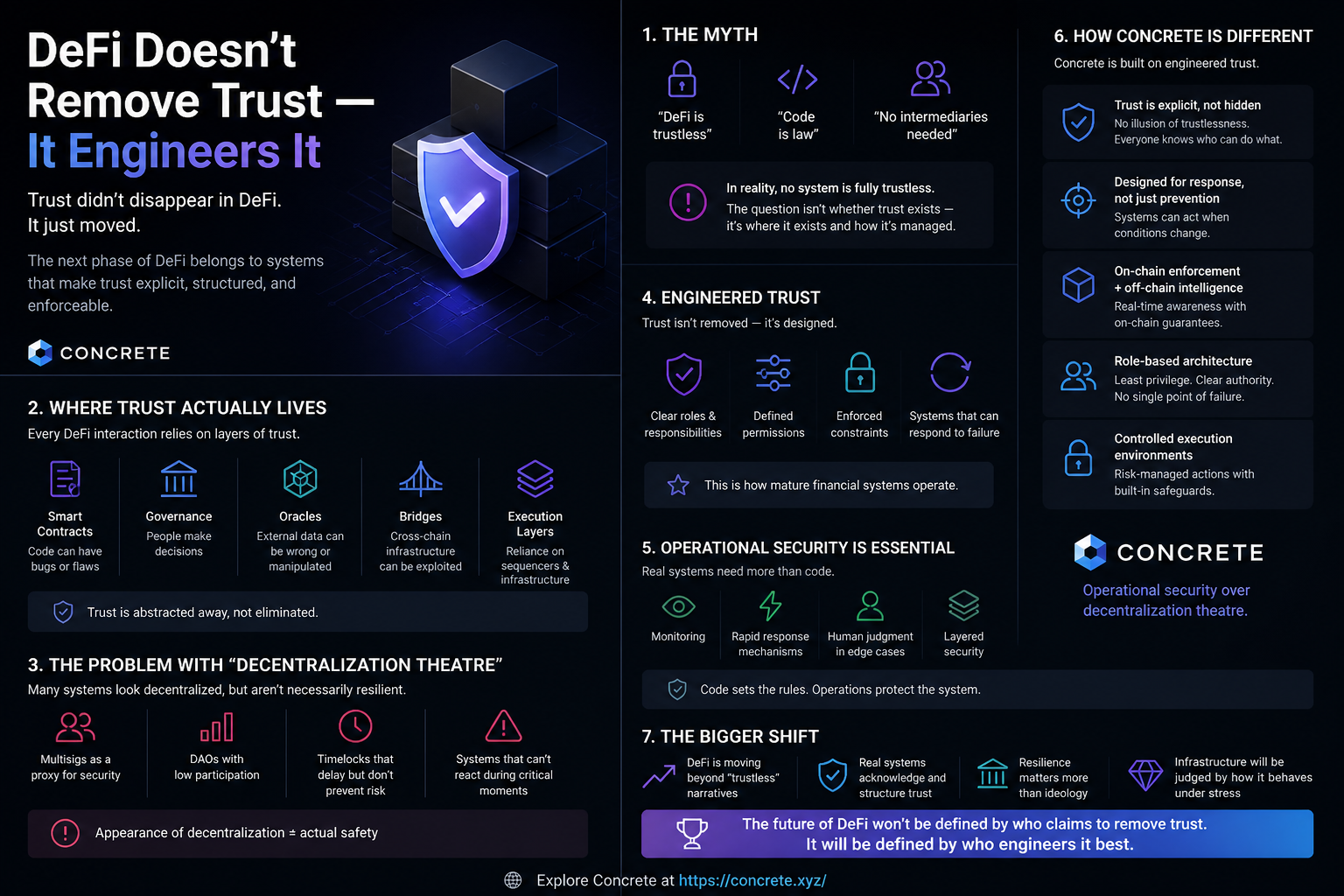
Every DeFi interaction has assumptions baked into it.
We trust the contract won’t break.
We trust the oracle isn’t wrong.
We trust the bridge won’t get exploited.
We trust governance won’t make a bad call.
None of that is removed.
It’s just pushed into the background.
Where It Gets Risky
The problem isn’t that trust exists.
It’s that it’s often unclear and unmanaged.
A protocol can look decentralized, but still rely on:
- a small multisig
- inactive governance
- delayed reactions to real issues
So when something goes wrong, there’s no clear way to respond.
That’s not decentralization, but fragility.
What Actually Feels Strong
The systems that hold up don’t pretend to be trustless.
They make trust visible.
Who can act.
What they can do.
When they can do it.
And just as important, what happens when things break.
That’s what engineered trust looks like.
Why Code Alone Isn’t Enough
Code is good at rules.
It’s not good at edge cases.
Markets move fast. Exploits happen faster.
If a system can’t react, it doesn’t matter how “decentralized” it looks, it won’t survive stress.
Real DeFi security needs more than prevention. It needs response.
This Is Where Concrete Comes In
Concrete https://concrete.xyz/ doesn’t try to hide trust behind the “trustless” label.
It structures it.
- clear roles
- controlled execution
- onchain enforcement
- ability to respond when needed
It’s built around operational security, closer to how real financial systems work, but onchain.
What’s Changing
DeFi is moving past the narrative.
Less “don’t trust anyone”
More “know exactly what you’re trusting”
Because in the end, the strongest DeFi infrastructure won’t be the one that claims to remove trust, it’ll be the one that handles it best when things go wrong.