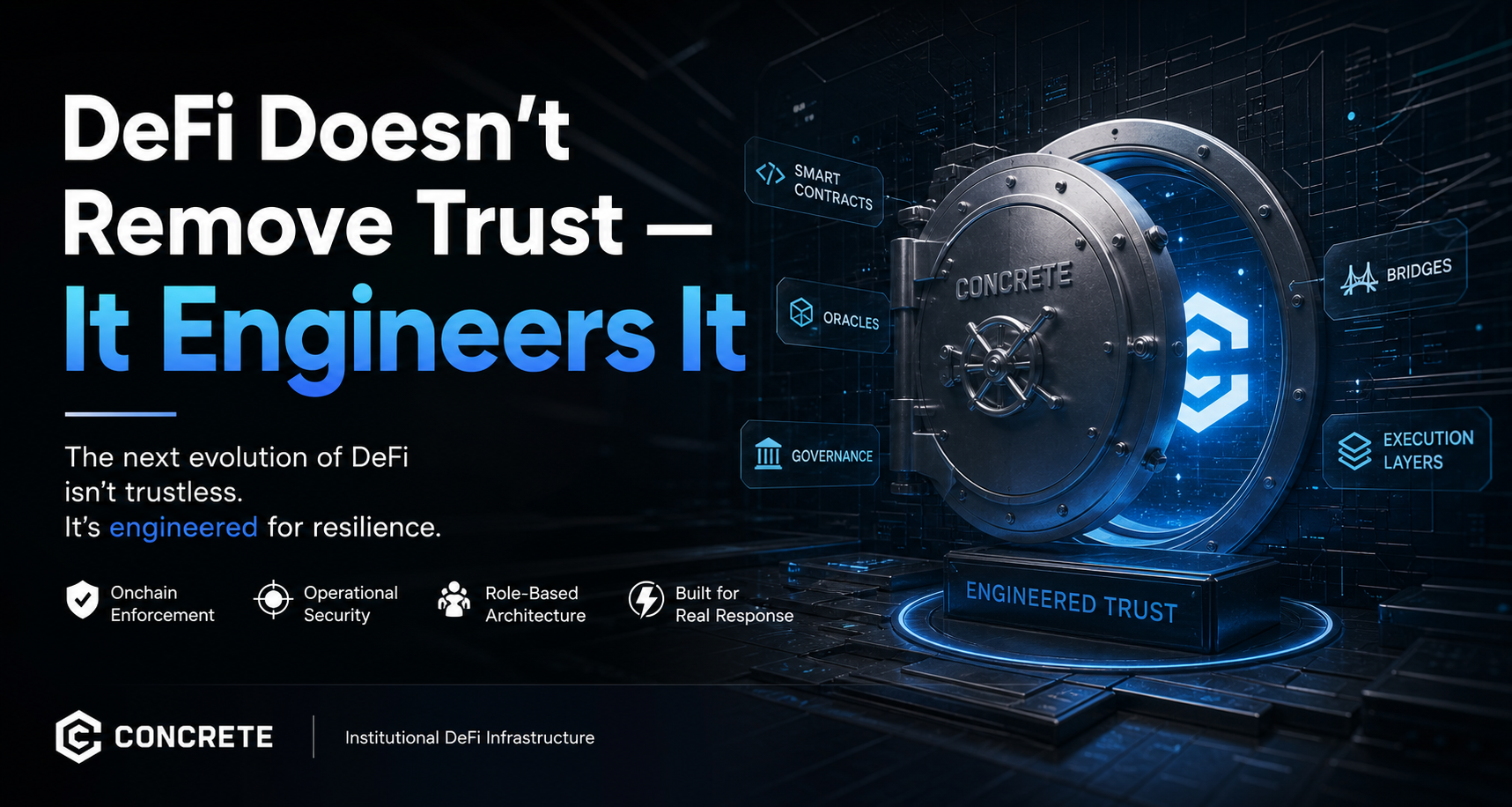
DeFi Doesn’t Remove Trust - It Engineers It
 Waqas3 min read·Just now
--
DeFi was built on a powerful idea: remove trust from finance and replace it with code. The narrative was simple — don’t trust people, trust smart contracts. For a while, this worked. It attracted users, capital, and innovation by promising a system where intermediaries were no longer needed and where execution was guaranteed by code. But as DeFi has evolved, it has become clear that this idea was never entirely true. Trust didn’t disappear — it simply moved into different layers of the system.
The concept of “trustless systems” created an illusion that DeFi operates without reliance on any entity or assumption. In reality, every interaction in DeFi still depends on trust, just in less visible forms. Users trust that smart contracts are written correctly, audited properly, and free from vulnerabilities. Yet history has repeatedly shown that bugs, exploits, and unforeseen edge cases are inevitable. Code is powerful, but it is not perfect.
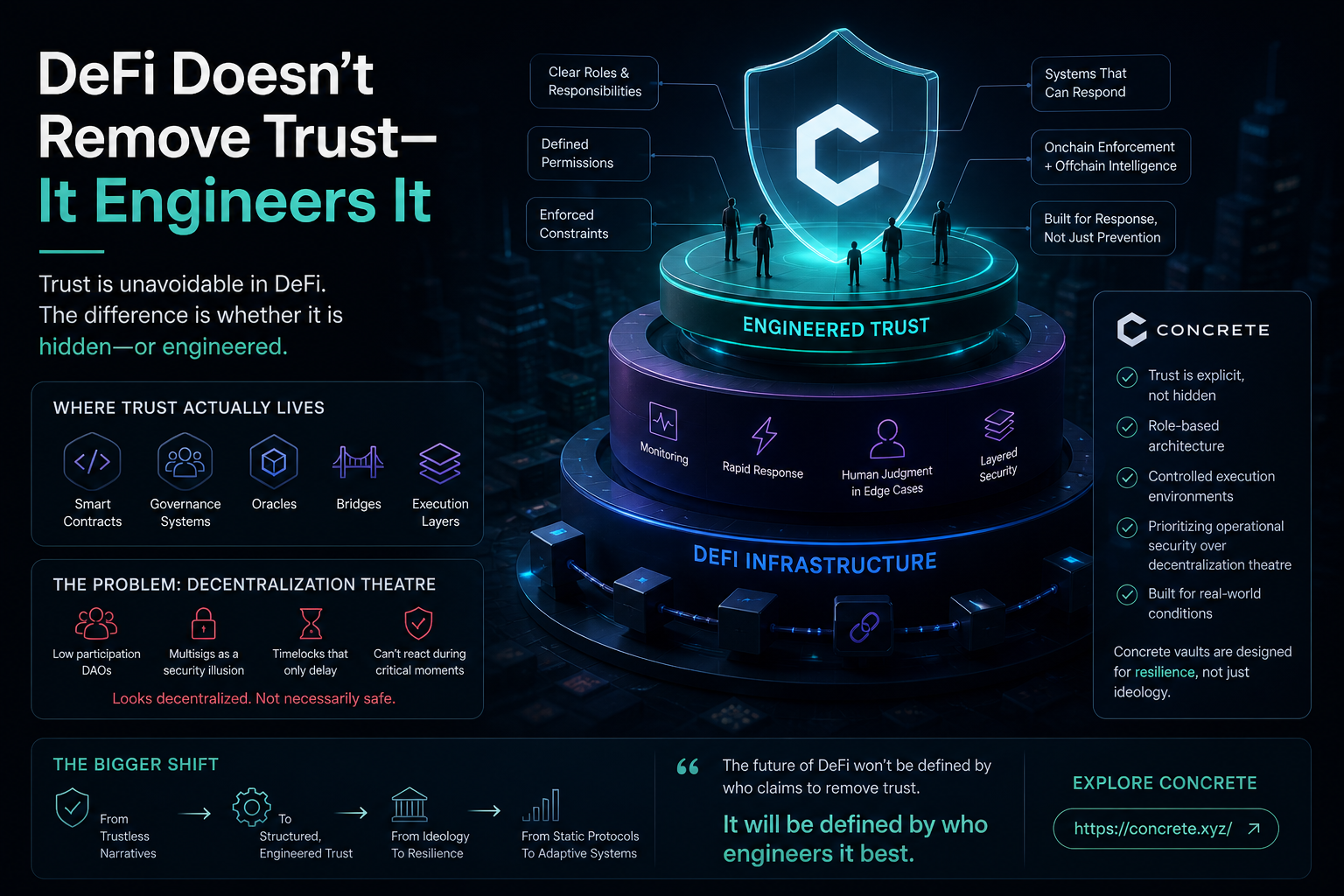
Beyond smart contracts, trust extends into governance systems. Many protocols rely on DAOs to make decisions, but participation is often limited and influence can be concentrated among a small group of token holders. This shifts trust from centralized institutions to governance structures that may not always reflect the broader community. Similarly, oracles introduce another dependency layer, as protocols rely on external data feeds for prices and market conditions. If the data is inaccurate or manipulated, the entire system can break. Bridges, which enable cross-chain interactions, have become one of the most vulnerable points in DeFi, requiring users to trust complex mechanisms that have historically been targets for major exploits. Even execution layers, such as validators and block builders, influence how transactions are processed, introducing yet another dimension of trust.
What makes this more problematic is the rise of what can be called decentralization theatre. Many systems appear decentralized on the surface but lack true resilience underneath. Multisignature wallets are often presented as a security solution, yet they concentrate power among a few individuals. DAOs may exist in structure but suffer from low participation, making them less decentralized in practice. Timelocks can delay actions but do not eliminate risks, and rigid systems often fail to respond effectively during critical situations. These designs prioritize the appearance of decentralization rather than actual safety, creating a gap between perception and reality.
The next phase of DeFi requires moving beyond this illusion and embracing a more honest approach. Trust is not something that can be eliminated — it must be engineered. Engineered trust means designing systems where roles, permissions, and responsibilities are clearly defined. It means creating enforceable constraints that limit risk and building mechanisms that allow systems to respond when things go wrong. This is how mature financial infrastructure operates, and it is the direction DeFi must take if it wants to scale sustainably.
Operational security becomes critical in this context. Real-world systems are unpredictable, and no amount of code can anticipate every possible scenario. Effective DeFi infrastructure needs continuous monitoring, rapid response capabilities, and the ability to incorporate human judgment when edge cases arise. Security cannot rely solely on prevention; it must also focus on response. The ability to act quickly during unexpected events often determines whether a system fails or survives.
This is where a new approach to DeFi infrastructure emerges, one that does not hide trust but makes it explicit, structured, and enforceable. Concrete represents this shift by designing systems that prioritize operational security over decentralization theatre. Instead of assuming that code alone can handle every situation, it combines onchain enforcement with off-chain intelligence, allowing for both deterministic execution and adaptive response. Its architecture is built around clearly defined roles and controlled execution environments, reducing uncertainty and minimizing risk. Concrete vaults are designed not just to prevent failure but to handle it effectively when it occurs, which is ultimately what defines resilient systems.
As DeFi continues to evolve, the industry is moving beyond the simplistic narrative of trustless systems. The future will not be defined by protocols that claim to eliminate trust, but by those that understand how to manage and engineer it effectively. Resilience, transparency, and adaptability will matter far more than ideology. In the end, trust is not the enemy of decentralization — poorly designed trust is. The systems that succeed will be the ones that acknowledge this reality and build infrastructure capable of handling it.
Explore Concrete at https://concrete.xyz/