DeFi Doesn’t Eliminate Trust It’s Engineered It
 Beztrhe3 min read·Just now
--
At first glance,DeFi promises a world without trust just code,transparency, and autonomy.But beneath the surface,something more interesting is happening.Trust hasn’t disappeared; it’s been redesigned,redistributed,and quietly embedded into every layer of the system.
** Start with the Myth
DeFi is trustless.
That phrase has become a cornerstone of the decentralized finance narrative. The idea is simple: by removing intermediaries, replacing institutions with smart contracts, and executing everything on-chain, users no longer need to trust anyone.
But this framing is misleading.
DeFi doesn’t eliminate trust it relocates it.
Instead of trusting banks or brokers,users now trust code,infrastructure, governance systems,and the people who build and maintain them. The system hasn’t removed trust; it has transformed its structure.
**Where Trust Really Lies
In practice, every DeFi interaction relies on multiple layers of trust:
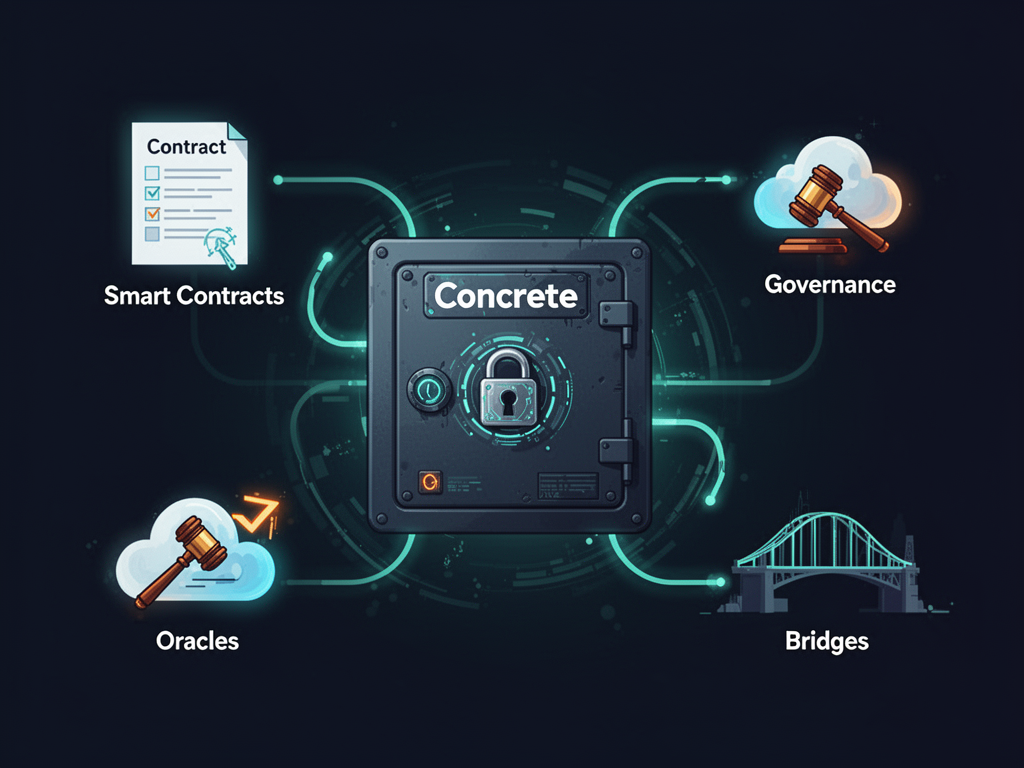
- Smart Contracts → You trust that the code is secure, audited, and free from exploits.
- Oracles → You trust that external data feeds are accurate and manipulation-resistant.
- Frontends & Interfaces → You trust that the UI you’re interacting with isn’t malicious.
- Key Management → You trust yourself (or your tools) to securely manage private keys.
- Governance Systems → You trust that protocol decisions won’t compromise your assets.
Even in so-called trustless systems, trust is embedded at every layer — just abstracted away from traditional institutions.
**The Problem with “Decentralization Theater”
Much of today’s DeFi ecosystem suffers from what can be called decentralization theater systems that appear decentralized on the surface but rely on hidden centralization underneath.
Examples include:
- Admin keys that can pause or upgrade contracts
- Multisigs controlled by small groups
- Centralized frontends acting as gatekeepers
- Upgradeable contracts without clear accountability
These designs create a dangerous illusion: users believe they are operating in a trustless environment when, in reality, they are exposed to opaque and often undocumented trust assumptions.
This gap between perception and reality is where most risks emerge.
**Introducing Engineered Trust
The solution isn’t to chase “zero trust.” That goal is unrealistic.
Instead,the future of DeFi lies in engineered trust.
Engineered trust means:
- Making trust assumptions explicit
- Designing systems where trust is minimized,distributed,and verifiable
- Embedding safeguards that align incentives and reduce failure points
In this model,trust becomes a designed property,not an accidental byproduct.
Trust isn’t eliminated it’s engineered.
**Why This Matters for Operational Security
Real financial systems require more than just code correctness.They require strong Operational Security.
This includes:
- Access Control → Who can move funds,upgrade contracts,or trigger actions
- Transaction Policies → Rules governing how and when assets can be used
- Monitoring & Response → Detecting and reacting to anomalies in real time
- Key Protection → Secure custody mechanisms beyond basic wallets
Without these layers, even perfectly written smart contracts can become vulnerable due to human error,compromised keys,or governance failures.
DeFi security is not just about preventing exploits it’s about managing real-world operational risk.
**From Theory to Practice: A Concrete Approach
This is where systems like Concrete introduce a fundamentally different model.
Instead of assuming trustlessness, Concrete builds DeFi Infrastructure around controlled,verifiable trust mechanisms.
Core Concepts
Concrete Vaults
Vaults are designed with programmable constraints:
- Define who can access funds
- Enforce transaction limits
- Restrict interactions to approved protocols
Policy-Driven Execution
Every action is governed by predefined rules,reducing reliance on manual decision-making.
Onchain Law Enforcement
Rather than reacting after an incident,enforcement is embedded directly into the system:
- Invalid actions are blocked at execution
- Policies act as real-time guards
Institutional-Grade Design
Built for teams and organizations,not just individuals:
- Multi-role access systems
- Transparent accountability
- Audit-friendly structures
This transforms DeFi from a purely permissionless environment into a controlled yet decentralized system one where trust is visible,measurable, and enforceable.
**A Bigger Shift
The next phase of DeFi isn’t about removing trust it’s about designing better trust systems.
We are moving from:
- “Trustless” → Transparent trust
- “Permissionless” → Policy-aware systems
- “Code is law” → Code + enforcement is law
Concrete represents this shift by focusing on:
- Real DeFi Security, not just theoretical guarantees
- Practical Operational Security for real users and institutions
- Structured systems that enable Institutional DeFi at scale
The future of decentralized finance will not be built on the absence of trust.It will be built on engineered trust systems where trust is intentional, verifiable,and resilient by design. Explore Concrete at APP
DeFi Security,Trustless Systems,Engineered Trust,DeFi Infrastructure,Operational Security,Institutional DeFi,Concrete Vaults,Access Control Systems