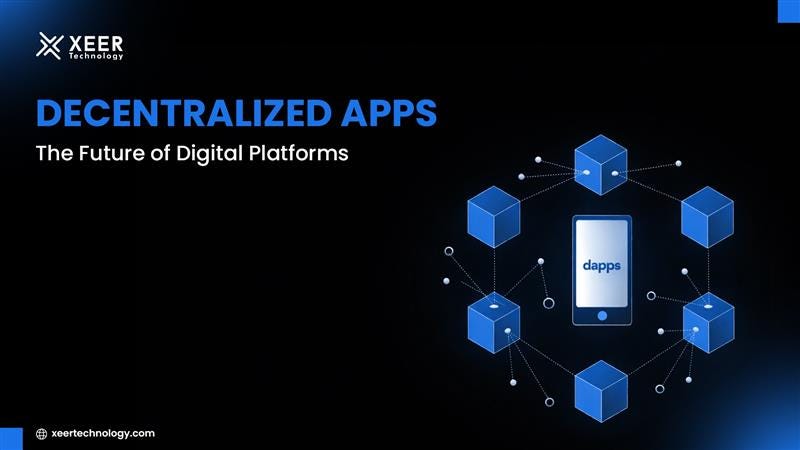
Decentralized Apps: The Future of Digital Platforms
 Xeer Technology3 min read·Just now
--
The internet is evolving. As users demand more control, privacy, and transparency, decentralized applications (dApps) are emerging as the next major shift in how digital platforms are built and used. Unlike traditional apps that rely on centralized servers, dApps operate on blockchain networks — changing the rules of trust, ownership, and power online.
Let’s explore why decentralized apps are shaping the future of digital platforms.
What Are Decentralized Apps (dApps)?
Decentralized applications are software programs that run on blockchain networks instead of centralized servers. They use smart contracts to automate processes and ensure transparency without relying on intermediaries.
Most dApps are built on blockchain platforms like Ethereum, which enables developers to create trustless, permissionless applications accessible to anyone with an internet connection.
How dApps Differ from Traditional Apps
Traditional apps (Web2) are controlled by a single organization that manages data, servers, and user access. dApps flip this model.
Key differences:
- No central authority controlling the platform
- Data stored across a distributed blockchain network
- Open-source and transparent logic
- Users retain ownership of assets and data
This shift removes single points of failure and reduces the risk of censorship or data misuse.
Core Benefits of Decentralized Apps
1. User Ownership and Control
dApps give users full control over their digital assets, identities, and data. Wallets replace logins, and users interact directly with the application.
2. Transparency and Trust
All transactions and logic are recorded on the blockchain and can be publicly verified. This creates trust without needing a middleman.
3. Enhanced Security
Decentralized networks reduce hacking risks associated with centralized servers. Smart contracts execute automatically and securely once deployed.
4. Global Accessibility
Anyone, anywhere in the world, can access dApps without approval from banks, governments, or platforms.
Real-World Use Cases of dApps
Decentralized apps are already transforming multiple industries:
- Finance (DeFi): Lending, borrowing, and trading without banks
- Social Media: Censorship-resistant, user-owned platforms
- Supply Chain: Transparent tracking of goods and logistics
- Digital Identity: Secure, self-sovereign identity solutions
Popular networks like Polygon and Solana are accelerating dApp adoption by offering faster and cheaper transactions.
Challenges dApps Still Face
While promising, decentralized apps are still evolving. Common challenges include:
- Scalability and transaction speed
- Complex user experience for non-technical users
- Regulatory uncertainty
- Higher development complexity
However, continuous innovation in Layer-2 solutions and wallet UX is rapidly closing these gaps.
Why dApps Represent the Future
Decentralized apps align with the growing demand for:
- Digital freedom
- Data privacy
- Trustless systems
- Borderless access
As Web3 adoption grows, dApps are expected to become as common as mobile apps — powering finance, entertainment, communication, and governance in a more open digital world.
Final Thoughts
Decentralized apps are not just a trend — they represent a fundamental shift in how digital platforms operate. By removing intermediaries and putting users in control, dApps are laying the foundation for a more transparent, secure, and user-centric internet.
The future of digital platforms is decentralized — and it has already begun.
#DecentralizedApps #dApps #Blockchain #Web3 #CryptoTechnology #DigitalPlatforms #DataOwnership #Trustless #FutureOfInternet #XeerTechnology