DAOs Aren’t as Decentralized as You Think: The Governance Problem No One Talks About
 Joey Bing4 min read·Just now
--
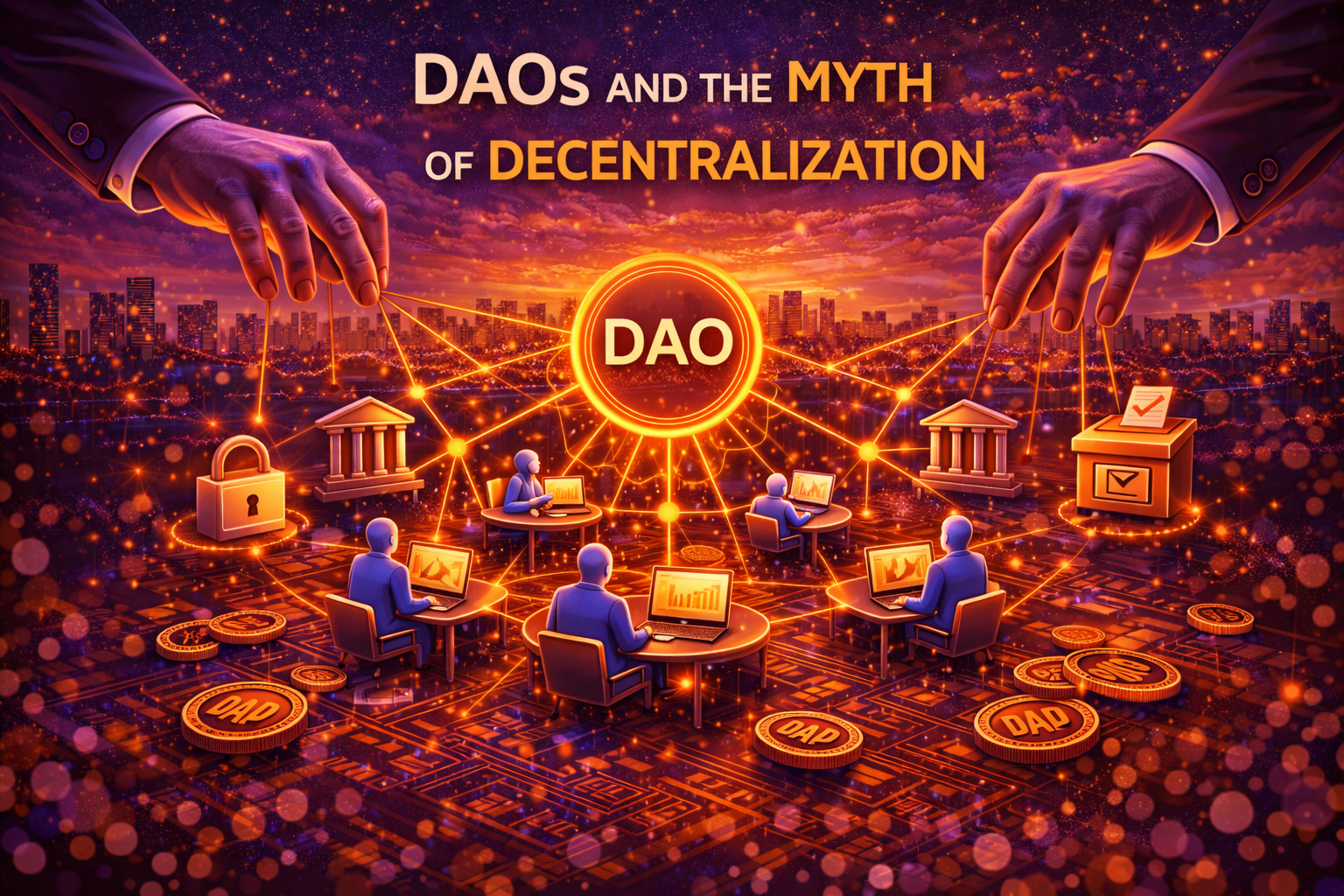
People often say that Decentralized Autonomous Organizations (DAOs) are the next big thing in governance because they are open, democratic, and don't have a central authority. In theory, DAOs let groups of people make decisions together by voting on ideas with tokens and deciding what will happen with a project in the future.
But in practice, the reality is far more complicated.
Many DAOs have deep structural problems that make the very idea of decentralization hard to work with, even though they have a lot of potential. Under the surface, there is a problem with governance that not many people talk about openly. This problem makes people wonder who really has power in Web3.
The Ideal vs The Reality
The ideal DAO operates like a digital democracy:
- Every token holder has a voice.
- Decisions are made collectively.
- Power is distributed across the community.
However, reality often looks different:
- A small number of large holders dominate voting.
- Participation rates are extremely low.
- Key decisions are influenced by insiders.
This gap between theory and practice is where the governance problem begins.
Token-Based Voting: A Flawed System
Most DAOs rely on token-based voting, where influence is proportional to the number of tokens held. While simple, this model introduces significant flaws.
1. Wealth Concentration
Those with the most tokens have the most power, effectively turning governance into a plutocracy.
2. Voter Apathy
Many token holders do not participate in governance at all, leaving decisions to a small minority.
3. Short-Term Thinking
Large holders may prioritize decisions that maximize short-term gains rather than long-term sustainability.
In many cases, this system undermines the very decentralization DAOs aim to achieve.
The Hidden Influence of Core Teams
Even in “decentralized” organizations, core teams and early contributors often retain significant influence.
They may:
- Control large portions of the token supply.
- Shape proposals before they reach the community.
- Influence outcomes through informal channels.
This leads to a subtle form of centralization that you can't always see on the blockchain but is very real in real life.
Governance Theater
Some DAOs fall into what can be described as “governance theater.” Proposals are put forward and voted on, but the outcomes are often predictable.
In such cases:
- Decisions are effectively pre-determined.
- Community voting becomes symbolic rather than impactful.
- Transparency exists, but true power does not shift.
This can lead to disillusionment among participants, weakening the overall ecosystem.
A Note on Market Focus
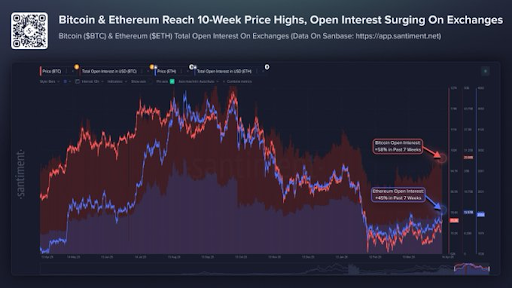
In the broader crypto space, attention is often drawn toward price speculation rather than governance structures. For example, discussions around ada cardano price prediction frequently dominate forums and social media, capturing the interest of investors.
On the other hand, while people look for ada cardano price predictions, important governance issues in DAOs get a lot less attention. This imbalance shows a major problem: markets pay attention to changes in prices, but they often forget about the systems that determine long-term success.
Can DAOs Be Fixed?
Despite these challenges, DAOs are still evolving, and several solutions are being explored:
1. Quadratic Voting
This model reduces the influence of large holders by making additional votes increasingly expensive.
2. Delegated Governance
Token holders can delegate their voting power to trusted representatives, improving participation.
3. Reputation-Based Systems
Instead of relying solely on tokens, governance can incorporate reputation and contribution metrics.
4. Improved Incentives
Encouraging participation through rewards can help address voter apathy.
While promising, these solutions are still experimental and have their own trade-offs.
The Future of DAO Governance
DAOs are not flawed in and of themselves, but the way they are used now is very far from perfect. To truly decentralize something, it takes more than just giving out tokens. It needs well-thought-out design, active participation, and constant improvement.
As the ecosystem matures, governance models will likely evolve, blending different approaches to create more balanced systems.
Conclusion
DAOs represent one of the most ambitious experiments in digital governance. They challenge traditional structures and offer a glimpse into a more decentralized future.
However, the idea that DAOs are fully decentralized today is more myth than reality.
The problem of governance, which includes too much power, not enough participation, and hidden influence, is still a big problem. It needs to be fixed if DAOs are to live up to their promise of being truly community-driven organizations.
Until then, decentralization in DAOs is not a destination that has been reached, but a goal that is still very much in progress.