Imagine walking past a construction site in the very heart of a metropolis. All around you see a high fence, mud, scattered bricks, and the constant roar of heavy machinery. Passersby shake their heads: “What a mess, just another stalled project; they’ll never finish this.” But if you were to peek at the architect’s blueprints, you would see a magnificent skyscraper with the strongest foundation in the world, capable of withstanding any storm.
The first quarter of 2026 in the crypto industry is exactly this “messy construction” stage. We are living in two parallel realities: the gloomy “yesterday” (red numbers on the screens) and the brilliant “tomorrow” (fundamental changes that are now unstoppable). So, let us cast aside all speculative news and price effects to analyze in detail what actually happened during this period and what to expect in the coming chapters.
1. General Market: The Deep Clean Before the Move
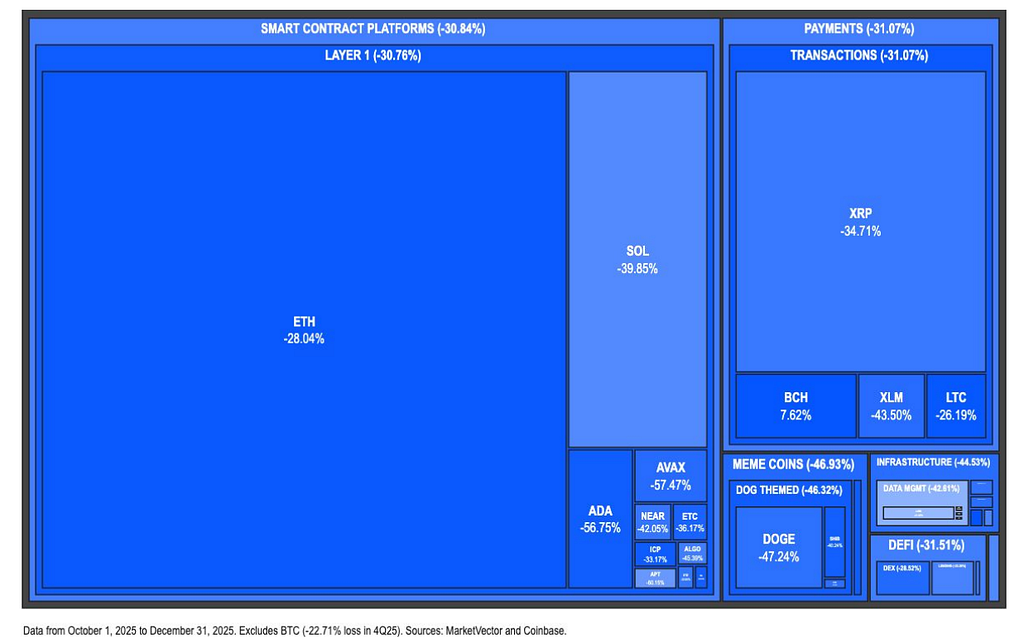
Looking only at the monitor can be unsettling: the top 10 assets lost between 23% and 57% of their value. It feels like the end of a wild party: the music has stopped, the random crowd has left, and only empty bottles remain. According to MarketVector, key sectors — including Blockchain Layer 1, Smart Contracts Platforms, and DeFi — saw an average loss of around -30%, which is a very significant indicator. Ultimately, however, this more closely resembles a routine deep cleaning before officially entering a modern, state-of-the-art home.
2. Bitcoin: A Solid Foundation
Bitcoin’s price dipped by 22%. Is it time to panic? Only if you refuse to look deeper. While speculators leave the market in fear, “conviction buyers” are doing the exact opposite. It resembles a massive clearance sale: while the crowd runs out of the store, the smartest players are buying up assets, knowing their true worth.
Today, we are witnessing a historic shift: giants that ignored the crypto world for decades have finally “opened the doors.” Leading brokerages, such as Merrill Lynch and Wells Fargo, have officially allowed their advisors to recommend crypto ETFs. This isn’t just a formal permission — it is the full-scale legitimization of digital assets in the eyes of conservative capital.
According to data from ARK Invest, this trend has reached unprecedented proportions. Accumulation volumes during the first quarter of 2026 show the highest dynamics since 2020. Currently, over 3.6 million coins are under the management of companies and private individuals (excluding exchange balances and mining companies).
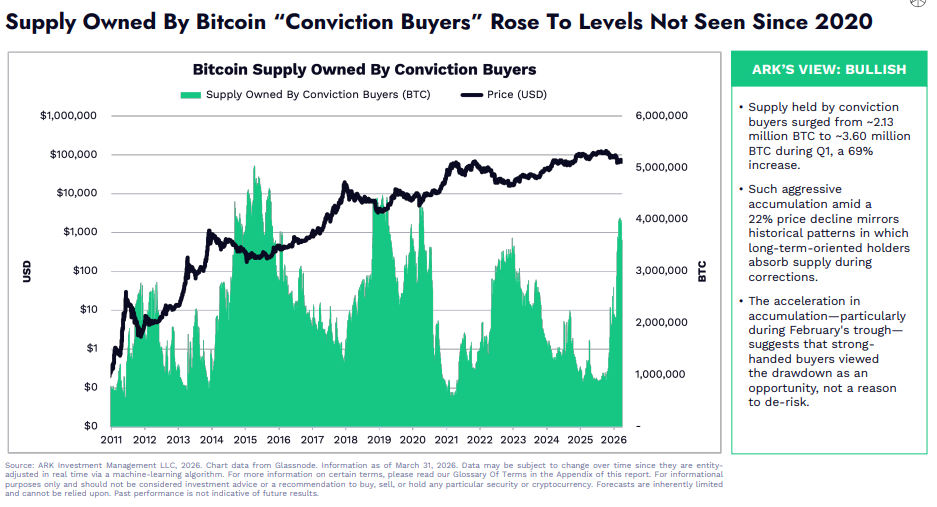
Let’s take a look inside our building’s “vault”:
- Corporate Reserves: 187 public companies now hold 1.15 million BTC (approximately $77 billion — more than the budgets of many countries).
- Institutional Money: In March alone, Bitcoin ETFs saw a net inflow of $1.3 billion.

While some see “red charts,” others see the foundation of a new financial system growing stronger by the day. Furthermore, the regulatory war seems to be moving into a truce phase. The SEC and CFTC have collectively classified 18 key assets (including BTC, ETH, and Solana) as commodities. For large funds, this is a “safety certificate” that allows them to invest billions without the fear of sudden lawsuits.
The Bottom Line: Institutional players, funds, and capital have already conducted thorough preparations for the official start of the new season, accumulating significant volumes of assets on their balances. Wall Street is merely waiting for the final official nod from regulators to give the signal for the “move-in” to our new home.
3. Ethereum: Technological Triumph in the Silence of “Empty Aisles”
Ethereum currently resembles a subway system that has completely replaced its rails with high-speed magnetic levitation tracks. Thanks to the Pectra and Fusaka upgrades, the “fare” (fees) has become almost free, and the network itself is operating at record levels.
The quality of this technological leap is best demonstrated by the numbers. According to Bitwise, the average number of active addresses on the Ethereum network reached a new historic peak, exceeding 500,000. This means that despite the “sleepy” price of the asset itself, real-world network utility is only gaining momentum.
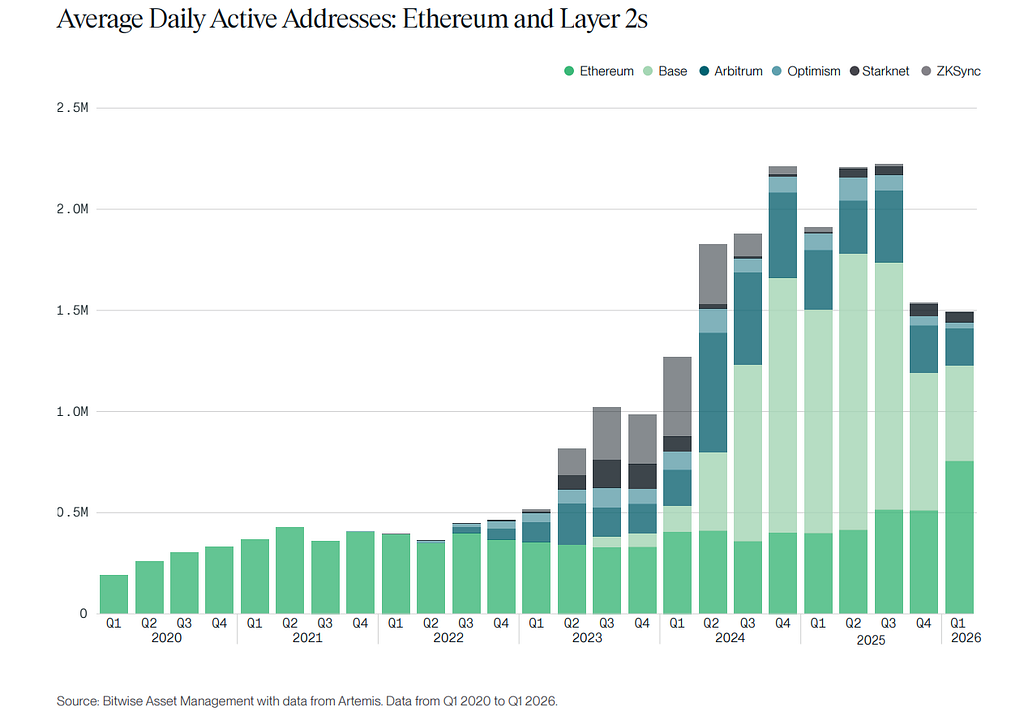
Why build such a complex system now?
It is crucial to understand: such massive structural changes are not made for small-scale transfers. This is preparation for an upcoming tsunami of capital. Everything is being built for one specific goal — the era of total tokenization. We are standing on the threshold of a time when:
- Company stocks will trade 24/7 on the blockchain, not just during exchange hours.
- Government treasury bonds and gold will turn into digital tokens that can be settled in seconds.
- Real estate and commodities will become liquid assets in your crypto wallet.
Ethereum is preparing a “highway” for volumes that are orders of magnitude larger than today’s. While retail investors stare at the price chart, big players see a network ready to become the primary operating layer for global digital asset trade. When this process begins in earnest, those who have already “taken their seat” on this train will find themselves in a vastly superior position.
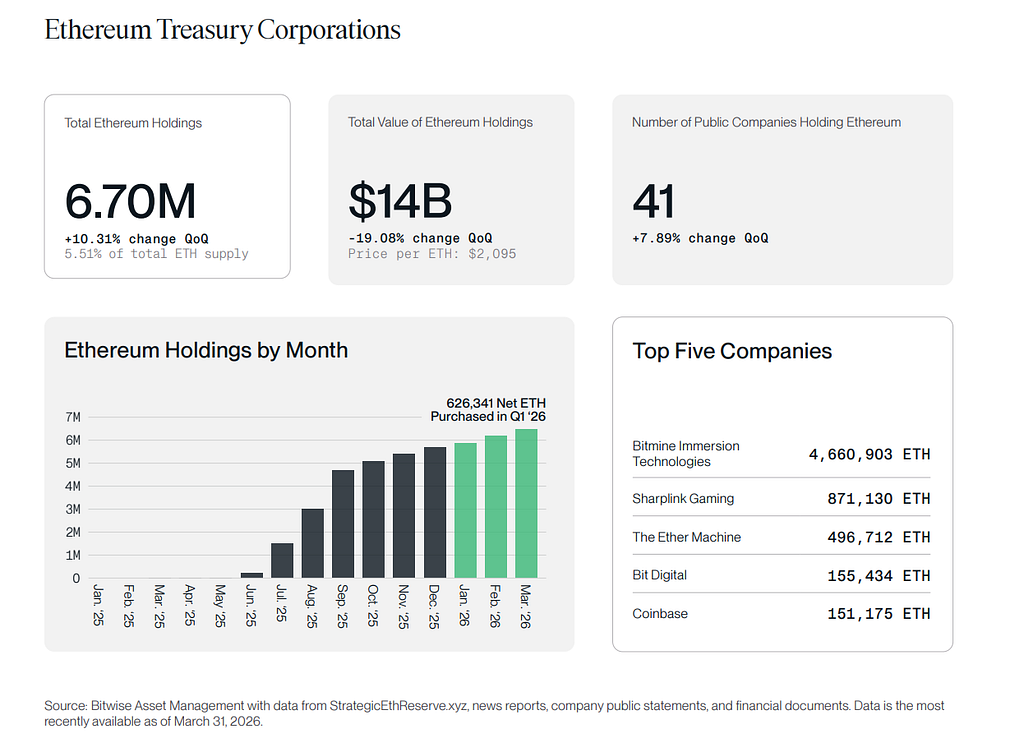
While the price “signaled” a -29% drop during Q1 2026, we see a massive inventory of property:
- Corporate Reserves: 41 public companies hold 6.7 million ETH (worth $14 billion), with their reserves growing by 10% this quarter.
- ETP Flows: Overall, investors have already poured over $10.6 billion into these funds.
Technology has already outpaced the price. When millions of new users drive onto this “highway,” they won’t even notice how cheaply and quickly everything works.
4. Liquidity: The First Test Runs
As analysts note, “despite the price dynamics, the on-chain health of the network has turned bullish.” Imagine a marathon runner. His body is exhausted by the price, but his heart and lungs are performing at their peak.
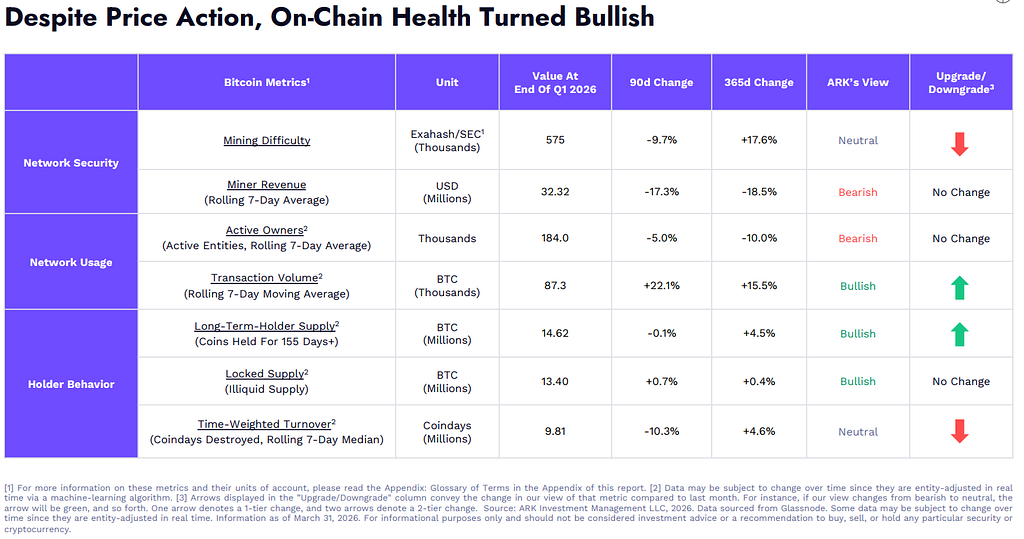
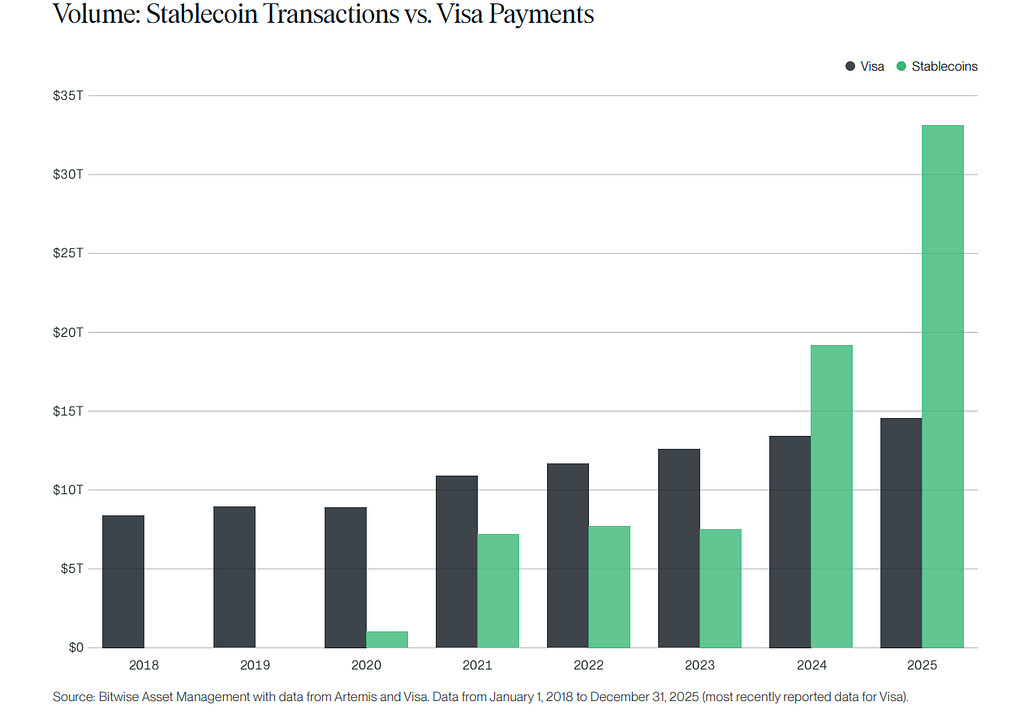
According to ARK Invest, Bitcoin network activity grew by 22% this quarter. This again highlights the hidden interest occurring far beyond price fluctuations. Meanwhile, digital dollars (stablecoins) are already moving more money than the giant Visa. Stablecoins have become the “digital blood” flowing through the veins of finance 24/7. These are the first trial runs — testing massive volumes of liquidity (capital) through new routes and protocols heading toward their final destinations: Bitcoin and Ethereum.
Final Takeaways for You:
We are currently in the “purge” stage. The market is washing out weak players. Prices are low, but the fundamental news has never been better. History teaches us: when the news is great, but the numbers on the monitor are grim — that is the best time for those who look 3–5 years ahead.
Stay calm. The palace is being built right now.
Crypto Paradox Q1 2026: When Is Wall Street Officially Moving Into the New Digital Office? was originally published in Coinmonks on Medium, where people are continuing the conversation by highlighting and responding to this story.