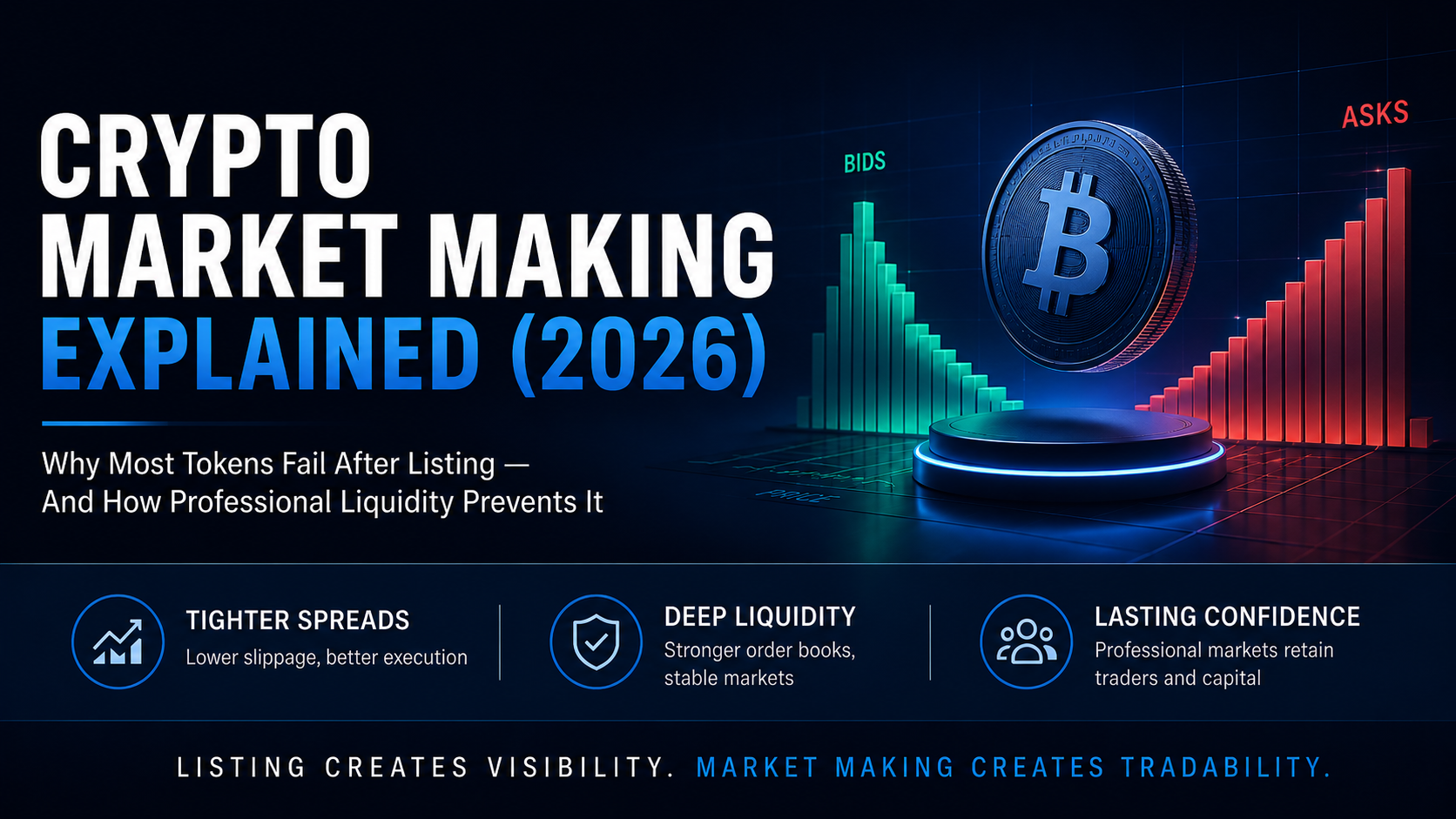
Crypto Market Making Explained (2026): Why Most Tokens Fail After Listing — And How Professional Liquidity Prevents It
 Cryptolistingpro -Web3 Launch & Exchange Execution3 min read·Just now
--
Most founders treat exchange listing as the finish line.
It’s only the starting line.
A token can surge on launch hype, trend for days, then quietly bleed out. Volume dries up, price collapses, and traders disappear.
The reason? Listing creates visibility. Market making creates tradability.
Without continuous liquidity and order book support, even promising projects lose momentum fast.
This guide breaks down how professional crypto market making works in 2026, why liquidity beats volume for long-term success, and how the right market structure separates tokens that survive from those that vanish.
What Is Crypto Market Making?
Crypto market making means continuously placing buy (bids) and sell (asks) orders in an exchange order book to ensure smooth, reliable trading.
Top market makers focus on:
- Tight bid-ask spreads
- Deep liquidity at multiple price levels
- Smart inventory management to handle pressure without wild swings
Result: Lower slippage, reduced volatility, and a professional trading environment that builds lasting trader confidence.
Why Market Making Determines Post-Listing Success
Projects invest heavily in marketing, KOLs, and launch events — but often overlook what happens when trading actually begins.
Without active market making:
- Spreads widen dramatically
- Even small orders cause large price moves
- Slippage frustrates traders
- Confidence collapses within days
Core distinction: Listing puts your token on the map. Market making decides whether real trading happens there.
How Order Books Work in Practice
Every exchange pair runs on a live order book showing bids and asks.
The spread is the gap between the highest bid and lowest ask. Depth measures how much volume sits near the current price.
Healthy Order Book Characteristics
- Spreads under 0.5–1%
- Strong stacked liquidity on both sides
- Smooth execution during normal volatility
Weak Order Book:
- Spreads of several percentage points
- Shallow depth
- Sharp 10–30%+ swings on moderate orders
Thin books turn minor selling pressure into cascading dumps — a common post-listing killer.
Liquidity vs Volume: The Biggest Misconception
High 24h volume does not mean a healthy market.
You can see strong volume numbers while suffering:
- Wide spreads
- Poor depth
- Unstable price action
Volume creates attention. Liquidity creates sustainability.
Wash trading or hype-driven volume often masks weak underlying structure. Real liquidity keeps the market functional long after initial excitement fades.
Why Most Tokens Fail Post-Listing
Failure after listing is rarely about the project fundamentals. It’s usually a market structure problem.
Typical causes:
- Inadequate liquidity depth from day one
- No sustained order book support
- Rapid inventory imbalance for makers
- Unmanaged volatility and sell pressure
Weak trading conditions often reduce trader retention and long-term market activity. Persistent weak conditions hurt visibility and can lead to reduced promotion or worse. Strong communities cannot compensate for terrible trading experience indefinitely.
How Professional Market Making Works Today
2026 market making is sophisticated and algorithmic. It includes:
- Real-time spread optimization
- Dynamic depth provision
- Cross-venue inventory balancing
- Volatility control systems
- Risk-managed execution
The objective is not price pumping. It is orderly, efficient markets that attract and retain serious traders and capital.
Common Market Making Myths
- ❌ “High volume = healthy market”
- ❌ “Listing solves liquidity automatically”
- ❌ “Only Tier-1 exchanges need professional making”
- ❌ “AMM locked liquidity replaces CEX order books”
Truth: Centralized exchange order books require dedicated, professional management — separate from protocol-level liquidity.
How to Prepare Before Listing
Treat market making as a core pre-listing requirement:
- Allocate proper liquidity budget early
- Define target spreads and depth
- Partner with experienced makers
- Align support with marketing and unlocks
Biggest mistake: Obsessing over launch day while ignoring day 8, day 30, and day 90.
Build a Market That Lasts
Exchange listing creates the spotlight. Professional market making keeps it shining long after the hype cycle ends.
If you’re preparing for an exchange listing or need stronger post-listing performance:
👉 If you’re preparing for an exchange listing or looking to improve post-listing market stability: https://www.cryptolistingpro.com/market-making
Final Thoughts
In 2026, the gap between a short-lived token and a sustainable one comes down to market structure — not just project quality or initial hype.
Secure visibility with smart listings. Secure longevity with professional liquidity.
Projects that understand both visibility and liquidity don’t just attract attention.
They sustain markets after the attention fades.