Concrete 1000 Bags
--
If You Can’t Explain Yield, You Are the Yield
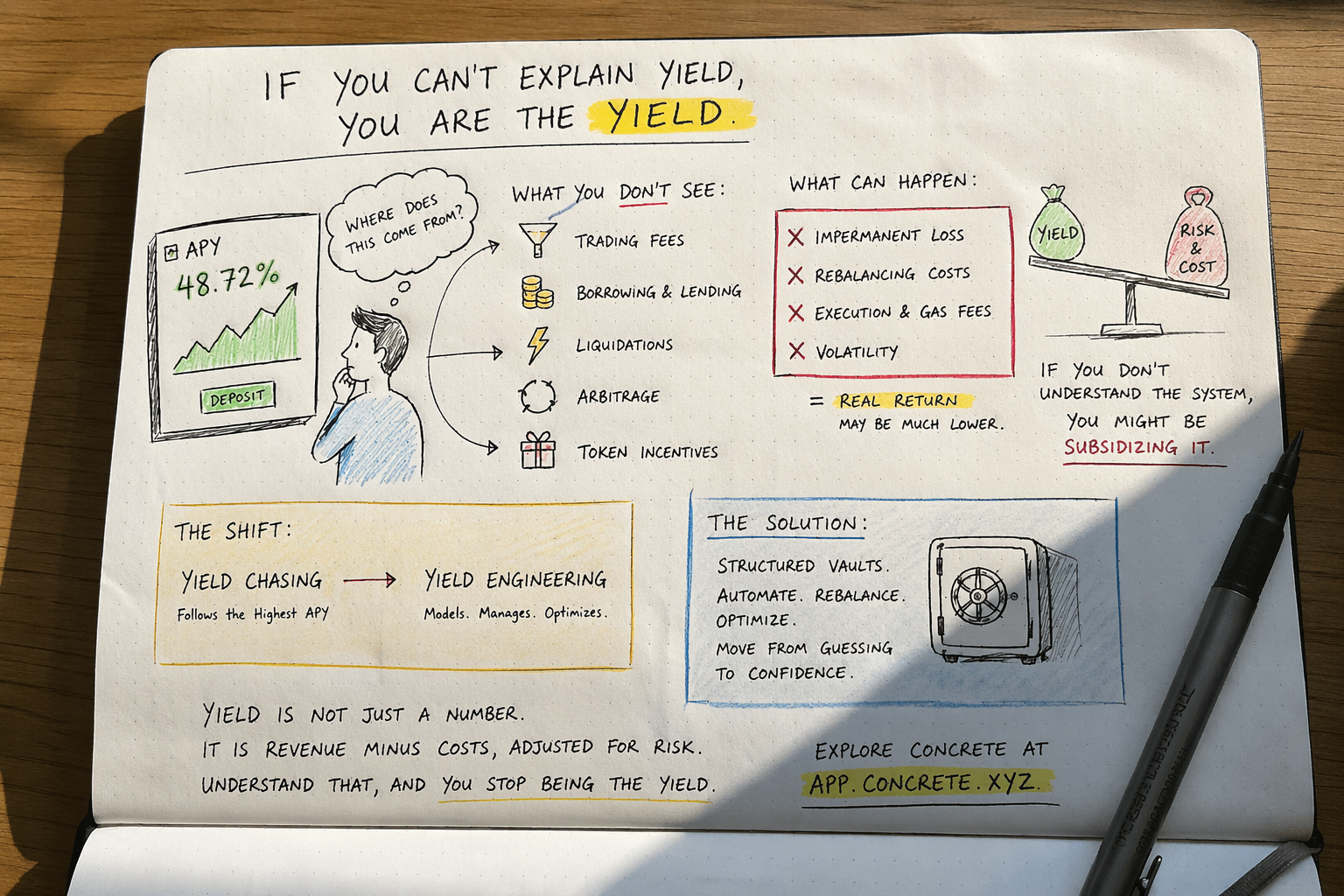
In DeFi, yield is packaged to feel effortless. A few clicks, a token deposit, and suddenly a dashboard shows double-digit APY updating in real time. It feels mechanical — like money simply “working.” But that presentation hides more than it reveals.
The number you see is only the surface layer. Real returns are shaped by forces that rarely appear on-screen: price volatility, impermanent loss, gas fees, slippage, and timing. What looks attractive in isolation can quietly erode once these variables take effect.
To understand yield, you have to trace its origin. It comes from somewhere: traders paying fees, borrowers paying interest, liquidations creating opportunity, or protocols emitting incentives to attract liquidity. Each source carries its own durability. Some persist. Others fade as conditions change.
The critical mistake is assuming all yield is passive. In reality, participation often means exposure. When you provide liquidity without fully understanding the mechanics, you may be absorbing risk so others can extract value.
This is why outcomes vary so widely. Two users can enter the same pool and leave with completely different results. The difference isn’t luck — it’s awareness, modeling, and decision-making.
DeFi is now moving beyond simple yield chasing toward structured yield design. Tools like Concrete Vaults help automate strategies, rebalance positions, and manage risk dynamically.
Explore Concrete at app.concrete.xyz
Because yield isn’t magic — it’s engineered.