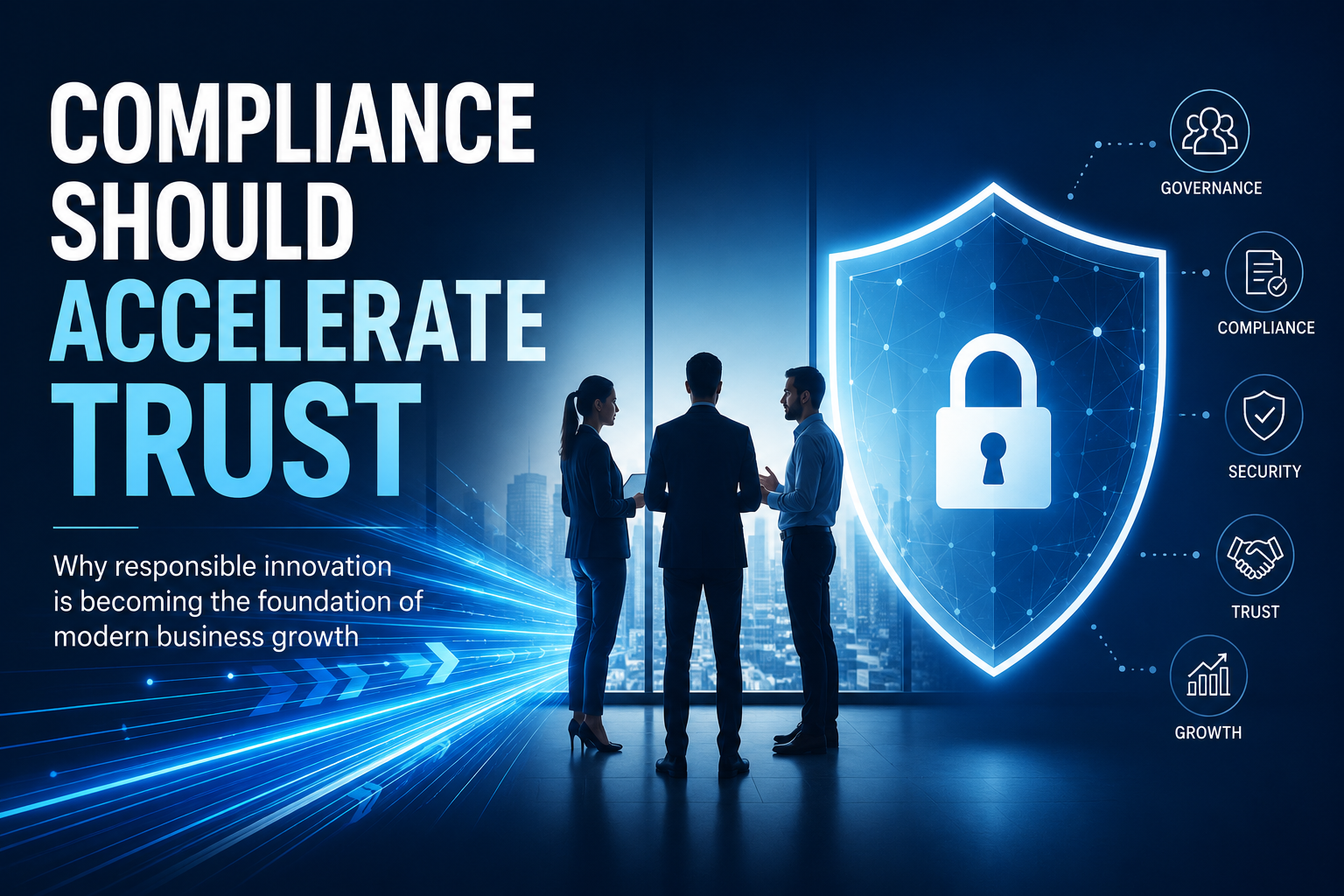
Compliance Should Build Confidence, Not Fear
Companies that earn lasting trust are not the ones moving the slowest. They are the ones learning how to grow without losing momentum.
 Avika6 min read·Just now
--
There is a frustration inside many modern businesses.
This frustration is rarely talked about honestly.
Innovation teams want to move
Legal teams want to be careful.
Security teams want a plan.
Leadership wants growth.
Customers want to trust the company.
Everyone is trying to protect something.
The process often feels like a constant internal struggle.
Somewhere along the way, compliance became associated with delay.
It became the department that people feared being involved in conversations with early.
Teams began to see governance as paperwork for protection.
Reviews became roadblocks.
Security questionnaires became tasks.
Policies became documents nobody wanted to read.
The irony is clear.
The systems designed to build trust are now often blamed for slowing down relationships that trust depends on.
The problem is not compliance itself.
The problem is how organizations approach it.
The future belongs to companies that understand a shift.
Compliance should not exist to restrict innovation.
It should exist to strengthen confidence in innovation.
That distinction changes everything.
Why Trust Has Become More Valuable Than Speed Alone
For years, growth in technology was measured by how companies could launch products, gain users, and enter markets.
Today, customers are asking questions.
How is our data protected?
Who has access to our information?
Can this platform be trusted in the long term?
What happens during a breach?
How transparent is this company when something goes wrong?
Trust has become one of the most valuable assets in business.
Not marketing trust.
Operational trust.
The kind built through consistency, accountability, and responsible systems.
This shift matters.
Digital relationships now operate at scale.
A single platform may hold records, personal conversations, healthcare information, or internal company intelligence for millions of people.
When trust breaks, the consequences are severe.
People remember how organisations handle responsibility.
That is why compliance can no longer be treated as a stage checklist.
It has become part of the customer experience itself.
When done correctly, compliance creates reassurance.
It tells customers:
“We thought carefully about protecting what matters to you.”
That message is more powerful than many companies realise.
The Hidden Cost of Treating Compliance Like an Obstacle
Many organisations unintentionally create a relationship between innovation and governance.
Product teams feel monitored and supported.
Security reviews arrive late in development cycles.
Compliance teams operate reactively because they were excluded from conversations.
Leadership becomes frustrated by delays without addressing the issues creating them.
Over time, trust inside the organization starts eroding.
Teams stop collaborating
People avoid asking questions
Decisions become defensive and strategic.
Innovation slows not because compliance exists. Because alignment disappeared.
This is where many businesses misunderstand the issue.
The biggest threat to innovation is not governance.
It is communication.
Companies that move effectively today are not removing compliance from the process.
They are integrating it intelligently from the beginning.
That creates a different culture.
Of hearing:
“This cannot be done.”
Teams begin hearing:
“Here is how we can do this responsibly.”
One sentence creates fear.
The other creates progress.
The Organizations Moving Fastest Are Often the Structured
There is a common myth that structure kills creativity.
In reality, mature systems often create the safety needed for innovation to thrive.
Think about industries where trust is critical.
Healthcare.
Finance.
Cloud infrastructure.
Enterprise software.
These sectors cannot survive on speed alone.
They survive because customers believe systems are reliable, secure, and resilient.
The strongest organizations understand that operational discipline creates freedom.
When teams know security expectations, early development becomes smoother.
When governance frameworks are clear, approvals become faster.
When documentation is organized, audits become less painful.
When risk conversations happen continuously, crises become less destructive.
Building Compliance Into the Culture of Paperwork
Policies alone do not create responsible companies.
Culture does.
Many organizations invest heavily in documentation while ignoring the reality of how teams experience governance internally.
If employees associate compliance with punishment avoidance naturally follows.
If they associate it with clarity and protection, engagement improves dramatically.
That shift starts with leadership behavior.
Healthy organizations normalize conversations about responsibility early and often.
They encourage collaboration between operational and governance teams before products reach critical stages.
Some practical shifts make a difference:
* Make Governance Understandable
* Involve Compliance Early
* Focus on Risk Prioritization
* Treat Transparency as Strength
The Emotional Side of Responsible Innovation
There is also a human side to this conversation.
Behind every compliance framework are real people making judgment calls under pressure.
People are balancing deadlines, expectations, legal obligations, customer needs, and operational complexity simultaneously.
Innovation culture sometimes glorifies speed aggressively, so that thoughtful caution becomes unfairly associated with weakness.
Responsible decision-making requires courage, too.
Choosing to slow down to protect users is not a failure.
Asking ethical questions is not resistance to progress.
Building systems carefully is not a lack of ambition.
The Real Opportunity Hidden Inside Compliance
Many organizations still view compliance as a cost center.
That mindset is becoming outdated.
Strong governance increasingly creates an advantage.
Customers evaluate vendors based on trust posture.
Investors assess maturity more carefully.
Enterprise partnerships often depend on security credibility.
Regulatory readiness influences expansion opportunities.
The Challenges Nobody Talks About Openly
None of this is easy.
Building innovation systems requires patience, alignment, and continuous adjustment.
One major challenge is balancing flexibility with consistency.
Much rigidity slows teams unnecessarily.
Little structure creates chaos.
Another challenge is leadership alignment.
If executives publicly prioritize speed while privately expecting risk reduction, teams receive signals.
There is also the challenge of scale.
Processes that work for startups often break under enterprise growth.
Where the Industry Is Heading Next
The future of compliance will look very different from the past.
Automation will reduce manual reviews.
Artificial intelligence will assist with risk monitoring and anomaly detection.
Continuous compliance models will replace static audit preparation cycles.
Customers will increasingly expect real-time transparency of occasional assurances.
At the time, global regulatory expectations are becoming more interconnected.
Data privacy, cybersecurity, ethical AI practices, and operational accountability are no longer niche concerns.
They are becoming business expectations.
Organizations that adapt early will gain advantages.
Not just in how we work but in how people see us.
Because trust grows fast.
Customers talk to friends and family.
Partners watch closely.
Employees notice a lot.
Investors look carefully.
In a world with technology options,s people choose companies that make them feel safe, respected, and understood.
That special kind of trust will define leaders more than many numbers do.
What does Responsible Innovation Look Like?
Consider a healthcare platform handling patient records.
Compliance is not about passing checks.
It is about protecting info when people are vulnerable.
Think about a financial technology company processing payments.
Security is not a requirement. It helps customers trust the platform with their money.
Even workplace tools have a responsibility.
Internal conversations, plans, and data flow through environments that employees expect to be protected.
In each case,e compliance is part of the user relationship.
When handled well, customers rarely notice it.
They feel its absence when something goes wrong.
The best systems create a sense of security.
That sense strengthens loyalty over time.
The Companies People Remember
Years from now, people may not remember every product feature.
They will remember which organizations kept trust when it mattered most.
They will remember which companies were honest during those times.
They will remember which leaders chose responsibility even when it was hard.
Innovation gets attention.
Responsible innovation builds a lasting legacy.
And that legacy is built through small decisions that say one thing:
“You can trust us.”
That message cannot be created through branding
It must be earned through actions, culture, and consistency.
Compliance at its best shows care.
In a rapidly changing world,d care may become a key business strategy.
If this perspective resonated with you, you follow the publication for conversations around technology, trust, innovation, ion, and business culture.
If you enjoyed this story, consider sharing your thoughts in the comments. Meaningful discussions often begin with perspectives from readers like you.
Writers, strategists, operators, and curious thinkers are also welcome to contribute ideas and experiences. Collaborative insights help industries evolve responsibly.
Connections, conversations, and thoughtful collaborations are always valuable in a world learning how to innovate with accountability.