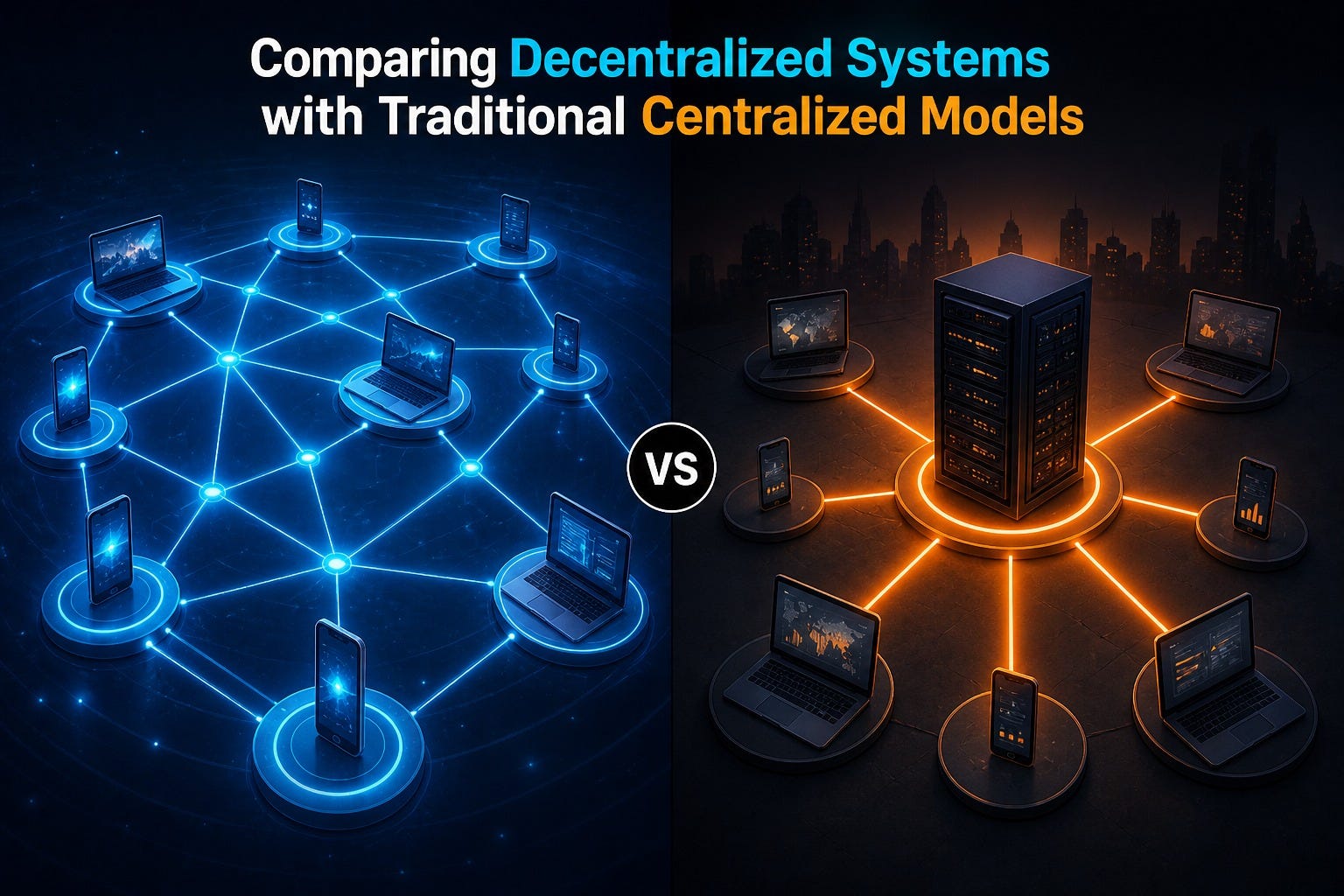
Comparing Decentralized Systems with Traditional Centralized Models
 Abcnetwork4 min read·Just now
--
The digital world is evolving rapidly, and one of the biggest technological shifts in recent years is the movement from traditional centralized systems to decentralized systems powered by blockchain technology. Businesses, financial platforms, online services, and even global communities are now exploring decentralized infrastructures because of their transparency, security, and efficiency.
While centralized systems have dominated industries for decades, decentralized technologies are introducing a new approach that gives users greater control over data, transactions, and digital interactions. Understanding the difference between these two models is essential for anyone interested in the future of technology, finance, and online ecosystems.
To explore blockchain activity and decentralized infrastructure in real time, users can visit the official Advance Blockchain Explorer.
Understanding Centralized Systems
A centralized system operates under the control of a single authority or organization. All data, operations, and decisions are managed from one central point. Traditional banks, social media platforms, online services, and many businesses use centralized structures.
Examples of centralized systems include:
- Traditional banking networks
- Centralized payment gateways
- Social media companies
- Cloud storage services
- Government databases
In these systems, users depend on the central authority for access, security, maintenance, and transaction approvals.
Advantages of Centralized Systems
Centralized models became popular because they offer:
- Faster decision-making
- Easier system management
- Better customer support
- Simplified updates and maintenance
- Consistent operational control
However, despite these advantages, centralized systems also face major limitations.
Problems with Traditional Centralized Models
As digital ecosystems grow larger, centralized systems often struggle with:
Single Point of Failure
If the central server fails, the entire system can stop working. This creates major risks for businesses and users.
Data Privacy Concerns
Centralized organizations store massive amounts of user data, making them attractive targets for hackers and cyberattacks.
Limited Transparency
Users usually cannot verify how data is handled or how transactions are processed internally.
Higher Operational Costs
Intermediaries and centralized management structures often increase transaction and service costs.
Dependency on Third Parties
Users must trust the organization completely to manage their information securely and fairly.
What Are Decentralized Systems?
Decentralized systems distribute control across multiple nodes instead of relying on one central authority. Blockchain technology is one of the most powerful examples of decentralization.
In decentralized systems:
- Data is distributed across networks
- Transactions are verified collectively
- No single entity controls the entire system
- Transparency is improved
- Security becomes stronger through distributed architecture
Modern blockchain ecosystems are helping decentralized technology become more practical and scalable for real-world applications.
Platforms like
MuffinSwap AI
are contributing to the growth of decentralized financial infrastructure and smart blockchain solutions.
Key Differences Between Centralized and Decentralized Systems
Feature
Centralized Systems
Decentralized Systems
Control
Managed by one authority
Distributed across networks
Transparency
Limited visibility
Public and transparent
Security
Vulnerable to single attacks
Distributed protection
Data Ownership
Controlled by organizations
Controlled by users
Transaction Speed
Sometimes delayed
Optimized blockchain systems improve speed
Intermediaries
Required
Often unnecessary
Failure Risk
High single-point failure risk
More resilient infrastructure
Security Comparison
Security is one of the biggest reasons decentralized systems are gaining popularity.
Centralized Security Risks
Centralized databases store huge amounts of sensitive information in one location. If hackers gain access, millions of users can be affected.
Decentralized Security Advantages
Blockchain networks distribute information across multiple nodes, making it far more difficult for attackers to manipulate or destroy data.
This creates:
- Better protection against cyberattacks
- Tamper-resistant records
- Improved trust and transparency
- Stronger data integrity
Financial Systems and Decentralization
Traditional financial systems rely heavily on banks and intermediaries for transactions, approvals, and record management. This often leads to:
- Processing delays
- Higher fees
- Limited accessibility
- Cross-border transaction complications
Decentralized Finance (DeFi) removes many of these barriers by allowing peer-to-peer transactions through blockchain technology.
Benefits include:
- Faster global transactions
- Reduced fees
- Better financial accessibility
- Greater transparency
- Smart contract automation
Stay connected with blockchain innovations and decentralized ecosystem updates through the official
Advance Blockchain Telegram Channel.
Real-World Applications of Decentralized Systems
Decentralized technology is already influencing many industries, including:
Banking and Finance
Blockchain-based payment systems and decentralized exchanges are transforming digital finance.
Supply Chain Management
Businesses can track products transparently from manufacturing to delivery.
Healthcare
Medical records can be stored securely while improving patient privacy.
Gaming
Players gain ownership of digital assets and in-game items.
Digital Identity
Users can control and secure their personal information more effectively.
Challenges of Decentralized Systems
Although decentralized systems offer major advantages, they still face some challenges:
- Regulatory uncertainty
- Technical complexity
- Adoption barriers
- Scalability limitations in some networks
- User education requirements
However, Blockchain 20 technologies are actively improving scalability, efficiency, and user experience to solve many of these issues.
The Future of Decentralized Technology
The future of technology is likely to involve a combination of centralized and decentralized infrastructures. Many businesses may adopt hybrid systems that combine the efficiency of centralized management with the transparency and security of decentralized networks.
Future innovations may include:
- Decentralized social media platforms
- Blockchain-based digital identity systems
- Advanced DeFi ecosystems
- AI-integrated blockchain solutions
- Transparent governance systems
- Faster decentralized applications
As adoption increases, decentralized systems could become a standard part of global digital infrastructure.
Join the Blockchain Community
Communities play an important role in spreading blockchain awareness and innovation. If you want to join discussions, updates, and decentralized technology conversations, connect with the growing community here:
👉 Join the Telegram Blockchain Community
Conclusion
Traditional centralized systems have powered the digital world for decades, but decentralized systems are introducing a more transparent, secure, and user-focused alternative. Blockchain technology is helping businesses and individuals reduce dependency on intermediaries while improving trust, efficiency, and accessibility.
Although both systems have their own strengths and limitations, decentralized infrastructure is rapidly becoming one of the most important innovations shaping the future of finance, technology, and digital communication.
As Blockchain 20 continues to evolve, decentralized systems may redefine how people interact with online services, financial platforms, and digital ecosystems worldwide.