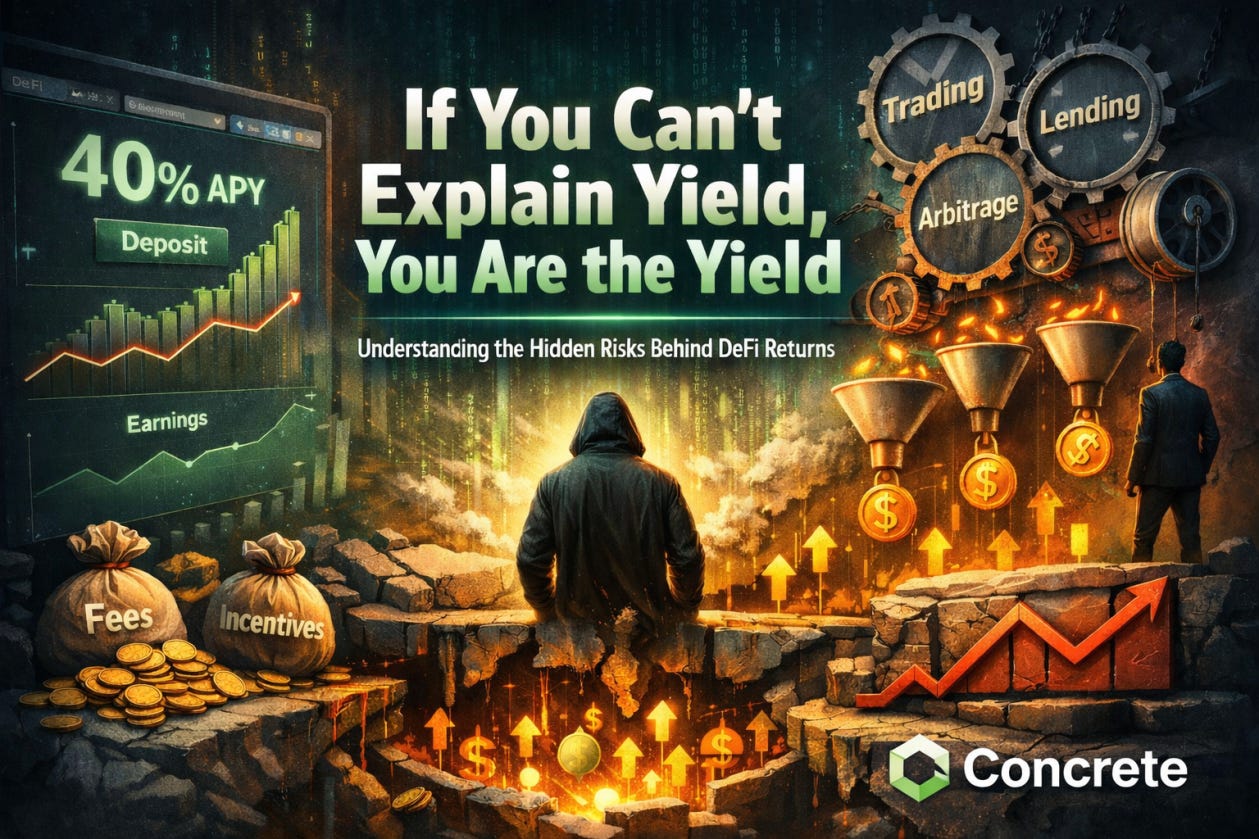
🧱 Community Article of the Week: If You Can’t Explain Yield, You Are the Yield
--
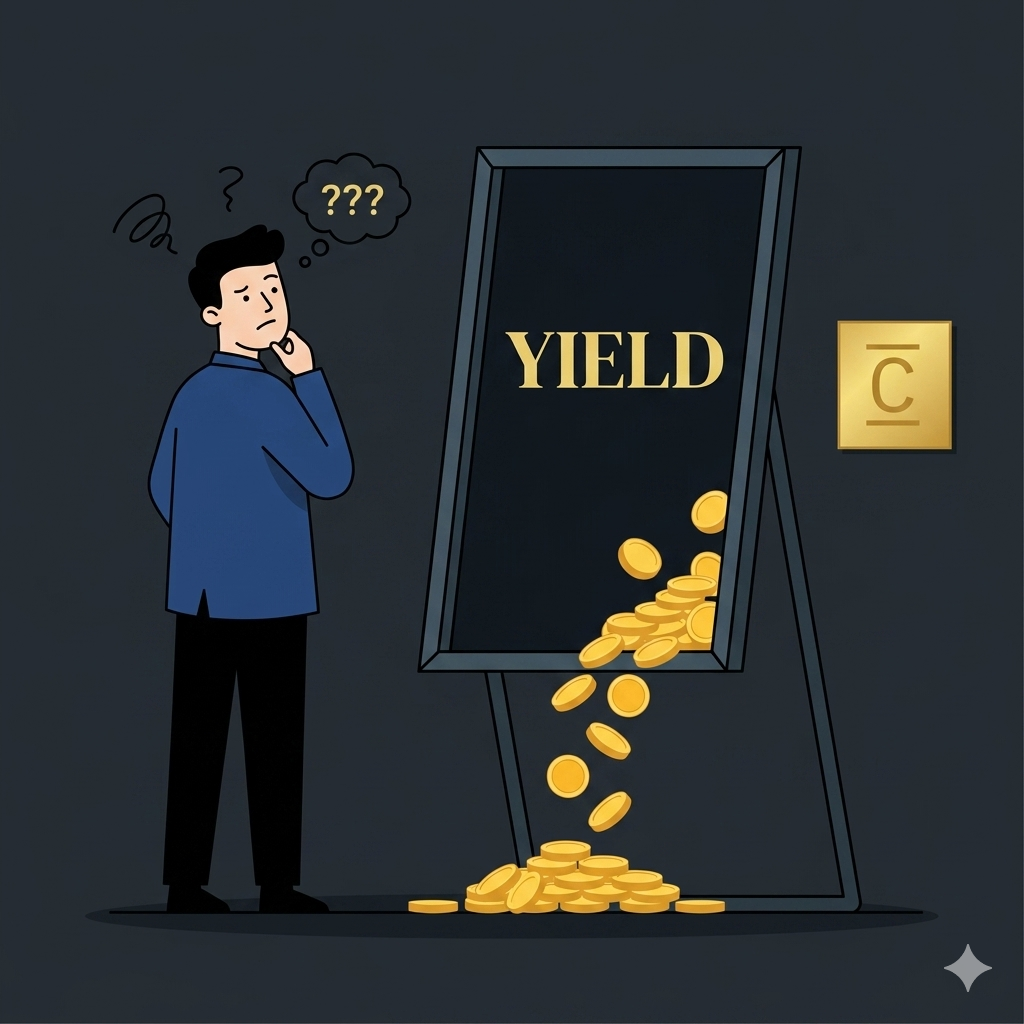
DeFi makes yield look easy, but understanding where it really comes from is far more complex.
1️⃣ The Illusion — How Yield Looks Today
Eye‑catching APYs on dashboards (30 % / 200 % / …)
One‑click deposit → earn flows
Bare‑bones explanations — rarely any detail on the mechanics
At first glance it’s “put token → get %,” but a whole engine runs behind that number.
2️⃣ The Gap Between Displayed and Real Yield
When you stare at a dashboard, the headline APY rarely tells the whole story. Several hidden factors silently erode that number:
Gross versus net returns — Fees, taxes and token incentives often eat most of the advertised APR.
Impermanent loss — Supplying liquidity to volatile pairs can cause the value of your LP tokens to drop, turning a high APY into a loss once prices move.
Rebalancing costs — Every time a strategy moves funds you pay gas fees and may suffer slippage, which shrinks your profit margin.
Execution friction — Delays, failed orders, or only partial fills reduce the amount of yield you actually realize.
Volatility impact — Sharp price swings can convert an 80 % APY into a single‑digit net gain once the underlying assets move against you.
Because of these forces, a headline “80 % APY” can end up as only 5‑10 % net after all costs are accounted for.
3️⃣ Where Yield Actually Comes From
Trading fees — Pools collect a slice of every swap.
Lending activity — Borrowers pay interest to liquidity providers.
Arbitrage — Bots capture price gaps; part of the profit flows back to LPs.
Liquidations — In lending protocols, liquidators earn bonuses that are shared.
Incentives / token emissions — Projects distribute their own tokens to attract capital (often temporary).
Not all of these sources are sustainable; token emissions can dry up quickly, and arbitrage disappears once markets align.
4️⃣ Hidden Value Transfer
If you don’t understand the system, you often subsidize it:
Liquidity without risk awareness — you bear impermanent loss and volatility.
Rewards without cost analysis — emitted tokens may lose value faster than you earn them.
Participation without modeling — sophisticated actors can extract the upside while you absorb the downside.
In other words, the “passive” yield can become a hidden cost you pay.
5️⃣ Why Outcomes Differ
APY chasers jump into the highest numbers, ignoring hidden fees.
Analysts dissect fee structures, loss exposure, and emission schedules.
Institutions run simulations, hedge, and dynamically rebalance.
One sees “200 % APY,” the other sees “2 % clean profit after all adjustments.” Understanding flips the result.
6️⃣ Toward Engineered Yield
DeFi is moving from yield chasing to yield engineering:
Model expected outcomes (price scenarios, volatility).
Manage risk (hedging, diversification).
Optimize over time (auto‑rebalancing, dynamic allocation).
Focus on net returns — the real number after fees, risk and taxes.
This mature approach turns flashy numbers into reliable income.
7️⃣ Concrete Vaults Fill the Gap
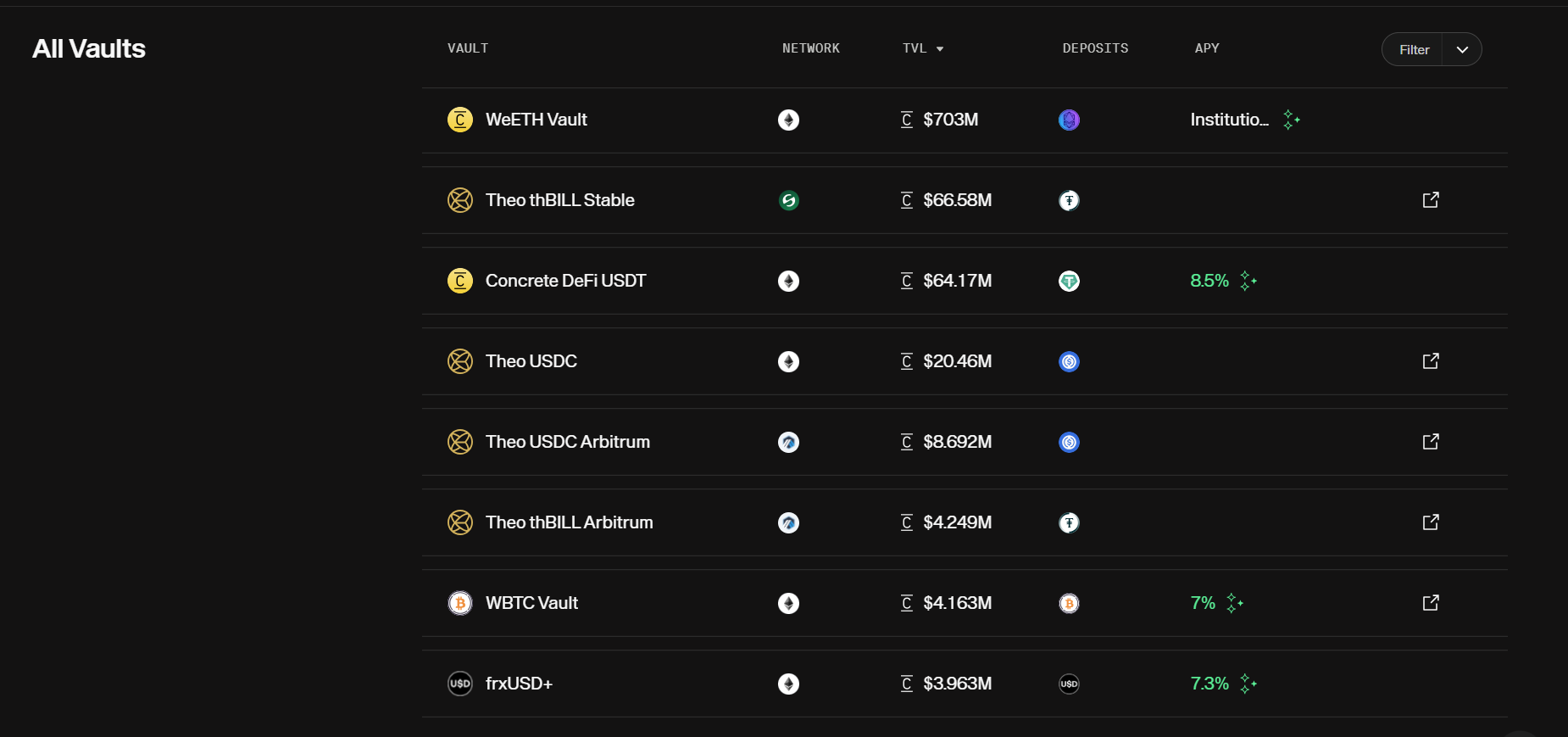
Concrete Vaults (explore at app.concrete.xyz) provide a ready‑made engine for engineered yield:
Automated capital allocation across multiple protocols.
Strategy management with built‑in rebalancing and loss protection.
Reduced manual errors — you set a risk profile, the vault does the rest.
Transparent metrics showing net APR, fees and risk exposure.
Now you move from “guessing” to a structured, data‑driven exposure.
8️⃣ Core Insight
Yield isn’t just a number.
It’s revenue — cost — risk‑adjustment. Recognizing each component changes how you approach DeFi: from “I just earn a percent” to “I build, model, and protect my returns.”