Start now →

Community Article of the Week “DeFi Doesn’t Remove Trust It Engineers It" DeFi emerged with a…

By Okike sylvester Chinaza · Published May 4, 2026 · 2 min read · Source: DeFi Tag
DeFi
Community Article of the Week
“DeFi Doesn’t Remove Trust It Engineers It"
DeFi emerged with a…
Okike sylvester ChinazaOkike sylvester Chinaza2 min read·Just now

--

Community Article of the Week
DeFi Doesn’t Remove Trust It Engineers It"
DeFi emerged with a foundational claim:
“Don’t trust people. Trust code.”
This framed the idea of trustless systems where smart contracts replace intermediaries and eliminate reliance on human discretion.
However, system evolution has exposed structural reality:
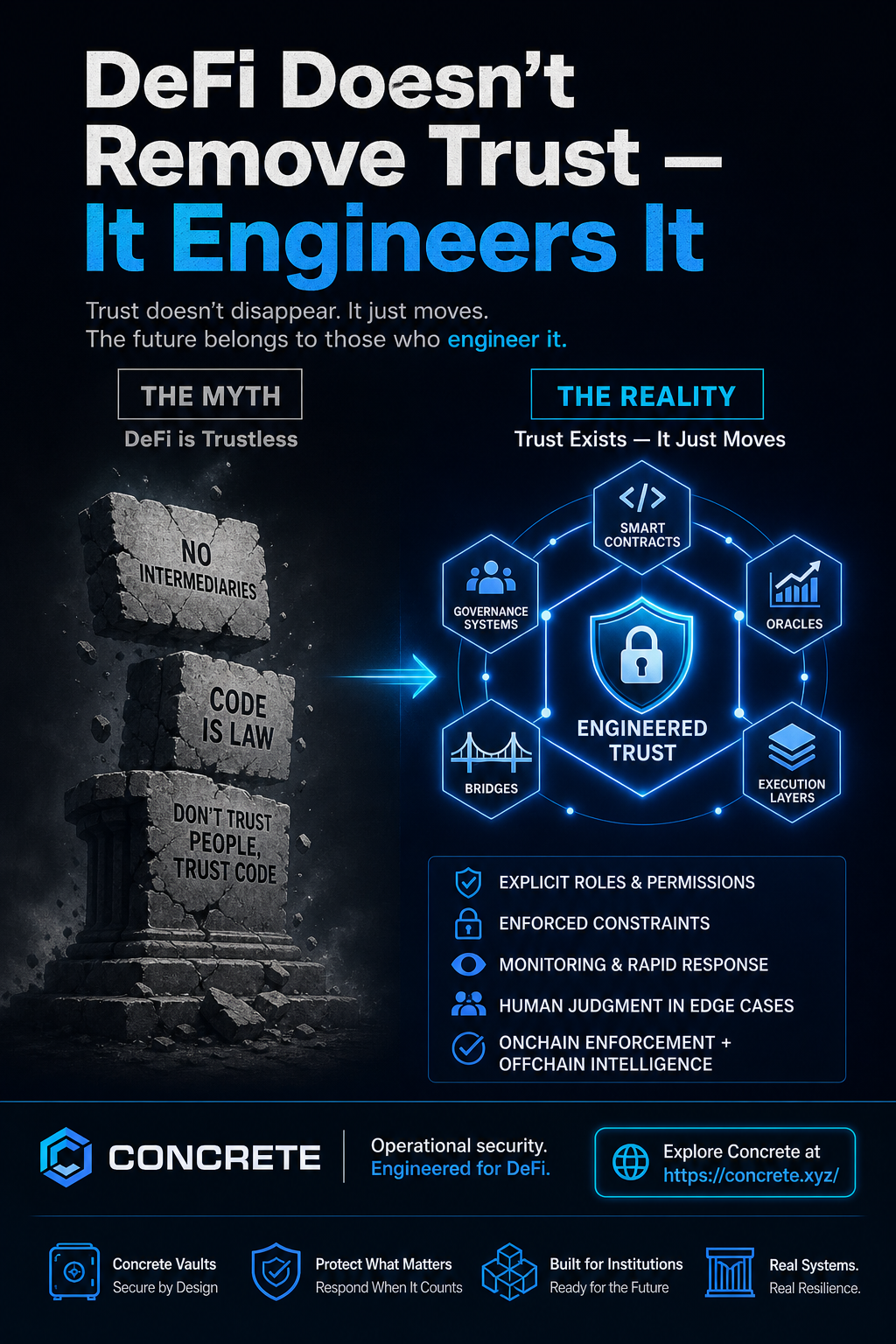
Trust was not removed. It was redistributed.
The Trustless Narrative vs System Reality
Core assumptions in early DeFi:
Code is law
Systems are autonomous
No intermediaries required
Operational reality:
Smart contracts are written, audited, and deployed by humans
Governance systems make ongoing decisions
External data feeds influence execution
Conclusion: trust remains embedded in system design. The critical variable is its structure and visibility.
Where Trust Actually Exists
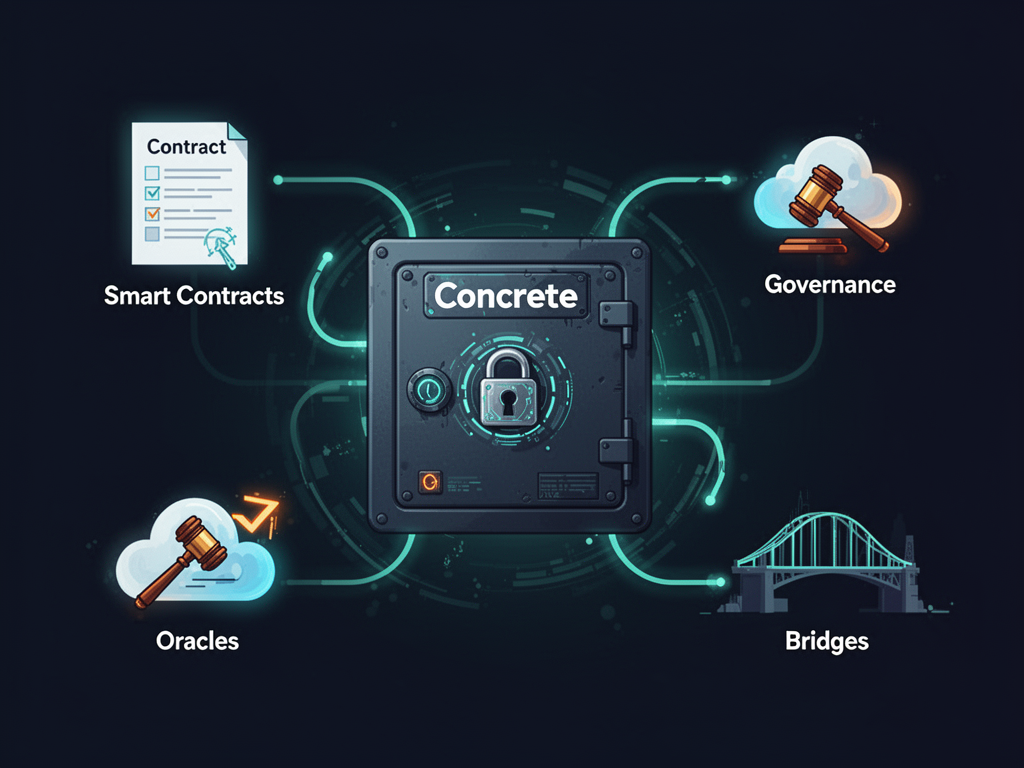
DeFi infrastructure contains multiple trust layers:
Smart contracts → correctness of logic and absence of exploits
Governance systems → parameter changes, upgrades, treasury control
Oracles → accuracy and integrity of external data
Bridges → custody and cross-chain verification
Execution layers → transaction ordering and inclusion
These components are not trustworthy. They are trust-dependent systems with varying guarantees.
Decentralization Theatre
Some systems exhibit surface-level decentralization without corresponding resilience.
Examples:
Multisigs acting as centralized control points
DAOs with low voter participation and concentrated influence
Timelocks that delay actions but do not eliminate systemic risk
Architectures unable to respond to real-time failures
Distinction:
Perceived decentralization → distribution of control signals
Actual security → ability to withstand and respond to failure
Engineered Trust
A more accurate model replaces “trustless” with engineered trust.
Engineered trust includes:
Explicit roles and defined responsibilities
Permissioned actions with enforceable boundaries
Predefined constraints on system behavior
Mechanisms for controlled intervention
This aligns with mature financial systems where risk is managed through structure, not assumption.
Operational Security in DeFi Systems
Sustainable DeFi infrastructure requires:
Continuous monitoring of system state
Rapid response mechanisms for anomalies
Human oversight for non-deterministic scenarios
Layered security across contracts, execution, and governance
Code cannot fully anticipate all edge cases. Operational security extends beyond deployment.
Concrete’s Approach to DeFi Infrastructure
Concrete implements engineered trust through system design:
Trust is explicitly defined within architecture
Systems are built for response, not only prevention
Integration of on chain enforcement with off-chain intelligence
Role-based structures controlling execution permissions
Controlled environments for capital deployment
Concrete vaults operate as managed DeFi systems prioritizing operational security over ideological decentralization.
Structural Shift in DeFi
Industry direction:
Moving away from “trustless systems” as a narrative
Toward explicit, enforceable trust models
Future evaluation criteria:
System resilience under stress
Clarity of trust assumptions
Strength of operational response mechanisms
Outcome:
DeFi infrastructure will be defined by engineered trust, not by claims of its absence.
Explore Concrete at https://concrete.xyz/

Press enter or click to view image in full size
This article was originally published on DeFi Tag and is republished here under RSS syndication for informational purposes. All rights and intellectual property remain with the original author. If you are the author and wish to have this article removed, please contact us at [email protected].
NexaPay — Accept Card Payments, Receive Crypto

No KYC · Instant Settlement · Visa, Mastercard, Apple Pay, Google Pay

Get Started →