
China’s crude oil imports plunge to pandemic-era lows as Iran conflict chokes supply lines
The world's largest oil importer saw April shipments drop 20% year-on-year as the Strait of Hormuz disruption reshapes global energy flows.
Share
Add us on Google by Editorial Team May. 27, 2026China’s crude oil imports cratered in April 2026, falling 20% year-on-year to 38.5 million metric tons. That’s the lowest level since July 2022, when parts of Shanghai were still under COVID lockdown.
The culprit this time isn’t a virus. It’s a war. The ongoing conflict in Iran has effectively shuttered the Strait of Hormuz, one of the most critical chokepoints in global energy logistics. That narrow waterway historically handles somewhere between 40% and 55% of all the crude oil China imports.
The Iran-shaped hole in China’s oil supply
Iran had become a quietly essential supplier to China’s energy machine. In 2025, Iranian crude accounted for roughly 12-13% of China’s total imports, flowing at a rate of approximately 1.4 million barrels per day. Much of that oil moved through an elaborate network of sanctions-evasion tactics, ship-to-ship transfers, and relabeled cargoes that allowed Chinese buyers to snag Iranian barrels at steep discounts.
AdvertisementThe buyers feeling this most acutely are China’s independent refineries, commonly known as “teapots.” These smaller operators, concentrated heavily in Shandong province, were the principal purchasers of discounted Iranian crude. Now they’re scrambling for replacement barrels at significantly higher prices.
Strategic stockpiling bought time, but the clock is ticking
Beijing isn’t exactly caught flat-footed here. China entered this crisis with substantial reserves, having built up stockpiles estimated at nearly 1.4 billion barrels by the end of 2025. Chinese importers ramped up purchases by approximately 16% during January and February of 2026, effectively front-running the escalation.
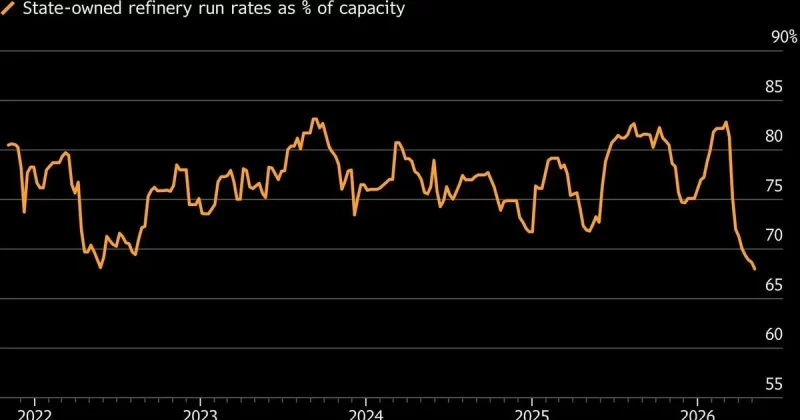
China’s fuel exports have also tumbled to decade lows. That’s a downstream consequence of reduced refinery throughput. Less crude coming in means less refined product going out, which ripples through Asian fuel markets that depend on Chinese diesel and gasoline exports.
What this means for investors
China consumes roughly one out of every seven barrels of oil produced worldwide. Russia has already become China’s top crude supplier in recent years, and the loss of Iranian barrels creates a natural opening for Russian producers to capture additional market share.
For energy-sector investors, the teapot refinery situation in Shandong deserves close attention. These independent operators process a meaningful share of China’s crude throughput. The refining margin compression is already underway as higher input costs squeeze operators that built their business models around cheap Iranian feedstock.
Disclosure: This article was edited by Editorial Team. For more information on how we create and review content, see our Editorial Policy.