
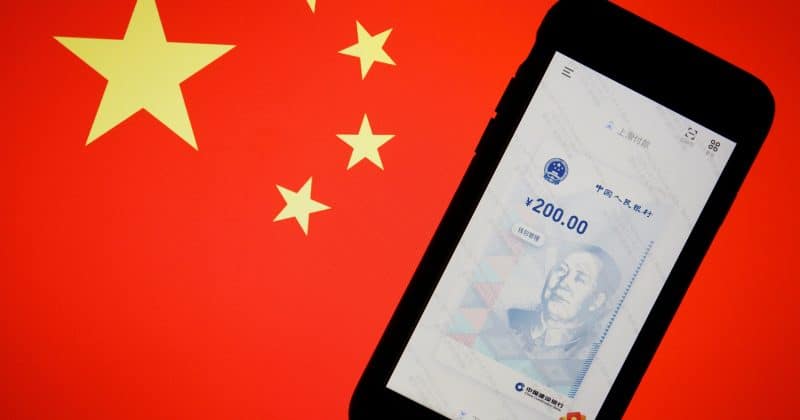
China considers national clearinghouse for digital yuan transactions
The PBOC wants to build a UnionPay-style backbone for e-CNY, signaling the digital yuan is moving from pilot project to permanent infrastructure.
Share
Add us on Google by Editorial Team May. 30, 2026China’s central bank is planning to create a dedicated national clearinghouse for processing digital yuan transactions, a move that would give the e-CNY the same kind of institutional plumbing that credit cards and traditional payments have relied on for decades.
The People’s Bank of China disclosed the plan on May 30, modeling the proposed clearinghouse after China UnionPay, the state-backed card network that processes virtually every domestic bank card transaction in the country.
From pilot to pipeline
Cumulative e-CNY transactions reached 16.7 trillion yuan, roughly $2.47 trillion, by November 2025. That’s a staggering sum for a currency that only started pilot testing in 2019.
AdvertisementIn early 2026, the central bank authorized twelve additional banks to handle e-CNY transactions, bringing the total number of participating institutions to 22.
The PBOC introduced interest-bearing features for e-CNY holdings starting January 1, 2026. Previously, holding digital yuan was functionally equivalent to stuffing cash under your mattress. Now it actually earns a return, giving consumers and businesses a tangible incentive to keep funds in the digital format rather than converting back to traditional bank deposits.
Smart contracts and real-world integration
The PBOC has been expanding the use cases for the digital yuan through pilot programs that embed smart contracts into everyday financial flows. These pilots span payroll disbursements, healthcare payments, lottery distributions, and fiscal spending by government agencies.
The PBOC is pursuing international applications of the e-CNY through the mBridge platform, a collaborative project designed to facilitate trade along the Belt and Road Initiative.
What this means for investors
The interest-bearing feature is particularly worth watching. Traditional stablecoins like USDT and USDC don’t pass yield through to holders. Tether and Circle keep the interest income for themselves. China’s decision to let e-CNY holders earn interest creates a competitive dynamic that could pressure private stablecoin issuers to reconsider their own models.
The expansion to 22 authorized banks also matters for competitive reasons. Each bank integration creates network effects that make the e-CNY stickier in daily commerce. The more embedded it becomes in payroll, healthcare, and government spending, the harder it is for private digital payment alternatives to compete on convenience.
The $2.47 trillion in cumulative transactions already dwarfs the daily volumes on most crypto exchanges.
Disclosure: This article was edited by Editorial Team. For more information on how we create and review content, see our Editorial Policy.
