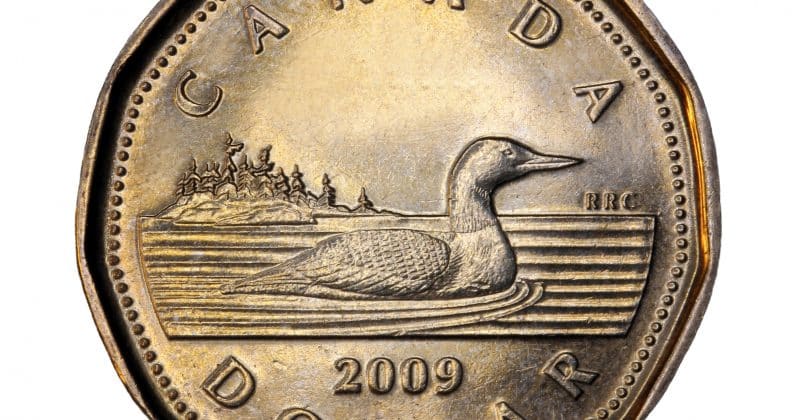
Canadian dollar slides to 2026 low as traders expect Bank of Canada to hold rates
The loonie hit its weakest level since December as speculators pile into bearish bets, with the central bank widely expected to keep rates frozen at 2.25%.
Share
Add us on Google by Editorial Team Jun. 9, 2026The Canadian dollar dropped to 1.3969 against the US dollar on June 9, the currency’s weakest print since December 2025. That translates to roughly 71.67 US cents per loonie, a level that has traders increasingly nervous about what comes next for Canada’s economy.
The culprit is straightforward: markets are pricing in a Bank of Canada that has no intention of moving rates anytime soon. The central bank’s policy rate has been parked at 2.25% since December 10, 2025, and economists surveyed by Reuters expect it to stay exactly there for the rest of 2026. When a central bank signals it’s comfortable standing still while the US Federal Reserve maintains higher yields, the math on currency flows gets ugly fast.
Why the loonie keeps losing altitude
Speculative short positions on the CAD have climbed to their highest levels since late 2025. The traders who bet on currencies for a living are increasingly wagering that the loonie has further to fall.
AdvertisementYield differentials between Canadian and US government bonds have been tightening, which makes holding CAD-denominated assets less attractive relative to their US counterparts.
Energy costs have been a persistent driver of price pressures in Canada, creating an awkward situation for the Bank of Canada. Inflation running hot would normally invite rate hikes, but the central bank appears more concerned about the fragility of economic growth than about chasing price stability with higher borrowing costs.
Elevated gold prices, while typically a positive signal for commodity currencies, have instead become a pressure point as broader risk sentiment sours. Oil markets have been choppy, and without a clear upward trend in energy prices, the CAD loses one of its traditional support pillars.
The bigger picture: trade and geopolitics
Economists from the National Bank of Canada and BMO have both flagged the precarious nature of the current trade and geopolitical environment. Canada’s economy remains heavily exposed to its trading relationship with the US, and any deterioration in that dynamic tends to hit the loonie disproportionately hard.
What this means for investors
A weaker Canadian dollar makes imports more expensive for Canadian consumers and businesses, which could feed back into the inflation numbers the BoC is already struggling to manage. Conversely, Canadian exporters benefit from a cheaper loonie, as their goods become more competitive in international markets.
The key variable to watch is the June 10 Bank of Canada meeting. Markets have already priced in a hold, so the statement and press conference matter more than the rate decision itself. With speculative shorts at their highest since December 2025, even a mildly hawkish signal could spark a squeeze that sends the loonie sharply higher in the short term.
Disclosure: This article was edited by Editorial Team. For more information on how we create and review content, see our Editorial Policy.