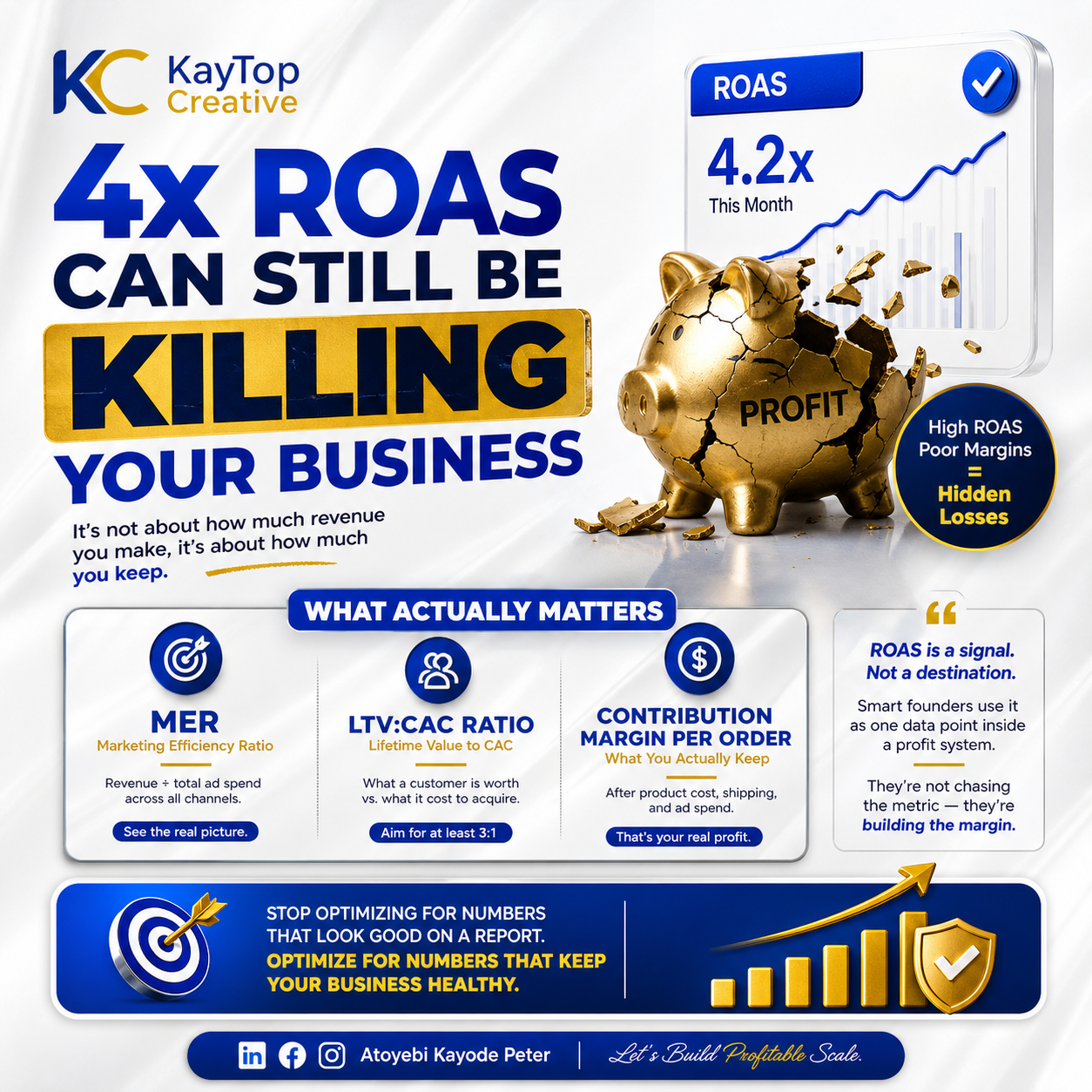
𝗔 𝟰𝘅 𝗥𝗢𝗔𝗦 can still be 𝗸𝗶𝗹𝗹𝗶𝗻𝗴 your 𝗯𝘂𝘀𝗶𝗻𝗲𝘀𝘀.
 Atoyebi Kayode Peter2 min read·Just now
--
I don't say that to be dramatic. I've watched it happen.
Brand comes to me excited. "Our ROAS is at 4.2 this month." Dashboard looks clean. Agency is celebrating. Founder feels like things are finally working.
Then we open the actual numbers.
Product margins at 22%. Repeat purchase rate nearly zero. Customer acquisition cost creeping up every month. Refund rate nobody was tracking.
At 4x ROAS with those margins, they were generating revenue and losing money simultaneously. Every new customer they acquired was actually a liability dressed up as a win.
The ads were "working." The business was slowly bleeding out.
This is the trap that ROAS sets for you. It's a clean, satisfying number. It feels like a report card. But it measures one thing how much revenue came back for every dollar spent on ads. It tells you nothing about whether that revenue actually made you money.
Here's what actually matters:
MER Marketing Efficiency Ratio. Revenue divided by total ad spend across all channels. Gives you the real picture.
LTV:CAC ratio What a customer is worth over time versus what it cost to acquire them. If this isn't at least 3:1 you're on a treadmill.
Contribution margin per order After product cost, shipping, and ad spend, what are you actually keeping?
ROAS is a signal. Not a destination.
Smart founders use it as one data point inside a profit system. They're not chasing the metric they're building the margin.
Are you optimizing for numbers that look good on a report, or numbers that actually keep the business healthy?
#MetaAds #EcommerceGrowth #ROAS #Profitability #ScaleSpecialist