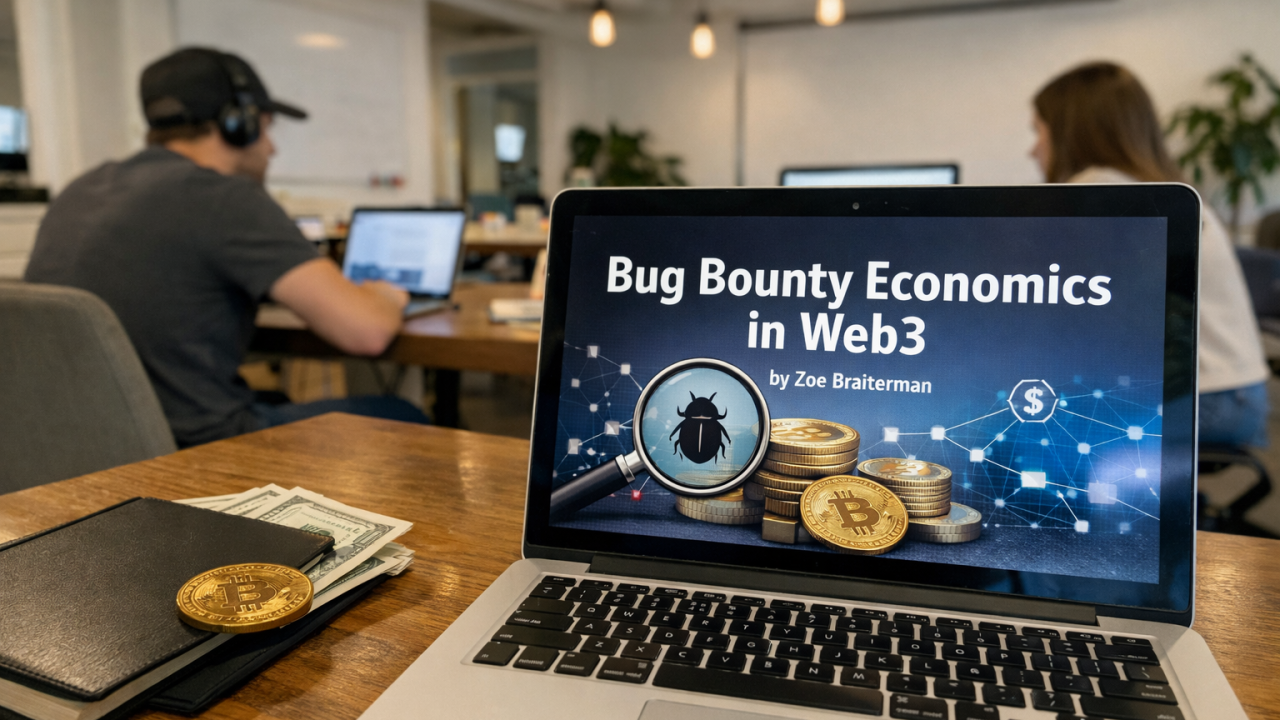
Bug Bounty Economics in Web3
 Zoe Braiterman2 min read·Just now
--
Bug bounty economics in web3 truly reflect shifts in various other technical and business operations in the age of AI and other recent trends in digital transformation.
Bug Bounty Economics in Web3: Exploring Recent Trends
Web3 security evolves quickly, and bug bounty economics shift with every new innovation. Security researchers now navigate faster development cycles and stronger incentives.
Moreover, AI adoption accelerates this transformation and reshapes how teams evaluate risk and reward.
Tokenizing Bug Hunter Rewards
Bug bounty programs once focused on traditional web vulnerabilities. However, Web3 introduces smart contracts, protocol logic, and on‑chain incentives. Platforms like Immunefi now reward researchers with tokens such as IMU. These token incentives attract global talent and strengthen decentralized security ecosystems. Additionally, token rewards align with Web3 culture and encourage long‑term engagement.
AI also changes the economics of bug discovery. Tools like OpenAI’s EVMbench evaluate smart contract development processes with high precision. These tools measure security outcomes and highlight engineering strengths. As a result, teams gain clearer insight into their development maturity. Furthermore, AI reduces manual review time and increases the value of high‑impact findings.
Broader Implications and Industry Impact
Workforce expectations shift as well. Technical specialization still matters, yet generalist leadership now delivers greater strategic value. This shift reflects ideas from “The Generalist Leader in the AI Era,” which highlights adaptable thinkers. Consequently, bug bounty hunters expand their skills across blockchain mechanics, AI‑supported analysis, and economic modeling. This combination increases earning potential and strengthens career resilience.
Web3 bug bounty programs also influence enterprise risk strategies. Organizations now treat researchers as essential partners in secure development. They integrate bounty insights into engineering workflows and compliance reviews. Moreover, token‑based incentives encourage continuous participation rather than one‑time contributions. This dynamic improves ecosystem resilience and supports sustainable innovation.
AI continues to amplify these trends. Teams use automated evaluations to validate code quality and detect emerging risks. Meanwhile, researchers use AI tools to explore attack surfaces with greater efficiency. Therefore, the economics of bug bounties now reward adaptability, creativity, and cross‑disciplinary thinking.
Web3 security grows stronger as these forces converge. The combination of AI, blockchain incentives, and evolving skill sets creates new opportunities for modern professionals. As these trends accelerate, effective leaders help organizations navigate complexity and build secure, scalable systems for the future.