Blockchain for Pipeline Material Traceability, Too Far Ahead, or Already Overdue?
--
Nobody in oil and gas talks about steel the way they should.
They talk about pressure ratings. They talk about corrosion allowances, wall thickness, SMYS — specified minimum yield strength — and they talk about inspection intervals. But the steel itself? Where it came from, who made it, what heat number it was poured from, whether the mill test report attached to that spool piece is the original document or a scan of a copy of a fax of the original? That part of the conversation gets quiet fast.
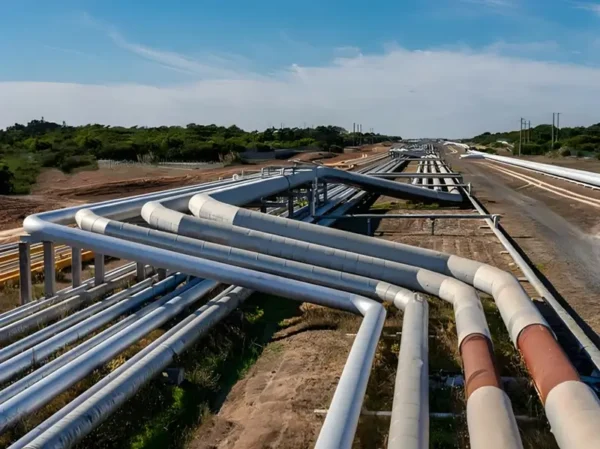
And yet that steel is sitting inside a pipeline that runs at 1,200 psi, carrying sour gas, buried under 1.2 meters of soil somewhere in the middle of nowhere, and it’s expected to do its job without failure for the next 25 to 40 years.
The material traceability problem in oil and gas pipelines is not a new problem. It’s an old problem that we’ve gotten very good at tolerating. What’s new is that there’s now a technology — blockchain — that could theoretically close the gap between what we say we know about a pipe and what we actually know. The question isn’t whether that’s technically interesting. Of course it’s technically interesting.
The question is whether it’s real, whether it’s worth the organizational cost, and whether the industry is structurally capable of adopting it without turning it into another compliance checkbox that looks good in an audit and means nothing in practice.
I’ve been sitting with that question for a while. I don’t have a clean answer. But I have a reasonably long argument.
The Actual Problem: What “Material Traceability” Means in a Pipeline Context
Before blockchain enters the conversation, it’s worth being precise about what we’re actually trying to trace — because “material traceability” is one of those phrases that sounds self-explanatory until you try to operationalize it.
In pipeline construction for oil and gas, the supply chain for line pipe typically looks something like this: a steel mill produces the base material (hot-rolled coil or plate), which gets shipped to a pipe manufacturer, which forms it into pipe, performs longitudinal or spiral seam welding, conducts the mandatory mill tests (hydrostatic testing, charpy impact, tensile, hardness), generates a Mill Test Certificate (MTC) or Mill Test Report (MTR), and ships the pipe to a coating yard, where it gets coated and sometimes bent. From there it goes to a stockpile, then gets issued to a construction spread, welded into the mainline, and buried.
Every step of that chain is supposed to generate documentation. The MTC is the foundational document — it records the heat number, chemical composition, mechanical properties, and the relevant standard compliance (API 5L, ISO 3183, whatever applies). The heat number is supposed to follow that pipe from mill to ditch. When you’re doing a fitness-for-purpose assessment 20 years later, the heat number is how you look up the original material properties.
In theory, this is airtight. In practice, it’s a mess for several reasons that are completely mundane and completely devastating:
Document management is handled by humans across dozens of organizations. The mill generates an MTC. The pipe manufacturer’s quality team verifies it. The coating yard files a copy. The EPC contractor’s document control team receives it. The client’s quality representative reviews it. Each of these steps involves someone handling a physical or digital document in a system that almost certainly doesn’t communicate with the next organization’s system. By the time a pipeline has been in operation for a decade, those documents may be in three different archive formats, two of which require software that no longer runs on current operating systems, across a chain of organizations some of which no longer exist in their original form due to mergers, acquisitions, or insolvency.
The MTC itself can be wrong. Mill test report fraud is not a theoretical problem. There have been documented cases — most famously in the U.S. market around 2018–2019, involving Chinese-manufactured steel products where MTRs were falsified or substituted — where the certification did not match the actual material. This is not a reason to assume all MTRs are fraudulent. It is a reason to recognize that a document-based traceability system has no intrinsic mechanism to detect when the document has been decoupled from the physical material.
Physical marking degrades. Heat numbers are stamped or stenciled onto pipe sections. Over time, in service, through handling, through coating application, through burial, through soil stress and corrosion — those markings can become illegible or lost entirely. Once the physical link between the material and the document is severed, you have a pipe whose history is, for practical purposes, unknown.
The chain of custody breaks at handoffs. Every time material transfers between organizations — mill to manufacturer, manufacturer to coating yard, coating yard to construction contractor — there is an opportunity for traceability to slip. Spool pieces get miscounted. Heat numbers get transposed in a spreadsheet. A shipment arrives at site and gets checked in against a delivery manifest that doesn’t quite match the pipe markings, and someone makes a judgment call to accept it and fix the paperwork later, and “later” never arrives.
This is the actual problem. Not a technological problem. A trust and verification problem that happens to involve a lot of paper.
What Blockchain Is, Technically, and Why It’s Relevant Here
Blockchain is an overloaded word, so I want to be specific about the mechanism and why it’s theoretically useful for this problem rather than some other one.
A blockchain is a distributed ledger — a database that is replicated across many nodes, where each entry (a “block”) contains a cryptographic hash of the previous entry, creating an append-only chain where retroactive modification of any record would require recalculating every subsequent block and simultaneously controlling the majority of nodes in the network. This is computationally infeasible at scale, which is what people mean when they say the ledger is “immutable.”
The relevance to material traceability is not that blockchain stores the MTC. It’s that blockchain can store a hash of the MTC — a unique cryptographic fingerprint of the document at a specific point in time — in a way that can be verified by any party with access to the ledger, without any single party controlling the record. If the document is later altered, the hash won’t match. If someone tries to substitute a different MTC, the hash won’t match. The record of who added each entry to the ledger, and when, is permanently visible.
More specifically, in a supply chain context, blockchain allows for the creation of a shared, permissioned record that tracks an object (in this case, a pipe segment or spool piece) across organizational boundaries, where each organization can write to the ledger about the steps they performed, but cannot retroactively modify what previous organizations wrote.
This addresses something that traditional document management systems can’t address: the multi-party trust problem. In the current system, traceability depends on every organization in the chain maintaining their records correctly and honestly and making them available to the next organization. This is a trust chain, and it’s as strong as its weakest link. Blockchain replaces the trust chain with cryptographic verification — you don’t have to trust that the previous organization kept accurate records; you can verify what they recorded and when.
That’s the theoretical case. It’s a good one.
The Architecture of a Blockchain Traceability System for Pipeline Material — Getting Specific
Let’s get into what this would actually look like, because the theoretical case is straightforward and the implementation is where things get complicated.
The Ledger Type: Public vs. Private vs. Permissioned Consortium
A public blockchain (Bitcoin, Ethereum) is not appropriate for pipeline material traceability. It’s too slow, too expensive per transaction, and too public — operator companies are not going to put their supply chain data on a ledger readable by anyone with an internet connection.
A private blockchain (controlled by a single organization) solves the privacy problem but defeats much of the purpose — if one organization controls the ledger, the immutability guarantees are theoretical rather than practical, because the controlling organization could in principle reconstruct the ledger with different data.
The right architecture for this application is a permissioned consortium blockchain — a ledger managed by a defined group of participants (the operator, major contractors, certified material manufacturers, and potentially a regulatory body), where each participant has write access for their relevant steps and read access for the full chain, but no single participant controls the ledger. Hyperledger Fabric and Quorum are the two enterprise blockchain frameworks most commonly proposed for this kind of application, both designed explicitly for permissioned multi-party ledgers.
The Smart Contract Layer
The interesting part of modern enterprise blockchain for supply chain isn’t the ledger itself. It’s smart contracts — self-executing code that lives on the ledger and triggers automatically when defined conditions are met.
In a pipeline material traceability context, smart contracts could enforce things like:
- A spool piece cannot be recorded as “issued to construction” unless an MTC hash exists on the ledger for that heat number and has been countersigned by an approved QC inspector.
- A weld joint cannot be recorded as “completed” unless the pipe heat numbers on both sides have verified MTC records and the welder’s certification is current on the ledger.
- An anomaly flag is automatically raised and surfaced to the operator when any step in the chain is recorded out of sequence — for instance, if a coating yard records a pipe as coated before the mill records the MTC as verified.
This is genuinely useful. Smart contracts move quality enforcement from a manual check to an automated gate. You can’t skip a step by forgetting to fill out the form, because the form doesn’t exist in isolation — it’s a transaction on a ledger that the next step depends on.
The IoT Integration Layer
Here’s where the theory gets ambitious, and where I have mixed feelings.
For blockchain traceability to close the gap between the document and the physical material, you need a way to link the physical pipe to the ledger entry. Otherwise you still have the problem of someone swapping the pipe and keeping the paperwork.
The proposed solution is physical-digital identity: a unique identifier attached to or embedded in the pipe that can be read electronically and matched to the ledger record. The options currently being explored include:
QR codes and 2D barcodes — cheap, readable with a standard phone, but physically vulnerable and easily copied or transferred.
RFID tags — readable without line of sight, harder to counterfeit, but add cost and have known failure modes in high-temperature environments (such as during welding or in service in hot pipelines).
Cryptographic physical unclonable functions (PUFs) — a more interesting approach where the unique microscopic surface characteristics of the steel itself (measured by laser profilometry or similar) are hashed and stored as the identifier. You can’t clone a PUF because you can’t reproduce the physical manufacturing variations that create it. But this requires specialized scanning equipment at each handoff point and is still largely in the research phase for this specific application.
Embedded NFC chips in weld seams or end caps — survivable through coating application but potentially not through in-service stresses over decades.
None of these is fully solved for the full lifecycle of a buried pipeline. And the lifecycle matters: the traceability system needs to work not just during construction, but during integrity management decades later, when someone needs to pull the material records for a pipe segment that’s been in the ground since the Clinton administration.
The Data Model
A blockchain ledger entry needs to be designed carefully for this application. Each transaction in the system should carry:
- Entity identifier: Who is recording this transaction (organization, facility, individual credential)
- Asset identifier: What pipe segment or spool piece (linked to heat number, pipe number, or a generated unique ID)
- Event type: What happened (MTC issued, QC inspection passed, coating applied, issued to construction, welded into position, hydrostatic test passed, buried)
- Timestamp: Recorded by the ledger, not by the submitting organization
- Data payload hash: The cryptographic fingerprint of the associated document or measurement data
- Geolocation and chainage reference: Where in the pipeline is this segment, referenced to the alignment sheets
- Cross-references: Links to adjacent pipe segments, welds, and field joints
The chain of these transactions, for a single pipe segment, tells a complete and verified story from mill to in-service condition. If a future integrity assessment flags an anomaly at a specific chainage, the operator can pull the full provenance of that segment in seconds rather than weeks.
Why This Hasn’t Happened Yet (And It’s Not Because the Technology Is Missing)
The technology for permissioned consortium blockchain has existed in production-ready form since roughly 2018. Hyperledger Fabric has been used in shipping, food safety, and pharmaceutical supply chains with genuine scale. The reason pipeline material traceability doesn’t already run on blockchain is not a technology problem.
It’s at least four different problems stacked on top of each other.
Problem 1: The Consortium Formation Problem
A permissioned blockchain only works if the participants agree to participate. In pipeline oil and gas, the relevant participants include operators (IOCs, NOCs, independent E&Ps), EPC contractors (who may be different on every project), pipe mills (often in South Korea, Japan, India, or China), coating yards, and potentially national regulators.
Getting all of these organizations to agree on a governance structure, a data standard, a smart contract ruleset, and a revenue or cost-sharing model is an organizational problem of the first order. It requires that no single participant be willing to trade short-term competitive advantage for long-term system integrity — and in an industry where material cost and supply chain relationships are sources of competitive differentiation, that’s a harder sell than it sounds.
The food safety blockchain consortiums that exist (IBM Food Trust, for example) work because major retailers drove adoption by making it a condition of doing business. The oil and gas equivalent would require a major operator or a regulatory body to do the same. This is possible. It hasn’t happened.
Problem 2: The Existing Data Problem
Most pipelines currently in operation were built without any digital traceability infrastructure. Their material records exist as paper archives, scanned PDFs, and legacy database exports. Any blockchain system for pipeline traceability has to decide what to do with this existing data — ignore it (which leaves the traceability gap for existing infrastructure), ingest it (which requires significant data wrangling and introduces the question of how to verify the accuracy of historical records being migrated to an “immutable” ledger), or operate as a two-tier system where new construction has full blockchain traceability and legacy infrastructure retains the old paper-based system.
None of these is a clean answer. The two-tier approach is probably the most practical for the next decade, but it means that the pipelines most urgently in need of better material records — old, high-pressure lines with incomplete documentation — don’t benefit from the new system.
Problem 3: The Ground Truth Problem
This is the one that doesn’t get enough attention. Blockchain makes records immutable. It does not make records accurate. If a mill generates an MTC with falsified mechanical property data and hashes it to the ledger, the ledger faithfully records the hash of the falsified document. The immutability is working exactly as designed. The fraud is also working exactly as designed.
For a blockchain traceability system to actually prevent the failure mode it’s supposed to address — specifically, that the document doesn’t match the material — you need independent physical verification at the point of manufacture. Portable XRF (X-ray fluorescence) analyzers for chemical composition verification, portable hardness testing, or third-party witness of mill testing, with the results hashed to the ledger independently of the mill’s own MTC. The ledger then records two independent data streams that can be cross-checked.
This is not a blockchain problem. It’s a quality assurance problem that blockchain creates the infrastructure to solve — but only if someone is willing to pay for the additional inspection and build it into the workflow.
Problem 4: The Incentive Misalignment Problem
Traceability costs money upfront. The benefit — being able to pull complete material records when a pipeline anomaly is detected 20 years from now — is realized by the asset owner, not necessarily by the contractor who bore the cost of implementation during construction. The EPC contractor who builds a pipeline with rigorous blockchain traceability gets no additional payment for that. The operator who inherits a pipeline with rigorous blockchain traceability gets enormous value from it, decades later. This is a classic infrastructure investment problem where the party who pays is not the party who benefits, on a timescale that makes the math uncomfortable for everyone.
Solving this requires either regulatory mandate (traceability as a condition of operating license), contractual requirement (operators writing blockchain traceability into the ITT — invitation to tender — requirements, which increases bid costs but shifts them appropriately), or industry standard-setting (API or ISO incorporating blockchain-compatible traceability into pipeline standards).
All three are plausible. None are moving fast.
The Theoretical Case for Why Pipelines Are the Right Application
I want to make the affirmative case clearly, because I think the theoretical fit between blockchain and pipeline material traceability is genuinely strong — stronger than for many other applications where blockchain gets proposed.
Pipelines have the following characteristics that make them a good match:
Long operational lifespan with periodic integrity reassessment. A pipeline built today will undergo multiple integrity management cycles over 40+ years. Each cycle involves reviewing material records to make fitness-for-purpose assessments. The value of having immutable, verifiable material records compounds over time in a way that shorter-lived assets don’t offer.
Multi-party supply chain with genuine trust gaps. Unlike a single-manufacturer product where traceability is internal, pipeline material passes through a long chain of independent organizations across multiple countries. This is exactly the use case where a shared ledger with no single controlling party provides real value over a centralized system.
High consequence of failure. The economic and human cost of a pipeline failure caused by a material defect — either a leak, a rupture, or even a precautionary shutdown triggered by inability to verify material properties — is enormous. The ROI calculation for a traceability system that reduces this risk looks very different from the ROI calculation for, say, a blockchain system for tracking grocery produce.
Existing regulatory framework. Pipelines already operate under intensive regulatory oversight — PHMSA in the US, HSE in the UK, various national regulators elsewhere. These bodies already require material documentation. A blockchain system doesn’t have to create the compliance requirement from scratch; it has to become the mechanism by which an existing compliance requirement is met. That’s a much easier organizational sell.
Digital twinning ambitions. The oil and gas industry has invested heavily in digital twin technology — creating living digital representations of physical assets that integrate design data, inspection history, maintenance records, and operational data. A blockchain-based material traceability layer is a natural foundation for a pipeline digital twin, providing the certified provenance data that gives the digital twin its trustworthiness.
Where It Gets Philosophically Interesting: The Immutability Paradox
Here’s something I genuinely find interesting about this application that I haven’t seen discussed enough.
Blockchain’s core value proposition is immutability — the record can’t be changed. But in pipeline integrity management, the need to annotate and update records is a real operational requirement. A pipe segment that was classified as acceptable at construction may be reclassified based on new inspection findings. A fitness-for-purpose assessment may revise the allowable operating pressure for a segment based on corrosion measurements. A weld repair may modify the original construction record.
None of these are fraudulent changes. They’re legitimate updates to the asset record. But a strictly immutable ledger doesn’t accommodate amendment; it only accommodates new entries.
The solution in enterprise blockchain design is append-only amendment — you never overwrite a previous record; you add a new record that supersedes it, with a link to the original. The full history remains visible. This is actually better than the current system, where physical document archives may be overwritten, misfiled, or lost. But it requires careful data model design and clear governance rules about who is authorized to issue superseding records and under what conditions.
It also raises an interesting question about regulatory inspection. When a regulator audits a pipeline’s material records today, they’re looking at a filing cabinet (physical or digital) whose contents have been curated by the asset owner. On a blockchain, they can query the raw ledger and see not just the current state of the records but the full history of amendments, including any records that were superseded. This is significantly more transparency than the current system offers — which is good for regulation and possibly uncomfortable for operators who are used to controlling how their compliance documentation is presented.
(I think this discomfort is a feature, not a bug. But I understand why it slows down adoption.)
Pilots and Where the Industry Actually Is
It’s not accurate to say this is purely theoretical. There are pilots.
Equinor ran a materials traceability pilot using blockchain in 2019–2020 for offshore components, specifically for lifting equipment and pressure vessels. The pilot demonstrated that the technology could function operationally but identified procurement process integration as the primary bottleneck — the technology was ready before the procurement contracts and supplier workflows were.
The Oil and Gas Blockchain Consortium (OBC), formed in 2019 by a group of North American operators including Chevron, ExxonMobil, ConocoPhillips, and others, focused initially on land operations data (particularly land rights and joint venture data sharing) rather than material traceability, but established the governance model for multi-operator consortium blockchain that would be necessary for a supply chain application.
Shell has been involved in various supply chain digitalization pilots, including blockchain-based certification tracking for lubricants and chemicals, which shares many structural features with pipeline material traceability.
The gap is that none of these has resulted in a deployed, at-scale system for mainline pipeline material traceability covering the full supply chain from mill to buried pipe. The pilots demonstrate feasibility. They haven’t generated adoption.
The Regulatory Gap — and Why It Might Be the Actual Unlock
PHMSA’s Pipeline Safety Regulations (49 CFR Part 192 for gas, Part 195 for hazardous liquids) require operators to maintain material records for pipelines. Specifically, if material documentation is not available, operators are required to use conservative assumptions about material properties — which typically means lower operating pressure, which directly affects throughput and revenue.
This is actually a powerful economic argument for better traceability: operators who can demonstrate material properties with higher certainty can potentially operate closer to design limits. The regulatory framework already creates a financial incentive for verified traceability. Blockchain is just a more robust mechanism for achieving it.
What’s missing is a regulatory statement that blockchain-based traceability constitutes an acceptable form of documentation for the purposes of these regulations. PHMSA has been generally supportive of digital innovation but hasn’t issued specific guidance on distributed ledger systems for material documentation. A guidance document — or better, an amendment to the regulatory text — that explicitly recognizes blockchain-anchored MTCs as compliant documentation would dramatically accelerate adoption, because it would give operators a compliance incentive to demand it from their supply chains rather than treating it as an optional upgrade.
This is, I think, the most likely path to actual deployment. Not a technology breakthrough, not a single pioneering operator, but a regulatory signal that recalibrates the risk-reward calculation for adoption.
Too Far Ahead, or Already Overdue?
My honest answer: the technology is not the problem. It stopped being the problem around 2018.
Permissioned consortium blockchain with smart contracts and document hashing is production-grade. The architecture for pipeline material traceability is well-understood at a theoretical level and has been validated at pilot scale more than once. If you gave a working group of engineers six months and actual organizational authority, they could design and build a functional system.
What isn’t ready is everything else. The consortium governance model doesn’t exist for this application. No supply chain standard requires it. PHMSA hasn’t issued guidance recognizing blockchain-anchored MTCs as compliant documentation. EPC contract templates don’t include it as a deliverable. The incentives are misaligned in the classic way — the party that pays for it during construction is not the party that benefits from it during a fitness-for-purpose reassessment twenty years later.
These are not technology problems. They’re exactly the kind of problems the industry has solved before, for other things, when the regulatory or economic pressure was high enough. What’s missing is the pressure.
The “too far ahead” framing frustrates me because it implies the bottleneck is technical maturity. It isn’t. What it actually means, translated into plain language, is: “the organizational will to change isn’t there yet.” Which is true. But that’s a different statement, and a harder one to sit with, because it’s a statement about choices rather than constraints.
The oldest pipelines — the ones with the thinnest documentation, the most uncertain material histories, the greatest reliance on conservative operating assumptions because nobody can prove the original properties — those are running right now. Today. The risk isn’t hypothetical. It’s just distributed across thousands of kilometers of buried steel in a way that makes it easy to not think about on any given Tuesday.
Every year that passes without better traceability infrastructure is another year that risk gets carried forward on assumptions rather than verified data. The blockchain system that would address it is deployable. The institutions that would have to decide to deploy it are choosing, day by day, not to.
The pipeline will stay in the ground for forty years regardless of whether we know what it’s made of. The question is whether we want to know — and whether we’re willing to build the systems that would make knowing possible. The technology is sitting there. The pipe is sitting there. What’s missing is the decision.