Bitcoin Pseudonymous vs Anonymous: What Bitcoin Actually Gives You
--
A freelancer accepts BTC payments for months using the same wallet. A small online merchant publishes a public address on a website. A remote worker cashes out through a KYC exchange after receiving client payments.
None of them use their real name directly on-chain.
Yet all three may still expose their financial activity permanently.
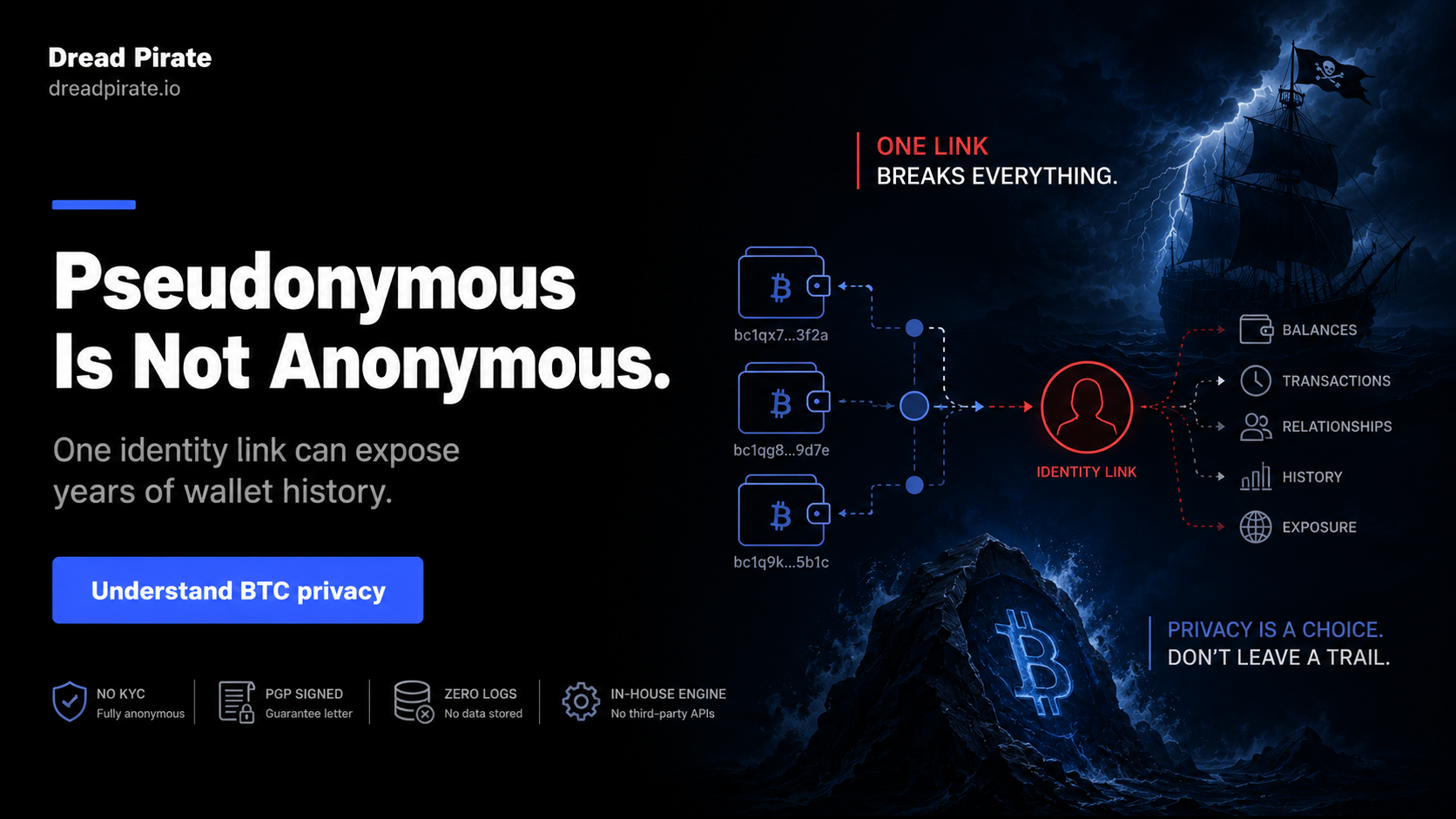
This is where the difference between bitcoin pseudonymous vs anonymous becomes important. Many users assume Bitcoin provides full anonymity because wallet addresses do not contain names or government IDs. In reality, Bitcoin is pseudonymous. Once a wallet becomes linked to a real-world identity, the transaction graph surrounding that wallet can often be analyzed indefinitely.
That distinction matters more today than ever before.
Bitcoin Is Public by Design
Bitcoin’s blockchain was intentionally built as a transparent ledger. Every transaction is publicly visible. Wallet addresses, transaction amounts, timestamps, and wallet interactions remain permanently recorded.
The system does not publish a legal name beside an address, but the visibility still exists.
This is why crypto pseudonymity explained properly is essential for anyone using BTC regularly. A pseudonym hides identity temporarily, but it does not remove traceability.
For example:
- A user withdraws BTC from a KYC exchange
- The same coins later pay suppliers or contractors
- Wallet clustering tools connect those transactions together
- The wallet history becomes associated with one identity point
At that stage, the blockchain history itself becomes part of a permanent financial profile.
Bitcoin Identity Exposure Often Starts Small
Many users think exposure only happens through mistakes involving large amounts of BTC. In practice, bitcoin identity exposure often begins through ordinary activity.
A single merchant payment can establish a link.
A freelancer posting a donation address publicly can establish a link.
A customer refund can establish a link.
Once the connection exists, blockchain analysis tools may map additional wallet relationships through transaction patterns, timing behavior, address reuse, or wallet consolidation activity.
This is especially relevant for:
- Online vendors
- Freelancers
- Agencies accepting BTC
- OTC traders
- Public-facing businesses
- Long-term holders who move funds between services
The blockchain itself does not forget old activity. Years later, the same historical links remain visible.
Real Bitcoin Anonymity Requires Additional Privacy Layers
Bitcoin alone was never designed to function as a fully anonymous system.
That does not make Bitcoin flawed. It simply means privacy requires operational planning.
Real bitcoin anonymity depends on separating identity from transaction history before wallet exposure accumulates. This is why many privacy-focused users rely on layered operational security practices.
Examples include:
- Avoiding address reuse
- Separating personal and business wallets
- Limiting publicly exposed payment addresses
- Using privacy-preserving transaction methods
- Reducing long-term wallet clustering
Mixing services are often discussed within this privacy stack because they aim to break deterministic transaction relationships between wallet histories.
The objective is not invisibility. The objective is reducing direct traceability between transaction sources and future outputs.
Where Mixing Fits Into BTC Privacy Explained
BTC privacy explained properly means understanding that privacy is not one single tool.
It is a layered approach.
A privacy-conscious user may:
- Receive BTC from multiple sources
- Separate wallet activity operationally
- Avoid direct identity linking
- Use additional privacy infrastructure before future transactions
This is where services such as DreadPirate enter the discussion.
DreadPirate operates as a Bitcoin mixer and anonymization service with its own proprietary in-house mixing engine. According to its published information, users send BTC which is mixed with thousands of other coins and distributed across exchanges before unrelated BTC is issued back.
The platform also states:
- No KYC requirements
- Zero-log policy
- PGP-signed Letters of Guarantee
- Proprietary infrastructure without external APIs
- BTC or Monero (XMR) output support
The service processes transactions after three blockchain confirmations and states average processing times between 2–6 hours depending on transaction volume.
One practical example involves a freelance developer receiving BTC payments from public clients. Over time, wallet activity may reveal revenue timing, customer relationships, or transaction flows. Privacy-focused users sometimes separate future wallet activity from historical payment records before moving funds into long-term storage or additional operational wallets.
Privacy Is Becoming an Operational Issue
The debate around bitcoin pseudonymous vs anonymous is no longer theoretical.
As blockchain analytics tools improve, more users are realizing that public transaction visibility can affect financial privacy long after transactions occur.
Bitcoin remains one of the most important decentralized financial systems ever created, but transparency also creates permanent historical records. That is why operational privacy increasingly matters to merchants, freelancers, traders, and ordinary BTC users alike.
DreadPirate positions itself as a next-generation Bitcoin mixing platform focused on transaction privacy through proprietary infrastructure, zero logs, and PGP-signed guarantees.
Explore the privacy layer:
https://dreadpirate.io/