Bitcoin Pioneer Adam Back, Bernstein Say Quantum Threat to BTC Isn’t Existential
Anxieties over the quantum threat to Bitcoin have been growing, but Bernstein backs Back in saying there’s no cause for alarm.
 By Jason NelsonEdited by Guillermo JimenezApr 8, 2026Apr 8, 20263 min read
In brief
- Bernstein says quantum computing poses a challenge to Bitcoin but represents a manageable long-term upgrade cycle.
- Blockstream CEO Adam Back said current quantum hardware remains extremely limited and far from breaking Bitcoin cryptography.
- Developers are already working on quantum-resistant cryptography as part of a future protocol transition.
The race between quantum computers and Bitcoin’s cryptography has become a recurring theme in the cryptocurrency industry. But even as anxieties over Bitcoin’s “Q-day” grow, a new report from investment firm Bernstein says the outcome is unlikely to be catastrophic for the world’s largest cryptocurrency.
Instead, the firm argues quantum computing should be treated as a long-term upgrade cycle for Bitcoin and the broader crypto industry rather than an existential threat to the network.
“The risk is neither existential, nor novel, and also not limited to crypto,” Bernstein wrote, noting that quantum computing also posed a threat to everything from financial services, military, and healthcare.
According to Bernstein, the highest threat from quantum computing is to the 1.7 million BTC, around $116.6 billion, in legacy wallets from the days when Satoshi Nakamoto was still active online. That’s because this stash of Bitcoin was stored in early address formats that expose public keys on the blockchain and could be targeted in a “harvest now, decrypt later” attack. For newer encryption protocols, chains, and crypto-linked real-world assets, the threat is limited to some unsafe practices that can be mitigated and managed, the firm said.
Bernstein also emphasized that quantum computing won’t impact Bitcoin mining in the near future.
“Bitcoin mining has no realistic risk from [quantum computers] based on Shor’s algorithm, as SHA encryption used in mining is quantum safe—several millions of years even after recent improvements, including Grover’s algorithm.”
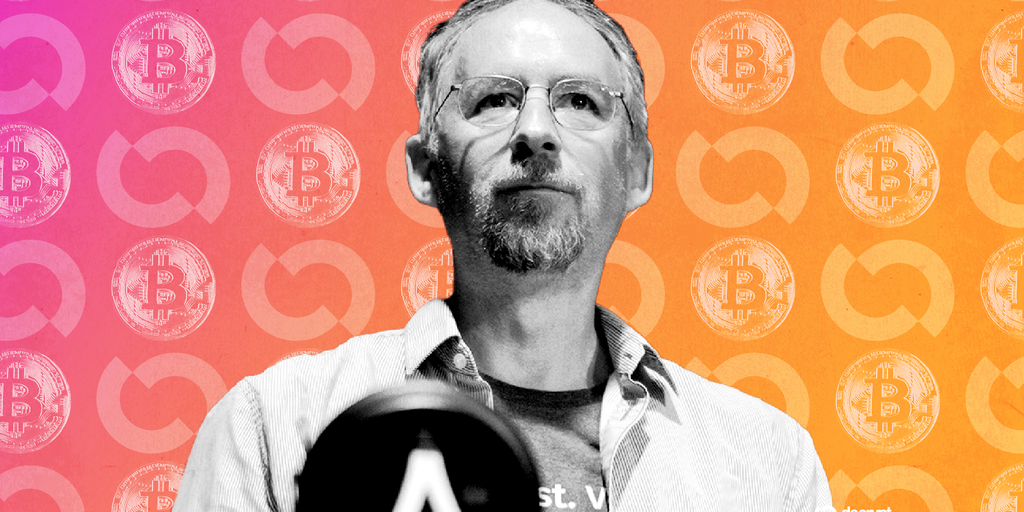
Blockstream CEO Adam Back, a Bitcoin pioneer, who was recently named as the likely person behind the identity of Satoshi Nakamoto according to a new report by The New York Times, expressed a similar view.
“The Google paper is talking about algorithmic improvements, and doesn't bring with it any hardware improvements,” Back told Bloomberg on Tuesday.
Back’s comments come as concern over quantum computing intensified after new academic research suggested fewer quantum resources may be needed to break elliptic-curve cryptography, the digital signature system used by Bitcoin wallets. A March paper from Google Quantum AI also shortened estimates for when such capabilities could emerge, pointing to a possible timeline around 2032.
Current quantum computers operate with roughly a thousand physical qubits. Breaking the cryptography used by Bitcoin would require hundreds of thousands of stable, error-corrected qubits along with major advances in engineering and hardware reliability.
Back said current quantum systems remain “extremely basic” because of limitations with error correction, calling even the most advanced demonstrations trivial compared with the calculations needed to compromise Bitcoin’s cryptography.
“The biggest calculation it's performed is that to factorize the number 21 into seven times three,” he said. “Sort of thing that primary school children can do.”
Bitcoin relies on elliptic-curve cryptography to secure transactions and SHA-256 hashing to power mining. While the Bernstein report suggests that quantum computers could eventually target the signature system, they are unlikely to threaten the mining algorithm.
The best approach, Back said, is to prepare Bitcoin users for a gradual transition to quantum-resistant security.
“The prudent thing to do is to prepare Bitcoin and give people the option to migrate their keys to a quantum-ready format,” he said. “The longer time that Bitcoin users have in order to migrate their keys for custodians and exchanges to move their coins to a quantum-ready format, the safer it will be,” he said.