Bitcoin Miners ‘Sitting on a Gold Mine’ as AI Demand Ramps Up: VanEck
VanEck’s Matthew Sigel argued miners are redirecting infrastructure to AI while trading at a discount to traditional data-center peers.
 By Decrypt AgentEdited by Stephen GravesMar 12, 2026Mar 12, 20262 min read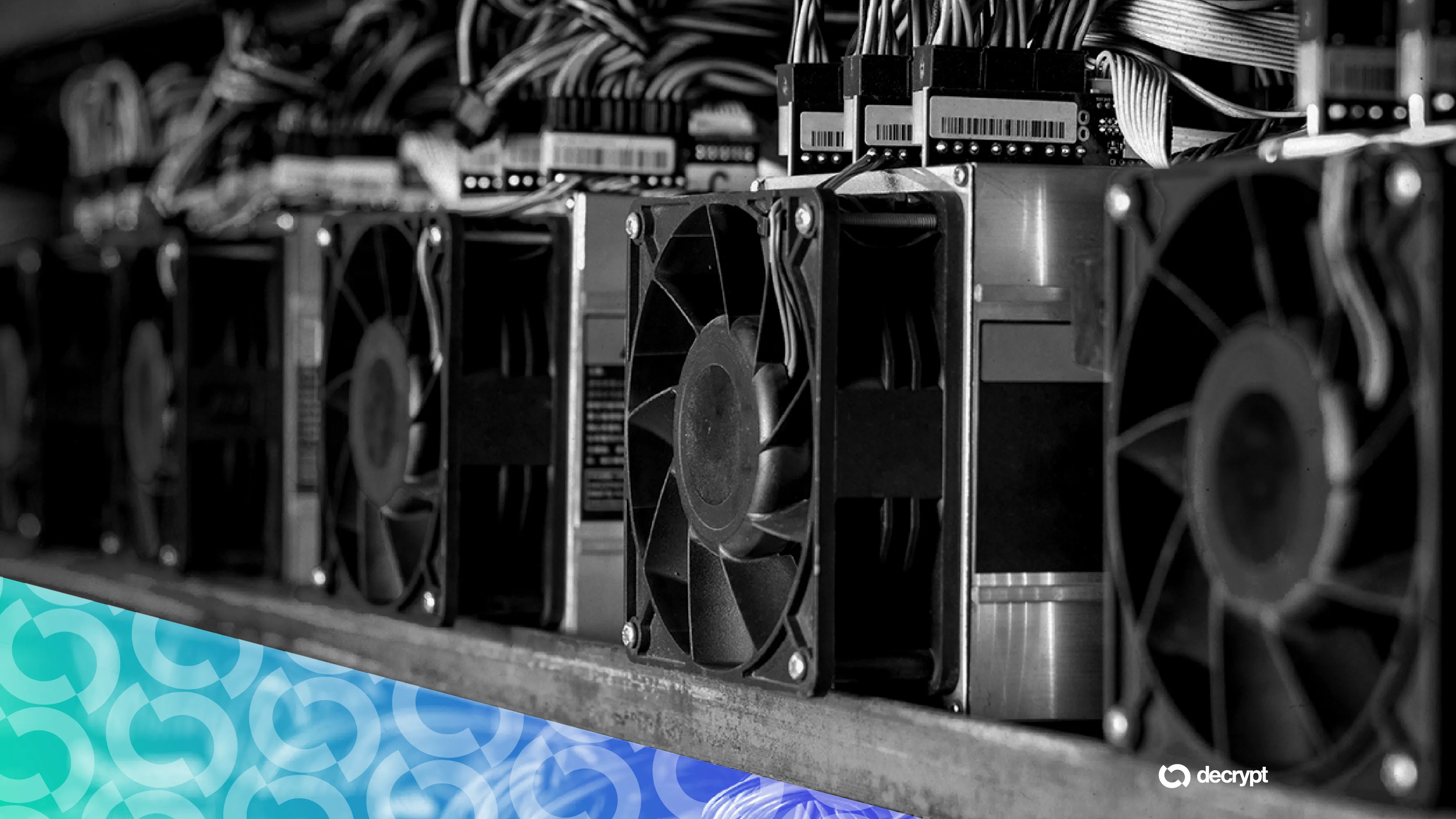
In brief
- VanEck’s head of digital asset research Matthew Sigel said that Bitcoin miners are “sitting on a gold mine” as power-hungry AI demand reshapes electricity and data-center markets.
- He argued miners are monetizing existing infrastructure by shifting capacity toward AI and grid-balancing services, while trading at a discount to data-center peers.
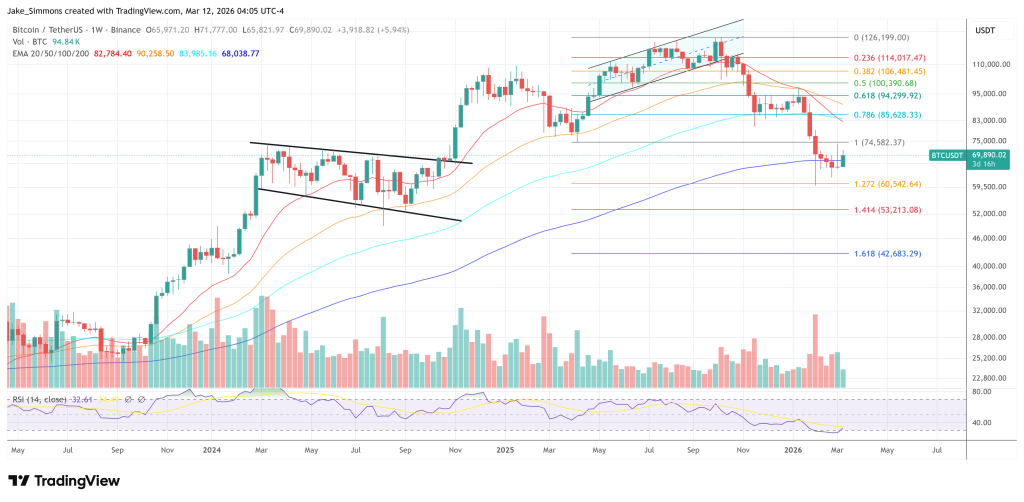
- Sigel said Bitcoin remains rangebound between $59,000 to $72,000 in the near term, while long-term holders have eased off on selling in recent weeks.
VanEck’s head of digital asset research, Matthew Sigel, said Bitcoin miners are uniquely positioned to benefit from a global scramble for electricity and computing power, arguing the sector has underappreciated upside as AI demand accelerates.
Speaking on CNBC’s Squawk Box, Sigel said miners have been “aggressively diversifying” their Bitcoin capacity to serve the AI market.
“These miners were early to identify that they were sitting on a gold mine in terms of the cost of capital that they can earn by pivoting,” he said, noting that Bitcoin mining firms “still trade at a huge discount to other data center peers on a market cap to megawatt basis.”
Sigel argued that Bitcoin mining firms are becoming more relevant to grid management because they can curtail power usage during peak demand. “It’s a really useful load balancing tool,” he said, pointing to increased demand on the grid from reshoring, AI and even defense applications. “The way that missiles are shot out of the sky now is using lasers and high intensity electricity, which requires grid resilience,” he said. “Bitcoin miners realized early on that they are additive to that process, because they can turn off when the electricity is needed and no one loses their power, they just lose a little money.”
The VanEck analyst’s comments come as a growing number of Bitcoin mining firms are transitioning to AI compute. They include MARA, which struck a deal to convert its mining sites into hyperscale data center campuses in February, and Core Scientific, which last week secured up to $1 billion in financing from Morgan Stanley to fund its pivot towards AI infrastructure.
Bitcoin’s outlook
Sigel framed Bitcoin’s macro setup as increasingly tied to broader risk assets and liquidity conditions, arguing that oil shocks and geopolitical stress could tighten global liquidity and pressure crypto as the cryptocurrency remains in a “trading range” between $59,000 and $72,000.
He added that selling from longer-term holders appears to have eased over the past month, after they locked in profits ahead of the four year cycle—something that he argued is “giving more stability.”
On prediction market Myriad, owned by Decrypt's parent company Dastan, users are evenly split on Bitcoin's outlook, placing a 50% chance on its next move taking it to $84,000 rather than $55,000. Per CoinGecko data, Bitcoin is currently trading at around $70,120, up 0.9% on the day.