BIS confirms tokenizing central bank reserves accelerates cross-border payments
Project Agorá demonstrates atomic multi-currency settlement with eight central banks and over 40 private firms, now moving toward real-value testing.
Share
Add us on Google by Editorial Team May. 27, 2026The Bank for International Settlements just showed that the plumbing of global finance can actually work the way everyone wishes it did. On May 27, the BIS released findings from Project Agorá confirming that tokenizing central bank reserves alongside commercial bank deposits can enable atomic, round-the-clock multi-currency settlement for wholesale cross-border payments.
What Project Agorá actually proved
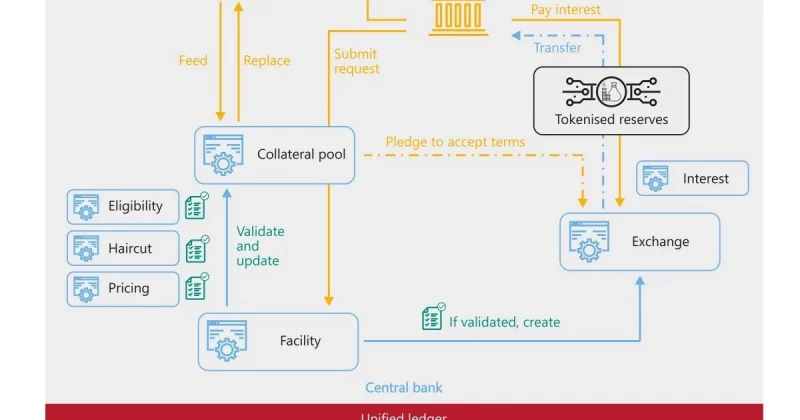
The prototype built under Project Agorá runs on a unified ledger that bundles messaging, reconciliation, compliance checks, and final settlement into a single seamless operation. That’s a sharp departure from the current correspondent banking model, where each of those steps happens separately, often across different time zones, different systems, and different business hours.
Eight central banks participated, including the Federal Reserve Bank of New York and the Bank of England. More than 40 private financial institutions also joined the effort.
AdvertisementThe BIS confirmed that the prototype handled essential requirements like anti-money laundering compliance and data privacy, all while maintaining settlement in central bank money rather than some novel token. The entire system is built on tokenized central bank reserves and commercial bank deposits. No private tokens. No stablecoins.
From simulation to real money
The BIS announced that the project will now transition from simulations to real-value transactions with selected currencies and market participants. The Bank of Canada has recently joined the initiative, expanding the roster of central banks involved.
The project builds on prior BIS initiatives like Project Helvetia and Project mBridge, both of which explored tokenization across multiple jurisdictions. The BIS’s June 2025 Annual Economic Report laid out what it called a “trilogy” framework, positioning tokenized central bank reserves and commercial bank money as foundational components of a next-generation financial ecosystem.
What this means for investors
The Agorá findings send a clear signal: the institutional path to modernizing international payments runs through tokenized central bank money, not through crypto-native alternatives. The BIS deliberately excluded private tokens and stablecoins from the project’s architecture.
The 24/7 settlement capability removes an entire category of problems, from Herstatt risk to the simple annoyance of waiting for Tokyo to open so London can close a trade.
Investors should pay attention to which currencies are selected for the real-value testing phase. The addition of the Bank of Canada suggests the project is prioritizing major, liquid currency pairs rather than starting with exotic or low-volume corridors.
Disclosure: This article was edited by Editorial Team. For more information on how we create and review content, see our Editorial Policy.