Beyond the Logo: How Crypto Is Rethinking Sports Deals
 Paul Bennett5 min read·1 hour ago
--
Over the past four years, the number of deals between crypto players and sports clubs has grown exponentially. In the Premier League alone, most clubs now have at least one partner from the crypto industry. Spain, France, and Italy show a similar pattern. Crypto has become a standard line item in the commercial strategies of top-tier clubs.
From 2021 to 2024, crypto companies signed over a hundred sports deals — spanning football, UFC, and the NBA. Most of them followed a familiar pattern: a large check, a high-profile announcement, and a prominently placed logo.
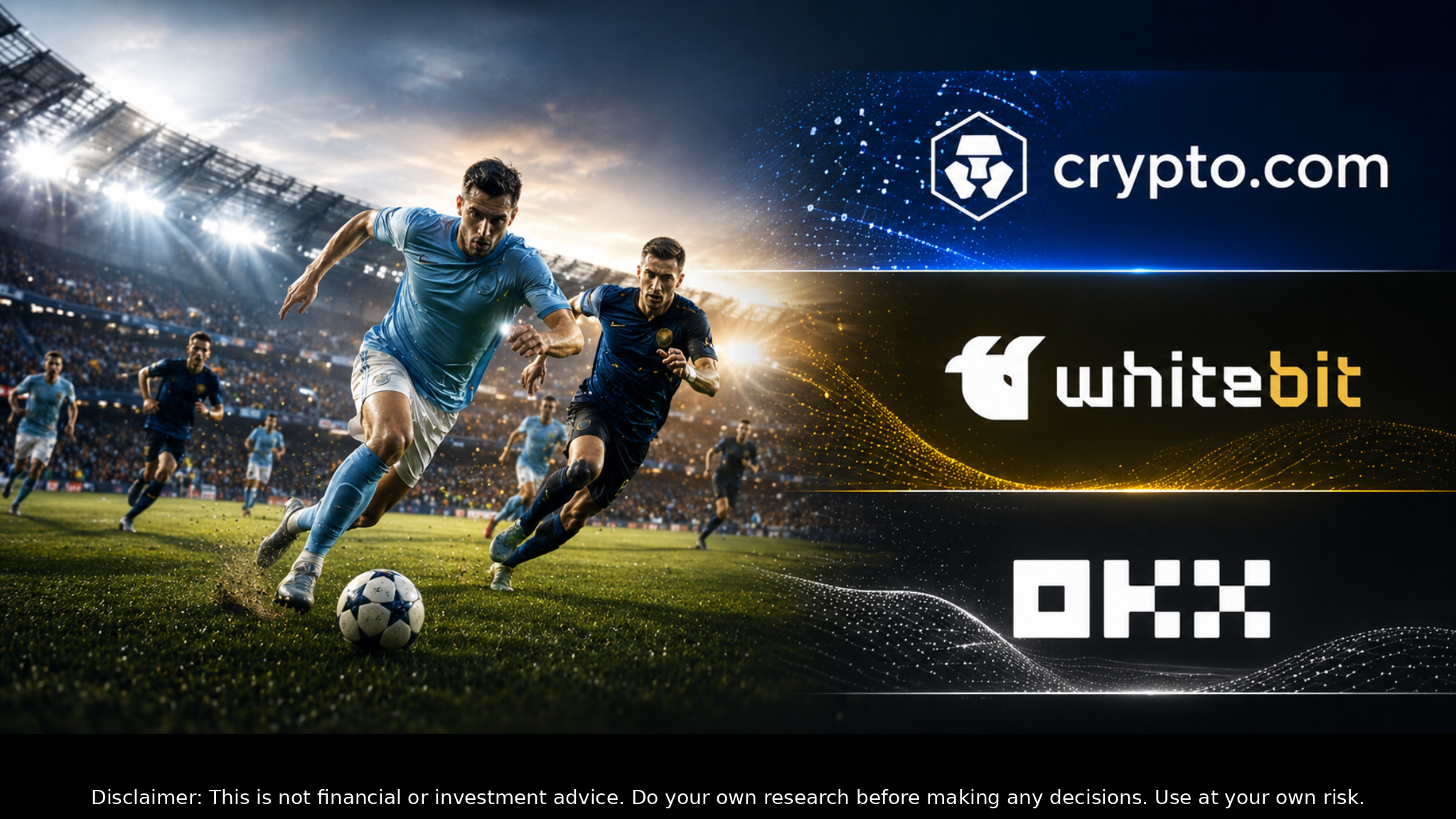
But if you take a closer look at what’s actually happening behind these deals, it becomes clear that most of them serve very different purposes. And only a few operate on a fundamentally different level. The three cases below highlight where that line begins to shift:
1. Crypto.com and Paris Saint-Germain: $30M to stand next to Lionel Messi
August 2021. Lionel Messi has just signed with Paris Saint-Germain, the crypto market is at peak euphoria, and Crypto.com enters Paris with a deal worth roughly €25–30 million.
The agreement included NFT collections, stadium visibility, and — most notably — a significant portion of the payment in CRO, the company’s native token. For a deal of this scale, it was a bold move that reflected the mindset of the time.
It also fit into a broader strategy. Just months earlier, Crypto.com had acquired the naming rights to the Staples Center in Los Angeles for $700 million, signaling a clear ambition to maximize global visibility. Paris Saint-Germain was a natural extension of that approach.
As the market turned in 2022 and crypto budgets tightened across the industry, the deal eventually ran its course without renewal. Rather than a setback, it reads more as a clear example of a specific era of crypto sponsorship — one where visibility itself was the primary product.
2. WhiteBIT and FC Barcelona: moving beyond sponsorship into partnership
In April 2026, WhiteBIT and FC Barcelona signed a new five-year agreement running until 2030. The real signal lies in what it represents: both sides have committed to a long-term strategic model. The roadmap includes new initiatives aimed at improving fan experience, supporting digital education, and expanding interactive technologies.
One of the first tangible product outcomes of this new phase is the WhiteBIT Nova Card in FC Barcelona design. The new card combines the functionality of the WhiteBIT Nova Card with an exclusive FC Barcelona visual identity, while also offering additional benefits for fans, including special features and future partner advantages linked to the collaboration.
This is B2B in its purest form: two companies building a shared ecosystem rather than simply exchanging brand visibility. WhiteBIT has chosen a different trajectory: fewer deals, but deeper integration. As Alex Kozenko, CMO of WhiteBIT, shared in an exclusive comment to me:
“We are not just signing a new deal. We are moving into a second term of partnership — on new terms and with a longer horizon. The first contract was designed for three years. The new one implies a longer timeframe. For me, this is one of the strongest indicators of mutual trust between both sides.”
If, in a few years, analysts look back at how the crypto industry evolved into a fully-fledged player within the global sports and financial ecosystem, this case will likely be among those they point to.
3. OKX and Manchester City: closest to real partnership, but still centered on visibility
OKX took a different approach with Manchester City — and arguably one step further in terms of ambition. Since 2022, the relationship has evolved from an official crypto partnership to sleeve sponsorship across both the men’s and women’s teams.
Alongside this, OKX launched OKX Collective: a metaverse space where fans can access exclusive content from players. The partnership also includes crypto education initiatives, NFT activations, and a Trophy Tour across five continents — all of which are already live.
By some estimates, the expanded agreement between OKX and Manchester City is valued at around $70 million, and notably, it continued even after the 2022 market downturn. That in itself signals a certain level of commitment beyond short-term cycles.
Structurally, however, the center of gravity still leans toward visibility. The sleeve placement remains a premium branding asset rather than a product integration layer. OKX is clearly embedding itself into the club’s culture and fan ecosystem — while a deeper, interdependent business layer between the two sides is still evolving over time.
What’s Next For Crypto In Sports?
Put these three cases side by side, and what emerges isn’t a ranking of “who did it better,” but a map of how the market is maturing. All three deals are smart. All solve real problems. But they operate on different levels.
Sponsorship is, at its core, a transaction: a brand buys visibility, a club gets capital. There’s nothing wrong with that — it’s how the market has always worked. But there’s also a ceiling to how far that model can go.
Partnership is a different mechanism. Two businesses sit down with shared incentives and build something that didn’t exist before. Crypto has signed hundreds of sports deals — but the number that evolve into second contracts with deeper, more integrated terms is still very limited.
The market is still learning to distinguish between sponsorship and partnership. And those who understand that distinction earlier won’t just secure brand presence in sports — they’ll secure a place within the infrastructure itself. And once you’re part of that layer, you’re no longer easy to replace. That’s the standard the market is moving toward for the years ahead.
Disclaimer: Investing in crypto-assets involves significant risks. You may lose the entire amount of your investment. Invest responsibly.