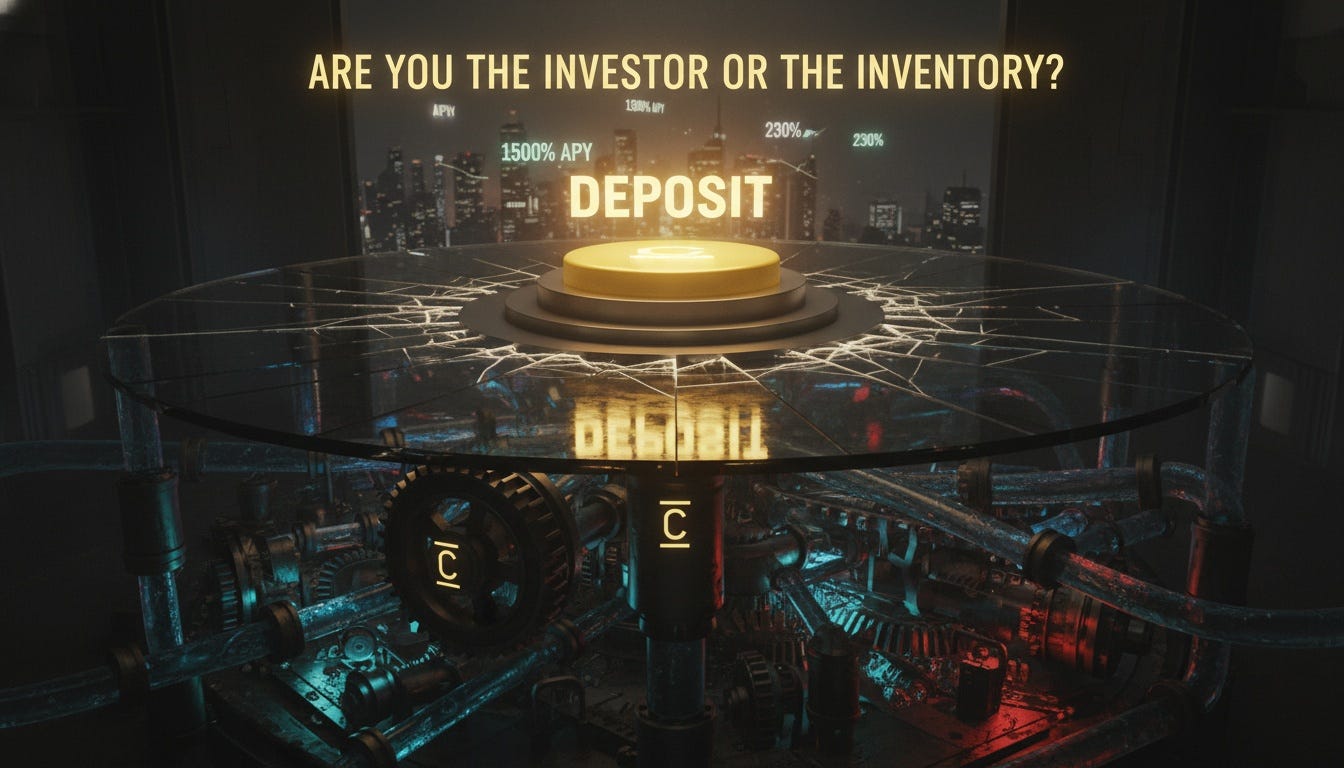
Beyond the Dashboard: Decoding the Reality of DeFi Yield
--
The Illusion of Simple Returns
Modern decentralized finance has turned complex financial maneuvers into a seamless user experience. When you visit a protocol, you are met with bright dashboards and high percentages that suggest effortless wealth creation.
These one-click deposit flows give the impression that earning is a passive, risk-free activity. However, this visual simplicity acts as a mask. While the interface is designed to be clean, the financial plumbing beneath the surface involves intricate smart contract interactions and market dynamics that most users never see.
The Gap Between Display and Reality
The headline APY is often a gross figure rather than a net gain. To understand your actual profit, you must account for several hidden factors that typical dashboards fail to highlight.
For instance, impermanent loss can erode your principal, while frequent rebalancing expenses and execution friction eat away at your margins. Furthermore, the inherent volatility of the underlying assets can mean that even a high interest rate cannot protect you from a drop in market value.
Without calculating these variables, a promising 50% return can easily result in a realized loss.
Where Does Yield Actually Come From
Real yield is not generated out of thin air; it is the result of specific economic activities. Sustainable returns generally come from trading fees generated by active swappers, interest paid by over-collateralized borrowers, or profits captured through liquidations and arbitrage.
It is vital to distinguish between this “real yield” and “inflationary yield” created by token emissions. While emissions can provide a temporary boost, they are often unsustainable. If you cannot pinpoint exactly who is paying for your return and why, there is a high probability that you are the one providing the exit liquidity for more sophisticated players.
The Shift Toward Yield Engineering
The days of blindly chasing the highest number are coming to an end as the market matures.
We are seeing a transition from simple yield chasing to a discipline known as yield engineering. This approach focuses on modeling potential outcomes, managing downside risk, and prioritizing net returns over gross percentages. Concrete Vaults are built to lead this shift.
By automating the allocation process and executing complex strategies across different protocols, these vaults help users move away from manual guessing. Instead, they provide a path toward structured, risk-adjusted exposure that is managed by code rather than emotion.
The Core Insight
Ultimately, yield is much more than a fluctuating number on a website. It is the final result of total revenue minus all operational costs, further adjusted for the specific risks taken.
Shifting your mindset to view DeFi through this professional lens is the only way to ensure long-term success in the ecosystem.
🗿 Explore Concrete at app.concrete.xyz